
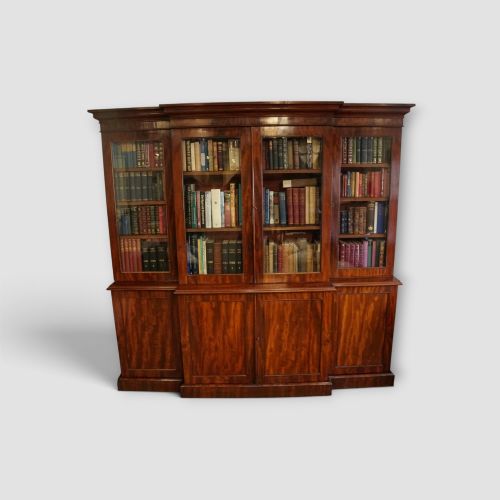
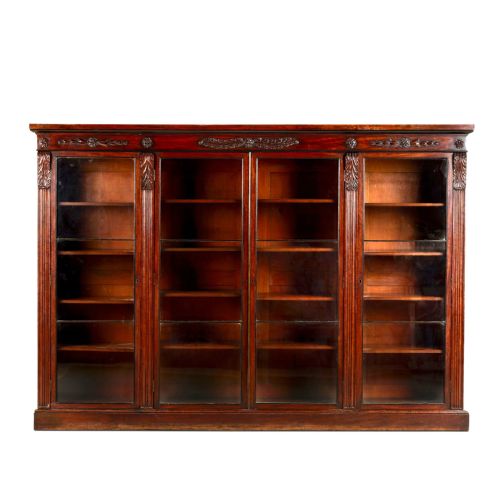
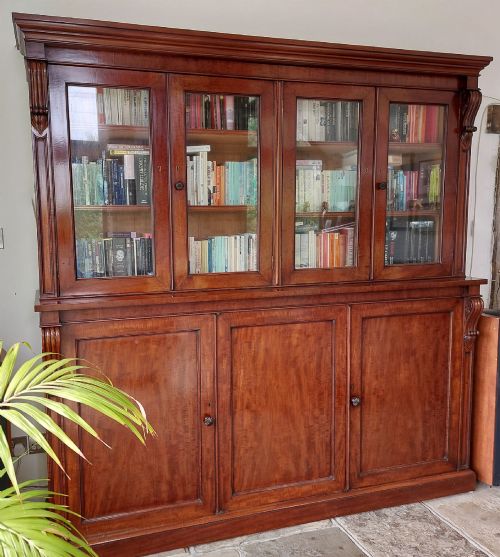
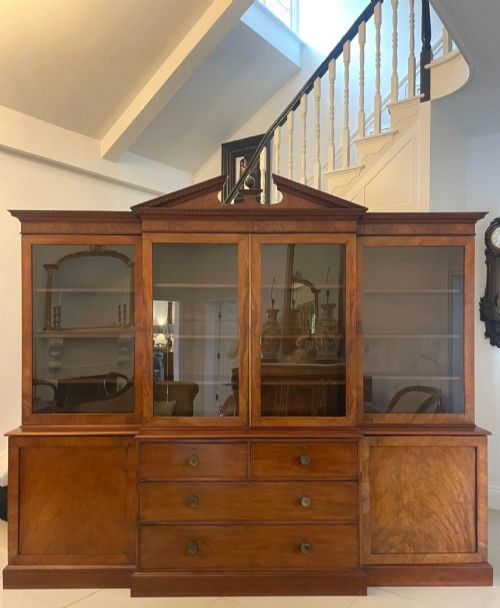
Large Glazed Library Bookcase
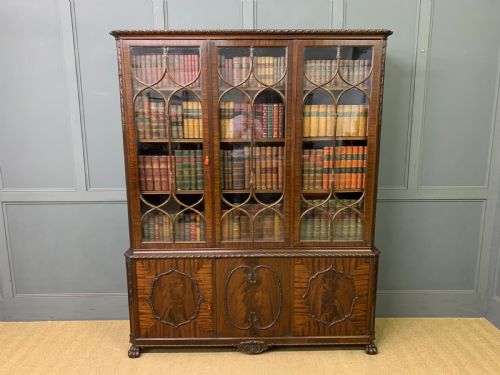
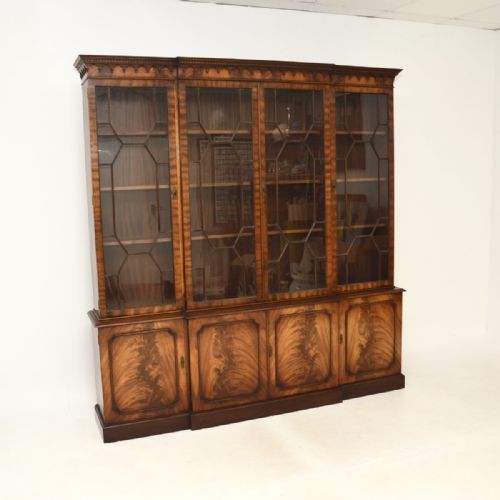
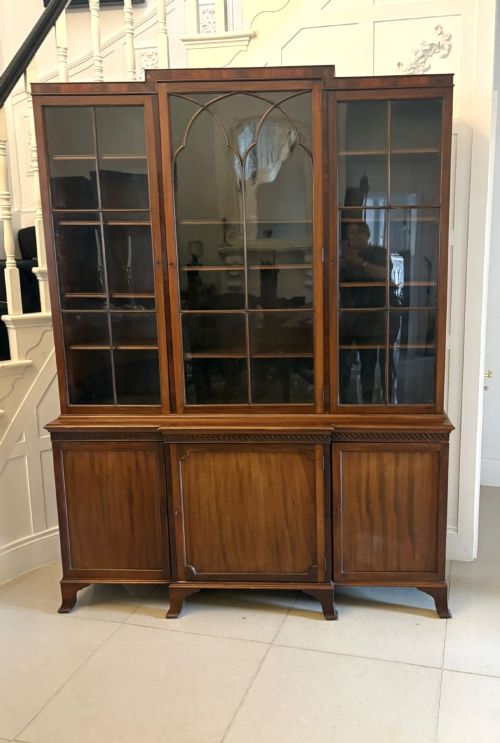
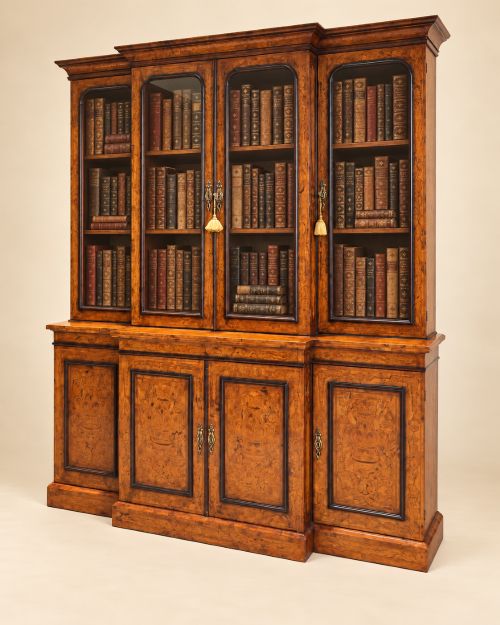
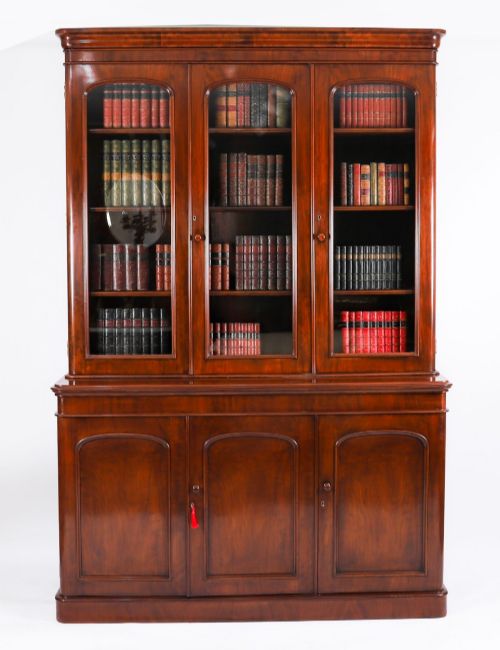
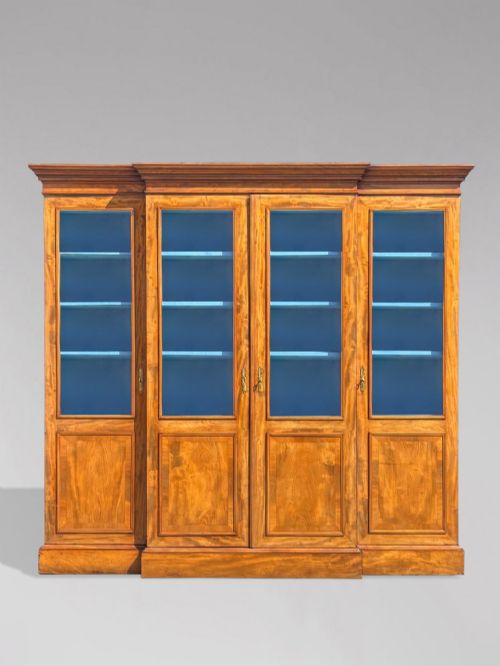
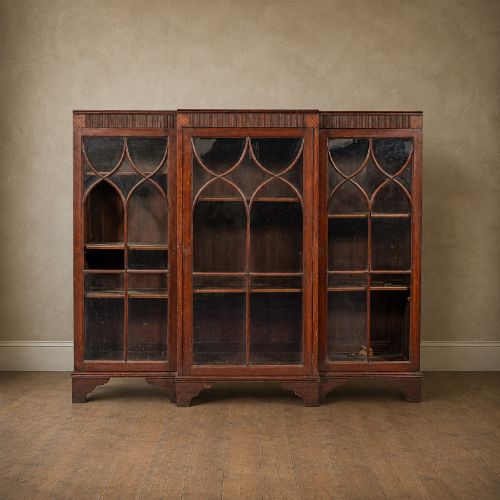
A large glazed library bookcase commands a room with architectural timber and rows of glass-fronted shelves designed to house serious collections.
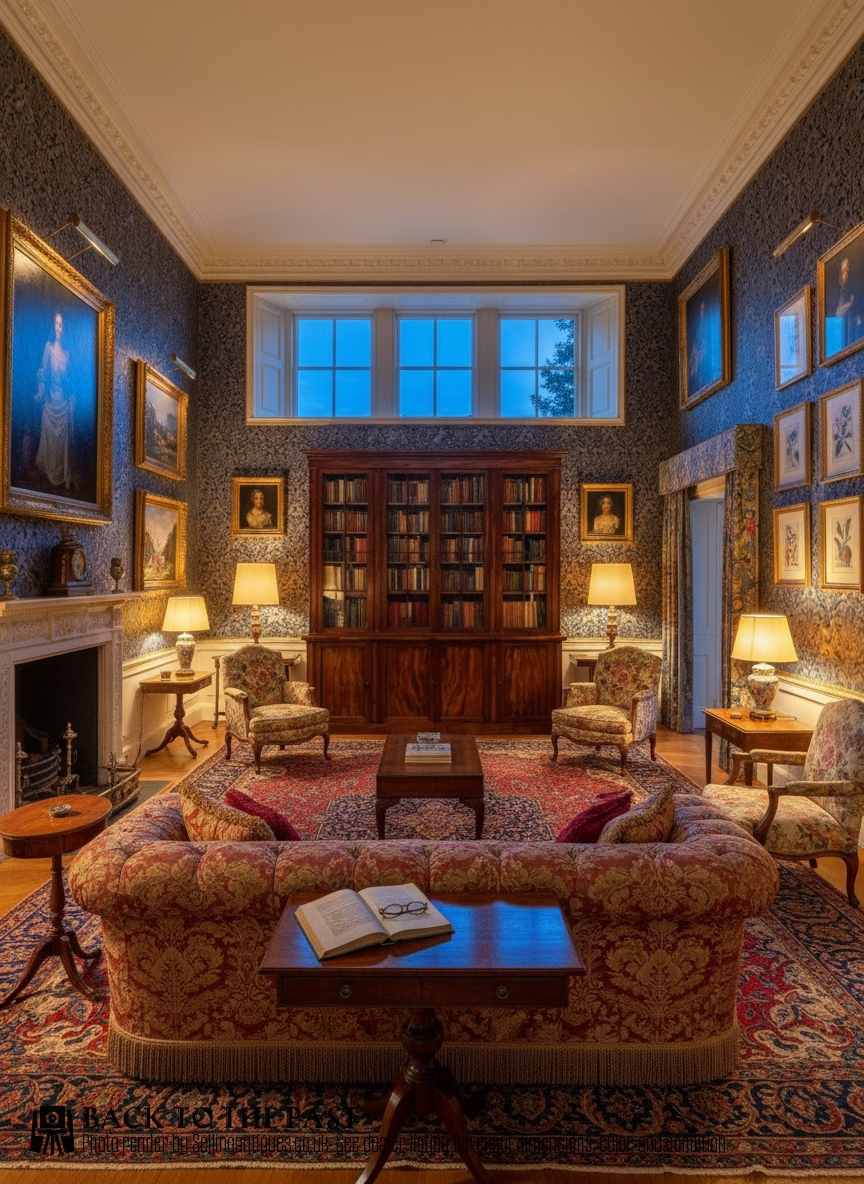
Large Glazed Library Bookcase
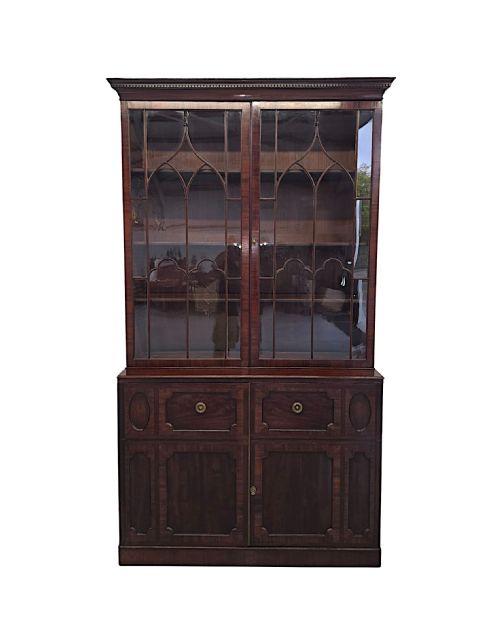
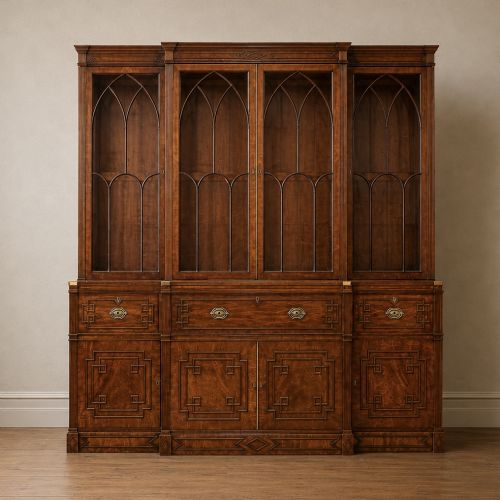
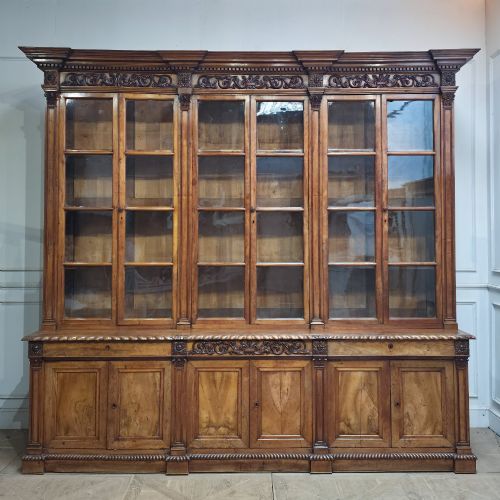
When you search for a large glazed library bookcase, you encounter substantial freestanding furniture built to store and protect volumes in domestic or institutional settings. These architectural storage pieces typically span multiple doors, combining upper glass display compartments with lower wooden cupboards or drawers. The versions you meet most frequently on this page belong to the nineteenth century, including Victorian, William IV, and Regency periods, alongside Georgian and later revival styles.
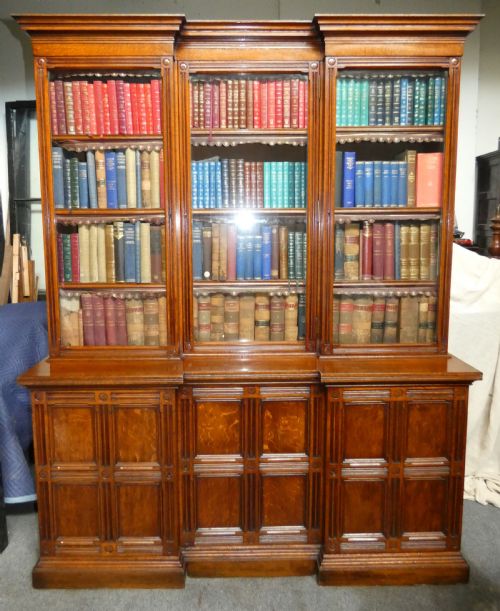
The dominant forms include breakfront configurations and multi-door setups in woods such as mahogany, oak, and walnut. Many examples incorporate glass panes secured by delicate timber glazing bars, revealing adjustable shelving arranged for varied book sizes. They served historically in country houses, studies, and institutional libraries where owners needed to preserve leather-bound volumes while keeping contents visible and dust-free.
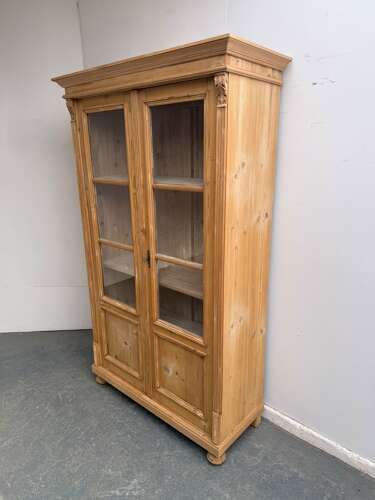
Regional variations appear across the selection, ranging from English mahogany breakfronts to French walnut and Louis Philippe designs. You also find pine and oak interpretations influenced by Gothic Revival, Jacobean Revival, or French provincial tastes. Each piece reflects the interior scale and storage demands of its original period, from the restrained lines of the early nineteenth century to the heavier carved facades of the late Victorian era.
How they were made
Cabinetmakers constructed these large glazed library bookcases using solid timbers and carefully selected veneers over stable secondary woods. Mahogany, walnut, and oak form the primary visible structures, often highlighted by figured grain patterns, flame mahogany, pollard oak, or inlaid banding. Glazing bars divide the large glass doors into geometric panes, requiring precise joinery to support the weight of the panels.
Internal components relied on functional practicality, incorporating adjustable shelving systems supported by wooden racks, brass pins, or metal tracks. Brass hardware, including hinges, locks, and escutcheons, provides operational strength to doors that often span considerable height and width. Lower cabinet sections frequently utilise panelled doors concealing deep storage spaces or banks of internal drawers.
Listings feature woods such as flame mahogany, pollard oak, and walnut across Victorian, Regency, and Georgian revival styles.
What varies in quality
The distinction between ordinary and superior library bookcases rests on timber selection and architectural proportion. Finer examples employ highly figured mahogany or burr walnut veneers matched across symmetrical breakfront facades, whereas utilitarian pieces rely on plain, unadorned surfaces. The crispness of carved mouldings, the delicacy of glazing bars, and the harmony of the overall proportions dictate the visual success of the piece.
Structural integrity and original components heavily influence overall merit. High-grade items retain their original glass panes, functional brass locks, and adjustable shelving mechanisms without excessive alteration. The precision of the drawer construction and the seamless alignment of large breakfront doors separate workshop output destined for grand libraries from standard commercial production.
Wylie and Lochhead·Howard and Sons
The Large Glazed Library Bookcase Glossary
- Breakfront
- A cabinet design where the central section projects forward from the flanking wings. This configuration creates architectural depth and visual weight.
- Glazing bar
- A narrow wooden strip holding individual panes of glass within a door frame. Finer bars allow more light into the interior cabinet.
- Flame mahogany
- A tropical hardwood veneer showing a distinctive flickering flame pattern derived from branch junctions. Cabinetmakers reserved this timber for principal display surfaces.
- Escutcheon
- A protective plate surrounding a keyhole, usually fashioned from brass. It prevents the timber from wearing around the lock.
- Pollard oak
- Oak timber gathered from pollarded trees, producing a dense, knotty burr grain. It appears as decorative veneer on nineteenth-century statement furniture.
Large Glazed Library Bookcase: Frequently Asked Questions
How do I fit a large library bookcase?
Measure your ceiling height and wall space carefully before acquisition, accounting for the projecting breakfront cornices and deep lower cupboards. Ensure that access routes through hallways and stairwells can accommodate the monumental dimensions of these structural bookcases.
Position the bookcase away from direct sunlight and heat sources to protect timber veneers and historic bindings. Many nineteenth-century examples feature knockdown construction or separate upper and lower sections, which simplifies transport and placement within a room.
Were these always meant for books?
While originally commissioned to house private libraries, encyclopaedias, and leather-bound volumes, these large cabinets served multiple functions in historic interiors. Families utilised the glazed upper sections to display porcelain, ceramics, and curiosities alongside literary collections.
Lower enclosed cupboards provided secure storage for documents, household ledgers, and table linens. Today, owners continue this tradition by adapting the generous shelving for mixed collections of books, objects, and archival materials.
How do I distinguish Regency from Victorian examples?
Regency bookcases generally display restrained classical lines, architectural pediments, and subtle brass inlay inspired by ancient Greek and Roman forms. The timbers are often clean figured mahogany with minimal carved ornamentation, prioritising symmetry and proportion.
Victorian bookcases tend to be heavier and more robust, frequently incorporating Gothic Revival tracery, dense oak carving, or elaborate scrollwork. They reflect an era of industrial manufacturing capacity that allowed for grander proportions and deeper breakfront profiles.
Can the shelves be adjusted?
Most traditional library bookcases incorporate adjustable shelving to accommodate volumes of varying heights. Early systems rely on vertical wooden ratchet strips or brass studs that allow shelves to be repositioned safely.
When inspecting a piece, check that the internal support tracks or original wooden bearers remain intact. This flexibility ensures the interior layout can be customised to suit modern display requirements without altering the historic structure.