
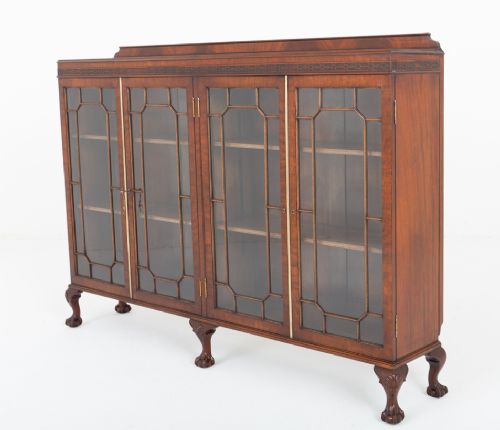
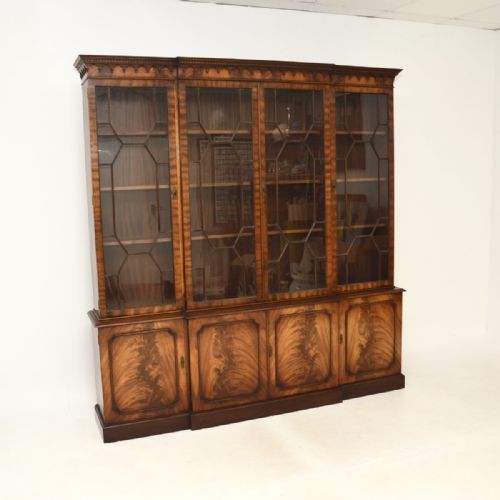
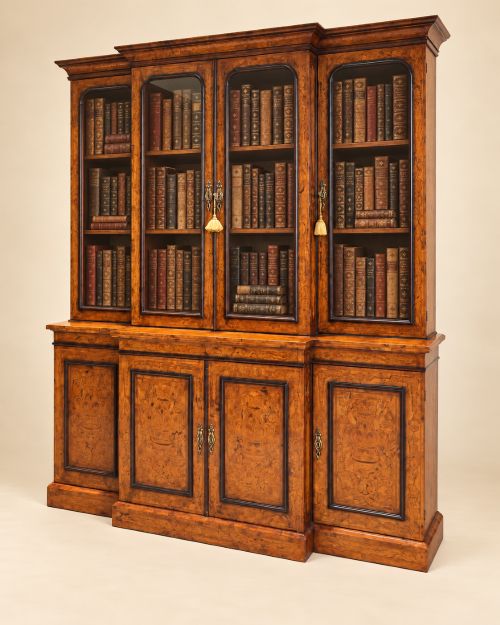
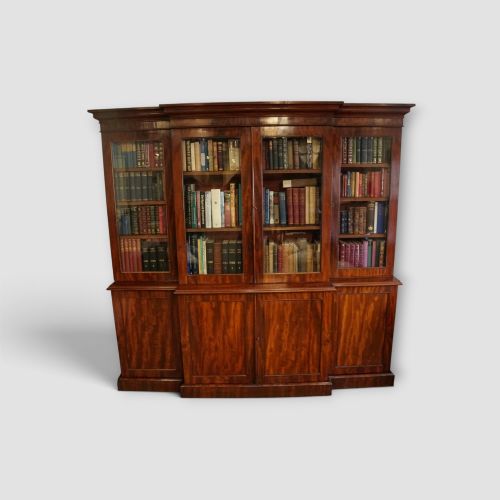
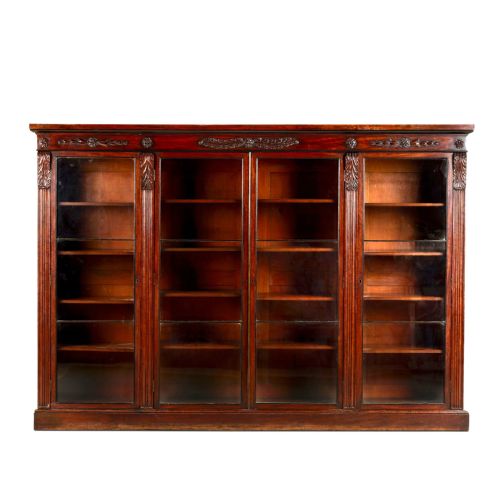
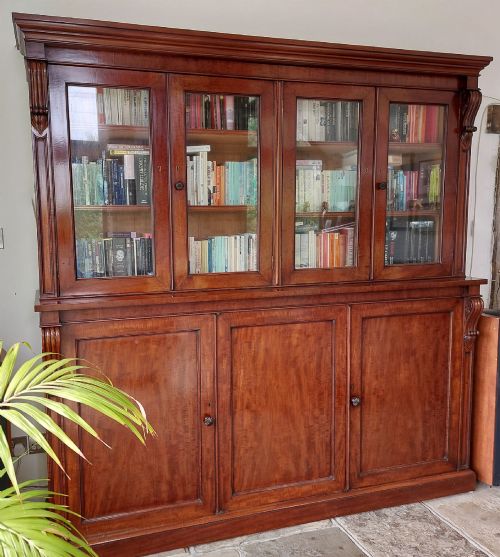
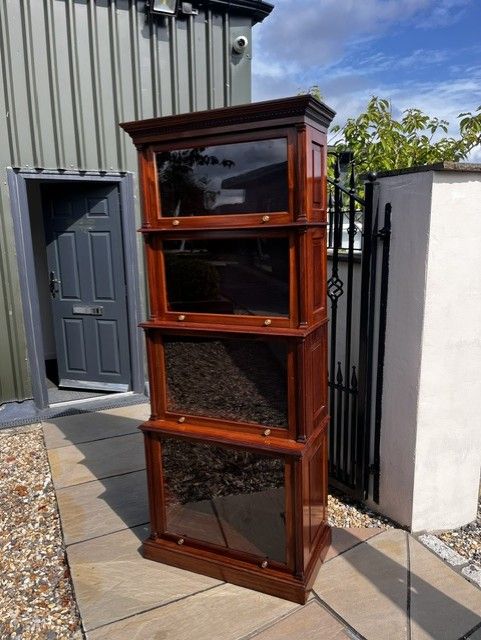
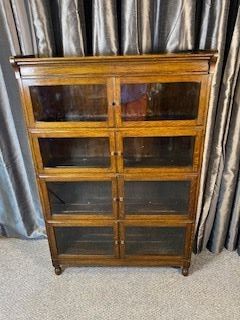



Four Door Library Bookcase
A four door library bookcase is a substantial piece built to house serious collections, bringing architectural presence and generous timber surfaces to a room.
Four Door Library Bookcase
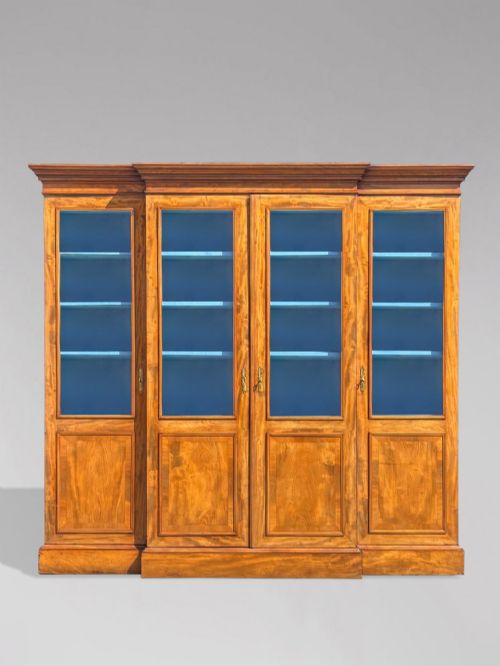
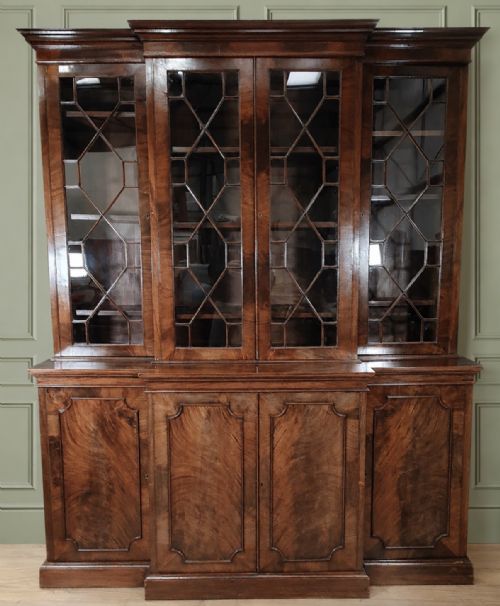
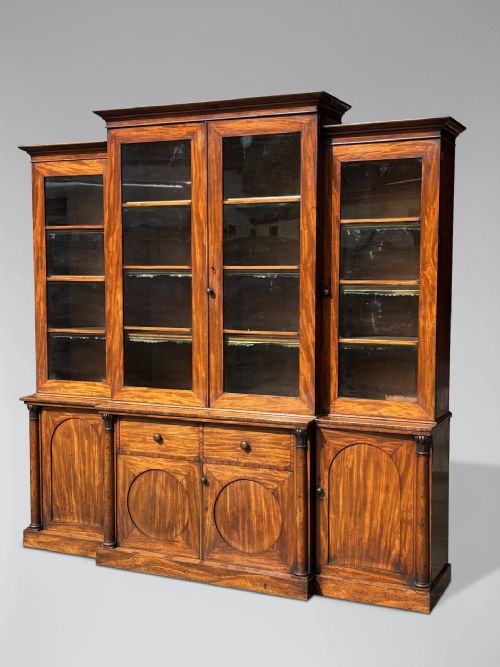
When searching for a four door library bookcase, you encounter large scale storage furniture designed for substantial book collections. These pieces typically feature glazed upper doors above lower wooden cupboards, creating a balanced architectural facade.
The versions most common on this page date from the nineteenth century, including Victorian, Regency, and William IV examples. They frequently appear in mahogany, flame mahogany, and walnut, often constructed as breakfront forms.
How they were made
Cabinet makers utilised dense hardwoods like mahogany, walnut, and oak for the structural carcass and drawer linings. Flame mahogany veneers and satinwood inlay provided decorative contrast on primary display surfaces.
Glazing bars divided large glass panes within the upper doors, while brass hardware secured the substantial cabinet sections. Carved details and period styling such as Gothic Revival or Chippendale influences shaped the cornices and plinths.
Periods represented include the eighteenth century, Regency, William IV, Victorian, and Edwardian eras.
What varies in quality
The selection of timber grain largely dictates the visual impact, particularly in flame mahogany and burr walnut examples where matched veneer figures span multiple doors. Finer execution shows in the precision of the glazing bars and the depth of carved mouldings.
Proportion and scale separate standard regional furniture from exhibition quality library pieces designed for country houses. The integration of breakfront styling and secondary timbers reveals the ambition of the original workshop.
Lamb And Co·Gunn
The Four Door Library Bookcase Glossary
- Breakfront
- A cabinet design where the central section projects forward from the flanking outer wings. This architectural arrangement creates depth and shadow across the front elevation.
- Glazing bar
- A narrow wooden or brass strip that holds individual panes of glass within a door frame. Finer bars allow for more delicate geometric or arched patterns.
- Flame mahogany
- Timber cut from the fork of the mahogany tree, producing a distinctive flickering flame-like grain pattern. Cabinet makers used these veneers symmetrically across primary doors.
- Burr walnut
- Wood taken from a growth wart on a walnut tree, yielding complex swirling grain patterns. It served as a high status veneer on Victorian library furniture.
- Cornice
- The decorative moulded projection that crowns the top of the bookcase. It defines the architectural style, ranging from simple classical profiles to carved Gothic pediments.
Four Door Library Bookcase: Frequently Asked Questions
Where should a four door library bookcase go?
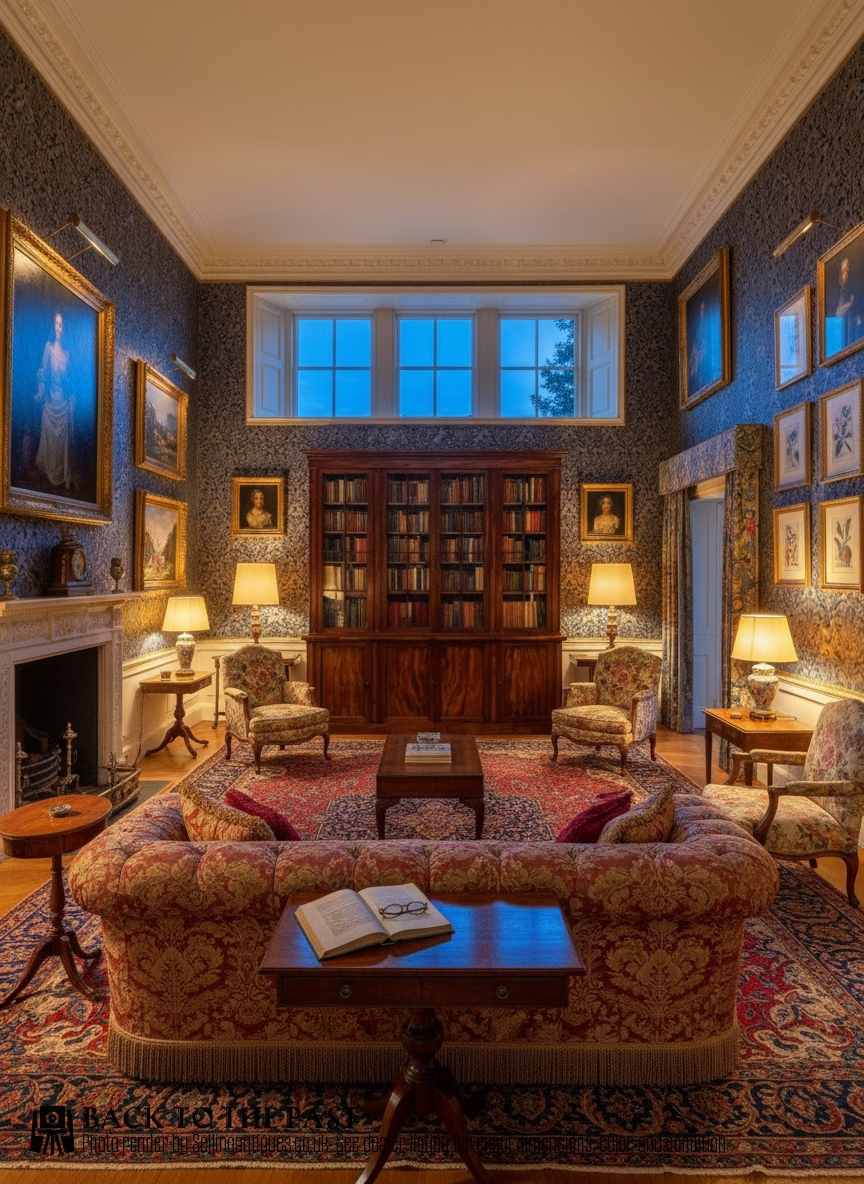
These large cabinets require a wall with sufficient length and ceiling height to accommodate their monumental proportions without overwhelming the room.
They function best in studies, libraries, or spacious reception rooms where their depth and glass fronting can be appreciated from a distance.
How do I organise books inside?
Adjustable wooden shelving allows you to group volumes by height, keeping heavier folios on the lower levels and smaller editions higher up.
Leaving slight gaps between rows maintains air circulation and prevents the shelving from bowing under heavy loads over time.
How do I care for the timber?
Keep the wood away from direct heat sources and strong sunlight to prevent the mahogany or walnut veneers from drying out and lifting.
Applying a traditional beeswax polish periodically helps nourish the grain and maintains the natural lustre of the polished surface.
Are the upper and lower sections separate?
Most large library bookcases divide horizontally into an upper glazed cabinet and a lower cupboard base for ease of transport and placement.
This two-part construction also helps when maneuvering the heavy framework through doorways and up stairwells during installation.