



Large Kitchen Cupboard
A large kitchen cupboard provides substantial storage for domestic provisions, uniting practical utility with period character across country houses and farmhouses.
Large Kitchen Cupboard
A large kitchen cupboard spans utilitarian housekeeper designs, larder cabinets, and kitchen dressers originating from the eighteenth and nineteenth centuries.
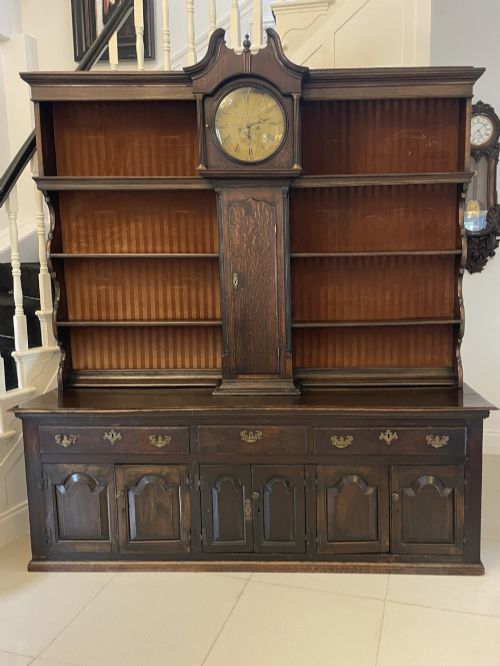
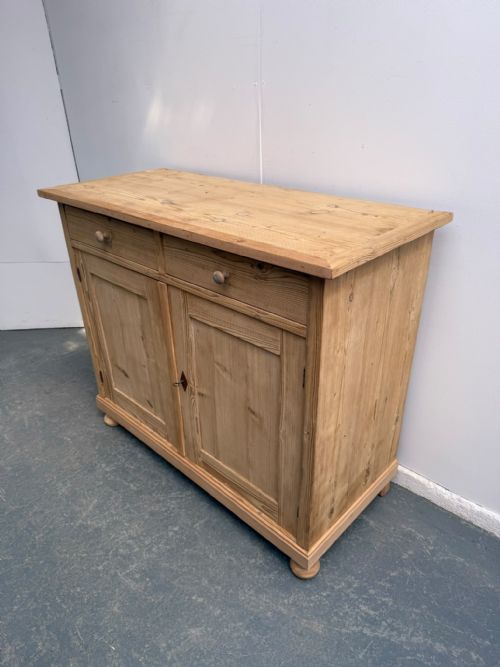
The most common examples encountered here are pine and oak pieces from the Victorian and Georgian periods, often manifesting as dresser bases, sideboards, or tall two-door cupboards.
Geographic origins range across English country workshops to French provincial and Hungarian carpentries, reflecting regional domestic traditions.
Materials and Construction
Makers relied principally on solid pine and oak, complemented by occasional chestnut, walnut, and pitch pine for structural integrity.
Surface finishes include original paint, scumble, wax, and later green or neutral paint layers applied over the bare timber.
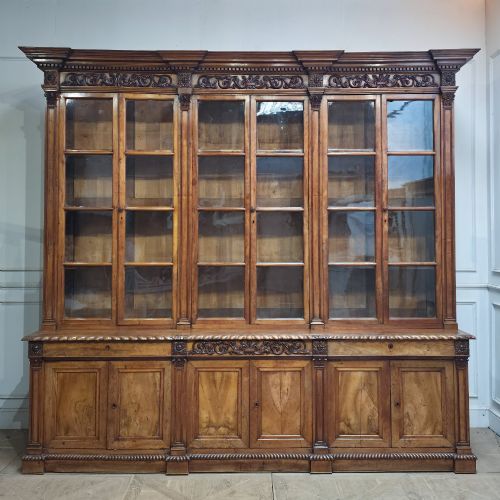
Hardware incorporates traditional brass fittings and iron elements to secure doors, drawers, and tall glazed cabinets.
Several pieces include integrated bread slides, reminding us of past kitchens where dough was rolled out right above the drawers.
Evaluating Craftsmanship
Quality rests upon the selection of timber, where tightly grained oak or mature pine denotes superior selection by the original maker.
Construction fidelity separates standard utilitarian boxes from finer estate pieces, evident in dovetail joints, panelled doors, and intact cornices.
The survival of original surfaces, such as early paint or undisturbed patination, preserves the historical integrity of the piece.
The Large Kitchen Cupboard Glossary
- Housekeeper's cupboard
- A large storage piece traditionally used for linens and provisions in a country house. These tall cupboards often feature multiple doors enclosing deep shelving.
- Dresser base
- The lower section of a kitchen dresser, functioning as a sideboard with drawers and cupboards. It provides a solid wooden surface top for food preparation.
- Scumble
- A decorative paint technique imitating wood grain or adding translucent colour over a base coat. It appears frequently on nineteenth-century country furniture.
- Breakfront
- A piece of furniture with a central section that projects forward from the side sections. This architectural form adds depth and presence to large cupboards.
- Bread slide
- A pull-out wooden board integrated into a dresser base or cupboard. Historically utilised for cooling bread or preparing food.
Large Kitchen Cupboard: Frequently Asked Questions
What rooms suit a large kitchen cupboard?
These substantial storage pieces fit naturally into spacious kitchens, utility rooms, and large dining spaces where floor area permits.
They serve effectively as larders, crockery stores, or general storage furniture for modern domestic life.
How do I date a pine cupboard?
Dating relies on construction methods such as hand-cut dovetails, timber types like pitch pine or older yellow pine, and original paint finishes.
Georgian pieces display different proportions and mouldings compared to later Victorian or Edwardian examples.
Can I paint a waxed pine cupboard?
Waxed pine can generally be painted provided the surface is properly prepared to remove accumulated wax and grease.
Many period pieces have been repainted multiple times over their lifespan in country homes.
What is the difference between a dresser and a larder cupboard?
A larder cupboard typically consists of tall enclosed doors designed specifically for food storage and provisions.
A dresser combines lower cupboards or drawers with an upper rack or open shelving for displaying plates and bowls.