




Georgian Pantry Cupboard
A georgian pantry cupboard is a substantial domestic storehouse for food and linens, built to last centuries in daily service.
Georgian Pantry Cupboard
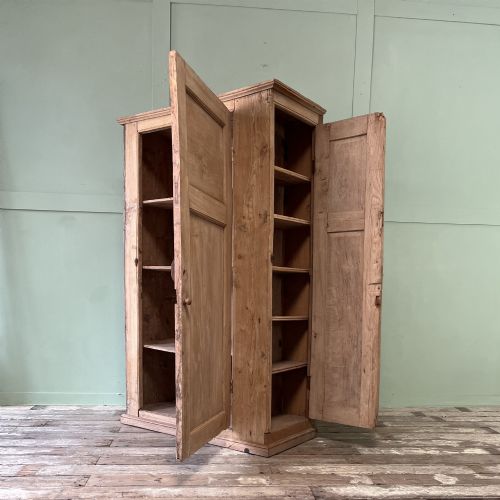
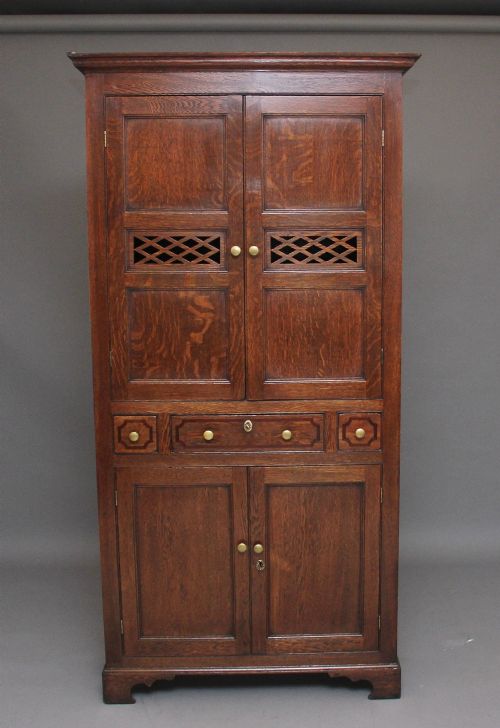
When you search for a georgian pantry cupboard, you encounter substantial utilitarian storage furniture designed for domestic provisions. These pieces span the eighteenth and nineteenth centuries, taking the form of housekeepers cupboards, food cupboards, and kitchen dressers.
The versions most commonly met on this page originate from English and Welsh country workshops. They display robust vernacular construction intended for practical use in sculleries and large kitchens rather than formal reception rooms.
How they were made
These pieces rely heavily on native timbers such as oak, elm, and pine, often joined with sturdy pegged mortise and tenon construction. Many examples feature fielded panels on the doors and iron or brass hardware designed for heavy daily use.
Surfaces frequently show layers of original or later paint, alongside waxed finishes that highlight the natural grain of the wood. Craftspeople built these cupboards with deep shelving and tall proportions to maximise internal storage capacity.
Listings feature eighteenth and nineteenth-century periods alongside materials including pine, oak, mahogany, and elm.
What varies in quality
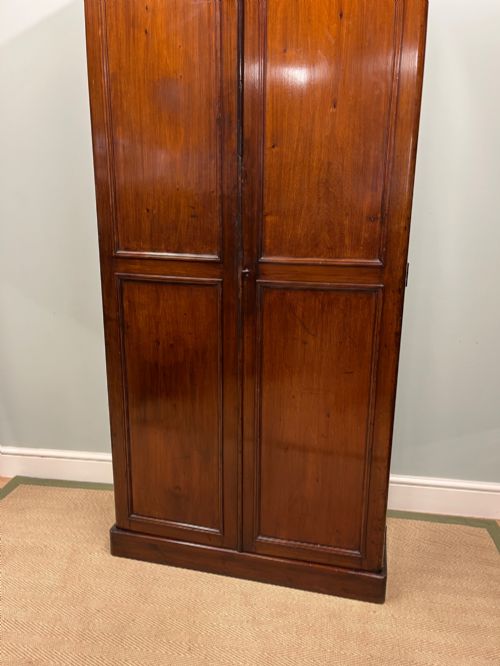
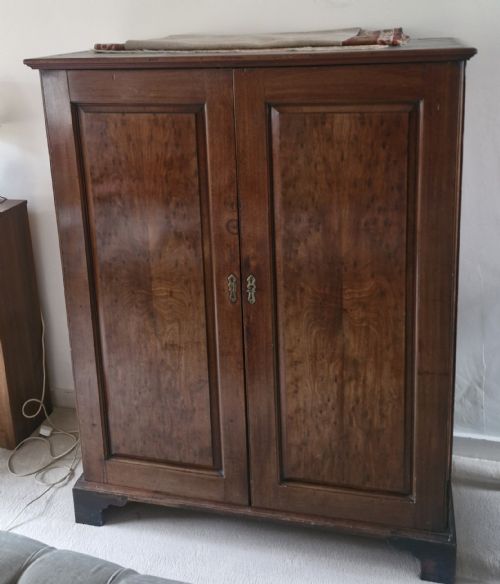
The distinction between standard utility pieces and finer examples rests on timber selection and architectural detailing. Superior items utilise dense oak or well-figured mahogany, whereas simpler country variants rely on local pine and elm.
Proportion and scale also define the hierarchy, with taller slim configurations or breakfront formats demonstrating greater ambition from the maker. The survival of original painted surfaces or brass ironmongery elevates the standing of an individual piece.
The Georgian Pantry Cupboard Glossary
- Housekeepers Cupboard
- A large storage cabinet traditionally used to store household linens, dry goods, and tableware. These items often feature double doors enclosing shelves and drawers.
- Fielded Panel
- A wooden panel with bevelled edges that fits into a grooved frame. This technique allows the wood to expand and contract safely with changes in humidity.
- Breakfront
- A cabinet facade where the central section projects forward from the flanking wings. This architectural arrangement adds visual depth to larger kitchen furniture.
- Vernacular
- Architecture and furniture built by local craftsmen using traditional regional methods and materials. These pieces reflect local habits rather than metropolitan academic designs.
Georgian Pantry Cupboard: Frequently Asked Questions
What is a georgian pantry cupboard?
A georgian pantry cupboard is a large storage unit built to hold provisions, linens, and utensils in domestic spaces. These pieces date primarily from the eighteenth and nineteenth centuries.
They reflect the practical demands of large country houses and farmhouses. Their robust construction allowed them to withstand decades of heavy service.
Where were these cupboards used?
These cupboards stood in pantries, sculleries, and large farm kitchens where food and household goods required secure storage. Their deep shelves accommodated bulky provisions and stacks of linen.
Today, they adapt well to modern kitchens and dining rooms as statement storage units. They offer substantial capacity for contemporary tableware and dry goods.
Should I choose painted or bare wood?
The choice between painted and bare timber depends on the finish recorded in the piece's history. Many country cupboards retain layers of historic paint applied to protect the softwood.
Unpainted examples showcase the grain of oak, mahogany, or elm. Both finishes represent authentic historical treatments found across the inventory.