




Large Japanese Porcelain Bowl
A large Japanese porcelain bowl carries centuries of kilncraft into your room, offering deep basins painted in cobalt and rich enamels.
Large Japanese Porcelain Bowl
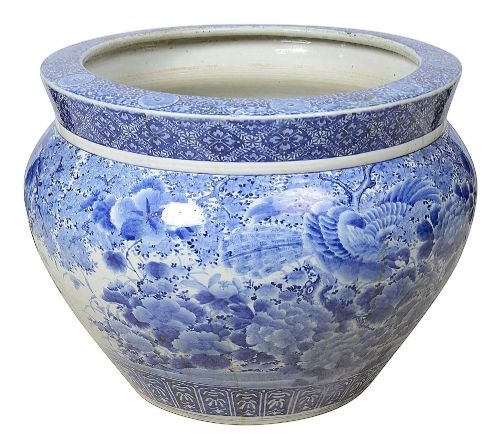
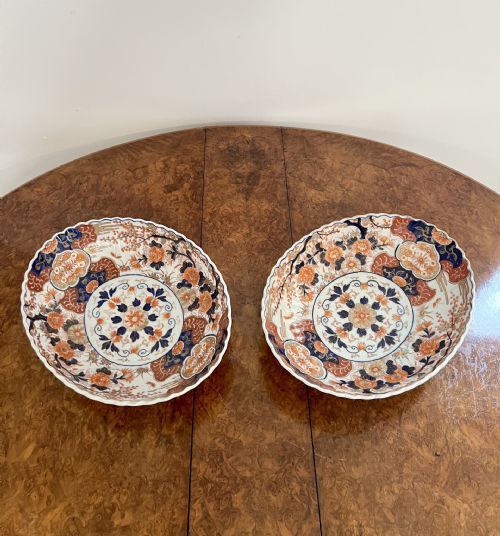
When you search for a large japanese porcelain bowl, you encounter substantial vessels created for display and utility across the Edo and Meiji periods. These pieces range from deep Imari bowls with scalloped edges to heavy Arita jardinieres designed to hold plants.
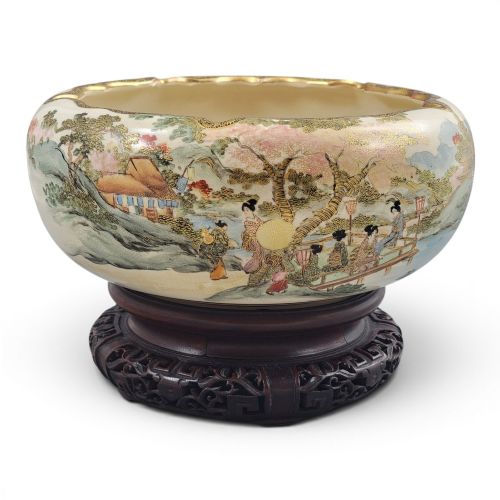
The versions most common on this page date from the nineteenth century, including numerous Imari examples featuring iron-red and cobalt underglaze decoration. Collectors also find Kutani shallow bowls and Satsuma pieces signed by renowned masters such as Shizan and Ryuzan.
Many of these large objects serve as ornamental centerpieces, while others take the form of jardinieres or fish-bowls with floral motifs. They reflect centuries of ceramic tradition adapted for both domestic use and export markets.
How they were made
Potters shaped these large vessels from fine ceramic materials, often applying a clear glaze before painting. Cobalt underglaze was painted directly onto the clay body prior to the primary firing.
Makers then added surface details using vibrant enamels and gold leaf or gilt highlights. Pieces such as Satsuma earthenware required careful low-fire techniques to support intricate hand-painted figural and floral scenes.
Several heavy jardinieres double as historical fish-bowls, built to house ornamental carp indoors.
What varies in quality
The distinction between ordinary production wares and superior examples lies in the execution of the painting and the purity of the porcelain body. Master painters achieved exceptional depth through precise brushwork in cobalt underglaze and rich enamel layers.
Signatures by recognised makers such as Shozo or Okuda indicate higher artistic ambition and workshop prestige. Furthermore, the crispness of scalloped edges and the stability of large potting define the finer vessels in this category.
Shizan·Ryuzan·Shozo·Okuda
The Large Japanese Porcelain Bowl Glossary
- Imari
- A style of Japanese porcelain featuring a distinct palette of cobalt underglaze blue, iron-red, and gilt highlights. These wares were produced in Arita and exported in large quantities.
- Jardiniere
- A large ornamental pot or container designed to hold plants or flowers. In Japanese export ceramics, these heavy vessels often feature deep sides decorated with floral or aquatic themes.
- Satsuma
- A type of earthenware with a crackled ivory glaze, typically decorated with elaborate polychrome enamels and gold leaf. Originating in Satsuma Province, it became immensely popular during the Meiji period.
- Arita
- The town in Hizen province where Japanese porcelain production began following the discovery of kaolin clay. Arita kilns produced the vast majority of early export wares.
- Cobalt Underglaze
- A blue pigment applied directly to the raw clay body before glazing and firing. This oxide withstands high kiln temperatures without fading.
Large Japanese Porcelain Bowl: Frequently Asked Questions
How do I care for a large porcelain bowl?
Dust the surface gently with a soft, dry cloth to prevent accumulation in painted recesses. Avoid using chemical cleaners or immersing gilded pieces in water.
Display the vessel away from direct sunlight and areas prone to sudden temperature changes. Ensure any heavy jardiniere rests on a stable surface or associated stand.
What is the difference between Imari and Kutani?
Imari wares typically combine cobalt blue and iron-red enamel with gold accents on a crisp porcelain body. They frequently display geometric and floral panel designs.
Kutani pieces often showcase bolder pictorial scenes rendered in a wider range of rich enamel colours. Kutani production encompasses both porcelain and fine earthenware shallow bowls.
Were these bowls made for export?
Many large vessels were produced specifically for Western export markets during the Meiji period. European and American demand influenced the scale and decorative themes of these ceramics.
Export pieces often adapted traditional Japanese motifs to suit foreign interior decoration tastes. Jardiniere forms and large chargers became particularly fashionable in Edwardian homes.
How can I identify a Meiji period piece?
Meiji period ceramics often bear maker signatures or studio marks painted on the base. The decoration tends to be highly detailed, reflecting the output of organised workshops.
These pieces frequently incorporate Western aesthetic influences while retaining traditional Japanese potting techniques. Earthenware bodies with heavy gilt and intricate enamels are common markers of this era.