
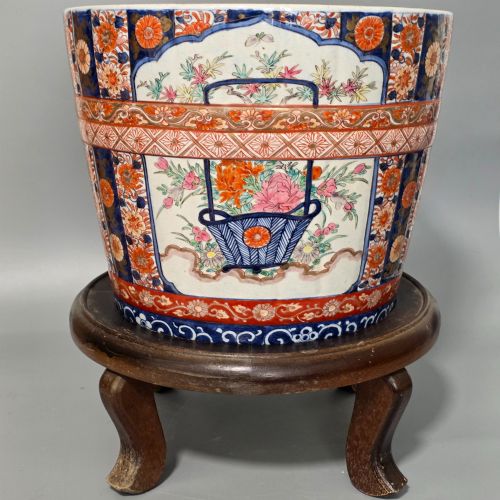


Meiji Period Porcelain Pot
These pieces of meiji period porcelain pot offer traditional form and intricate detail, bringing skilled craft from nineteenth century Japan into your home.
Meiji Period Porcelain Pot
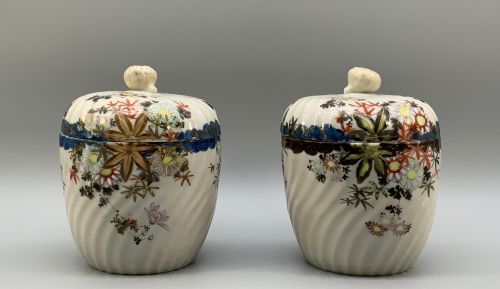
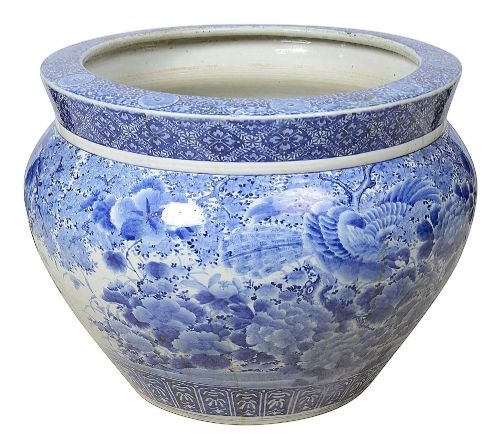
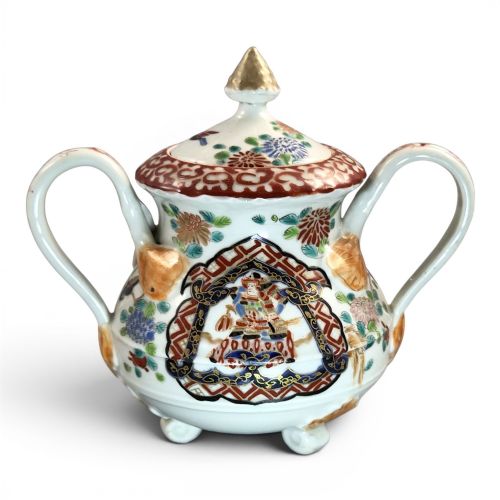
A meiji period porcelain pot covers various vessel types originating from nineteenth century Japan, including lidded jars, sugar bowls, and larger jardinieres. Most examples found here belong to the Meiji period and showcase distinct regional styles like Imari and Satsuma.
Buyers frequently encounter blue and white porcelain alongside decorated earthenware and ceramic pieces featuring samurai figures, floral motifs, or bamboo-handle forms. These objects served both decorative and functional purposes in domestic spaces.
The selection ranges from small lidded jars to substantial planters and stands, reflecting the varied output of Japanese kilns and studios during the late nineteenth century.
Materials and construction methods
Potters utilised porcelain, ceramic, and earthenware bodies as the foundation for these vessels, applying cobalt underglaze for deep blue designs. Artisans then added intricate enamel work, gold leaf, and gilding to enrich the surface decoration.
Workshops in Kyoto and other centres employed skilled painters to execute complex figural scenes with samurai and floral patterns. Selected pieces incorporated specialised forms, such as bamboo-handle shapes and fitted hardwood stands.
Listings feature nineteenth-century Japanese porcelain, earthenware, and ceramic pieces incorporating gold leaf, gilding, and cobalt underglaze.
Distinctions in quality and execution
The standard of a meiji period porcelain pot depends on the precision of the brushwork and the complexity of the enamel and gold leaf application. Finer pieces display crisp cobalt underglaze details and well-defined figural painting rather than hasty decoration.
Studio signatures and maker marks, such as those from Kyoto workshops or specific kilns, indicate higher production standards. The preservation of original gilding and the structural integrity of complex forms like lidded jars also differentiate the work.
Fukagawa Mark·Kinkozan·Shozan
The Meiji Period Porcelain Pot Glossary
- Meiji Period
- The era in Japanese history lasting from 1868 to 1912, characterised by opening trade and major artistic output. Pieces from this time often combine traditional techniques with new decorative influences.
- Imari
- A style of Japanese porcelain featuring a distinctive palette of underglaze blue, iron red, and gold. These items were widely produced for both domestic use and export during the nineteenth century.
- Satsuma
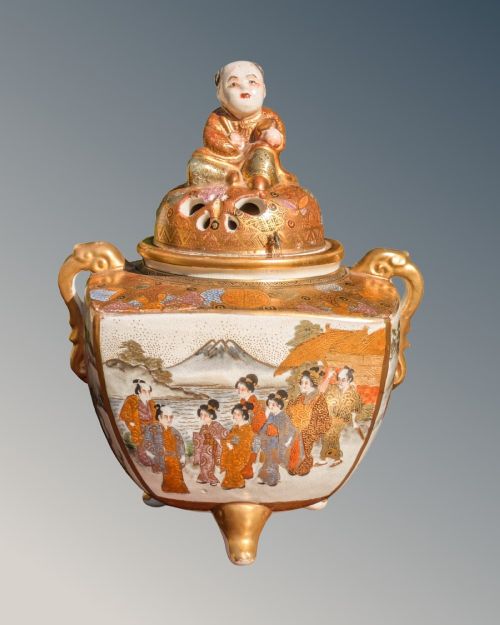
- A type of Japanese earthenware with a crackled ivory glaze, typically decorated with polychrome enamels and gilding. Kyoto studios produced many notable examples of this ware.
- Cobalt Underglaze
- A blue pigment applied to the raw ceramic body before glazing and firing, producing deep and permanent colour. This technique appears frequently on blue and white vessels.
- Koro
- A traditional Japanese incense burner, often fitted with a pierced lid. These ceramic or porcelain vessels rest on small feet and feature ornate ornamentation.
Meiji Period Porcelain Pot: Frequently Asked Questions
How do I identify a Meiji period pot?
Look for characteristic nineteenth-century stylistic markers such as Imari palettes, Satsuma glazes, and traditional Japanese motifs. Maker marks and studio signatures also help confirm the period of origin.
Examination of the paste, glaze crazing, and hand-painted enamel details provides further clues to distinguish these pieces from later reproductions.
Were these pots used for tea?
Certain forms like sugar bowls and lidded jars functioned as part of dining and beverage services. Other vessels served decorative roles or held plants and incense.
Understanding the original function helps collectors place each item within the broader context of nineteenth-century Japanese domestic life.
What is the difference between Imari and Satsuma?
Imari ware typically uses hard porcelain with blue, red, and gold decoration designed for durability and display. Satsuma ware consists of cream-coloured earthenware with a crackled glaze intended for intricate enamel painting.
Both styles originated in Japan during the nineteenth century but utilise different base materials and firing techniques.
How should I display a jardiniere?
Large jardinieres and planters suit prominent floor placement or sturdy tables, often accompanied by their original hardwood stands. Ensure the supporting surface can take the weight of the ceramic body.
Keep these vessels away from direct sunlight and extreme temperature changes to protect the delicate enamel and gold leaf decoration.