
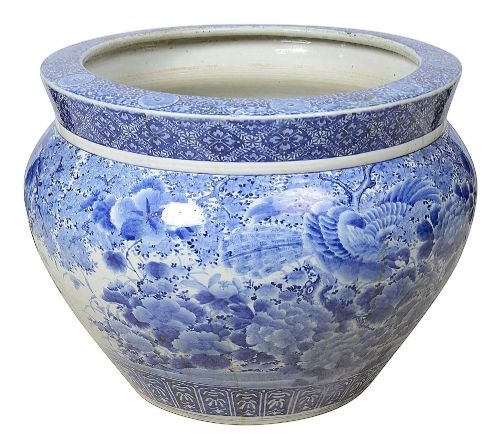
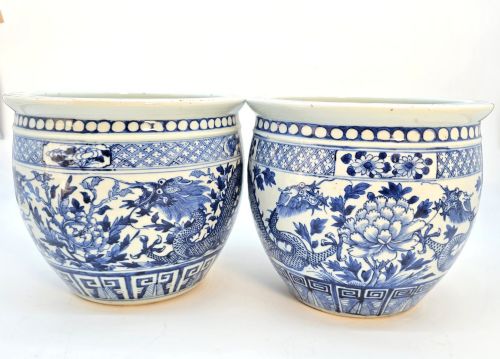


Oriental Porcelain Fish Bowl
An oriental porcelain fish bowl brings weight and intricate hand-painted detail to a room, holding large plants or standing alone as a floor-standing centrepiece.
Oriental Porcelain Fish Bowl
When searching for an oriental porcelain fish bowl, you are looking at large ceramic vessels built to hold water, fish, or sizable botanical displays.
The pieces you meet on this page most commonly take the form of heavy jardinieres, planters, and large bowls originating from the nineteenth century.
These items span diverse origins and aesthetics, including Chinese blue and white wares, Canton Famille Rose, Japanese Imari, and Satsuma bowls.
How they were made
These heavy vessels are shaped from porcelain and ceramic, then finished with cobalt underglaze, enamel colours, and sometimes gold leaf highlights beneath a clear glaze.
Potters achieved the deep blue motifs using cobalt pigment before firing at high temperatures, while enamel and gold detailing were often added in subsequent low-temperature firings.
Listings feature porcelain and ceramic vessels from the nineteenth century, including Japanese Meiji period and Chinese Qing dynasty pieces.
What varies in quality
Quality rests upon the crispness of the hand-painted brushwork and the depth of the glaze, where precise cobalt underglaze lines and vibrant enamel separation distinguish finer pieces.
The thickness and weight of the porcelain body, along with the complexity of floral, figural, or twin fish motifs, mark the difference between standard production and superior craftsmanship.
The Oriental Porcelain Fish Bowl Glossary
- Jardiniere
- A large ornamental pot or bowl designed to hold growing plants or flowers. They often sit directly on the floor or upon a low wooden stand.
- Canton Famille Rose
- A distinct Chinese ceramic style characterised by opaque pink enamel painting, often featuring panels of figures, birds, and flowers.
- Celadon Glaze
- A transparent greenish ceramic glaze that mimics jade, often featuring subtle crackles within the glassy surface layer.
- Cobalt Underglaze
- A blue pigment applied to raw clay before glazing and firing, creating a permanent design beneath the glossy protective surface.
Oriental Porcelain Fish Bowl: Frequently Asked Questions
How do I clean an antique porcelain bowl?
Dust the surface regularly with a soft, dry cloth to prevent grime accumulation. Avoid abrasive scourers or harsh chemical cleaners that can damage delicate enamel and gold leaf.
If washing is necessary, use lukewarm water and mild soap, then dry thoroughly with a soft towel.
Can these bowls stay outdoors?
Most nineteenth-century porcelain vessels are sensitive to extreme frost and freezing temperatures. Placing them outside during winter risks cracking the ceramic body and glaze.
Keep them indoors or in a sheltered conservatory during colder months to preserve the integrity of the porcelain.
How can I tell Chinese from Japanese pieces?
Chinese pieces from this era frequently feature deep blue and white cobalt painting or Canton Famille Rose enamel palettes. Japanese pieces often display distinct Satsuma crackle-glaze or bold Imari patterns.
Examining the specific motifs and colour combinations helps clarify the regional origin of each vessel.