





Large Japanese Floor Vase
A large Japanese floor vase brings commanding scale, intricate hand-painted palettes and monumental presence to a grand interior.
Large Japanese Floor Vase
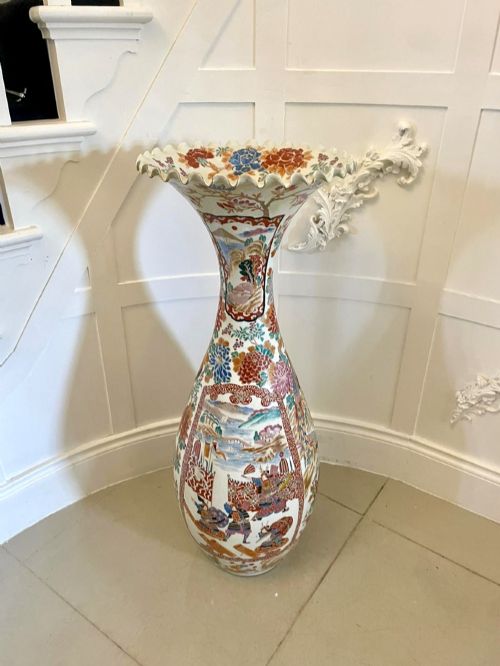
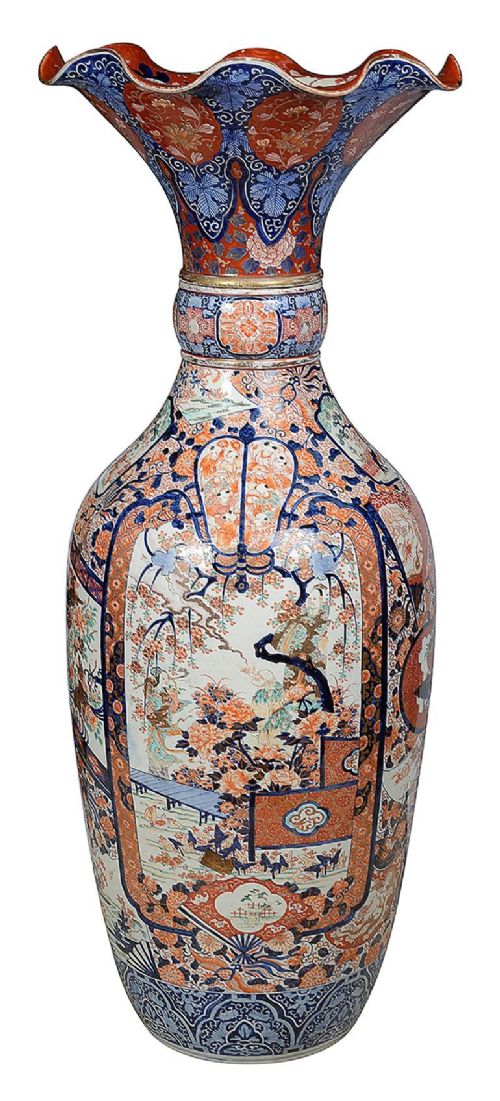
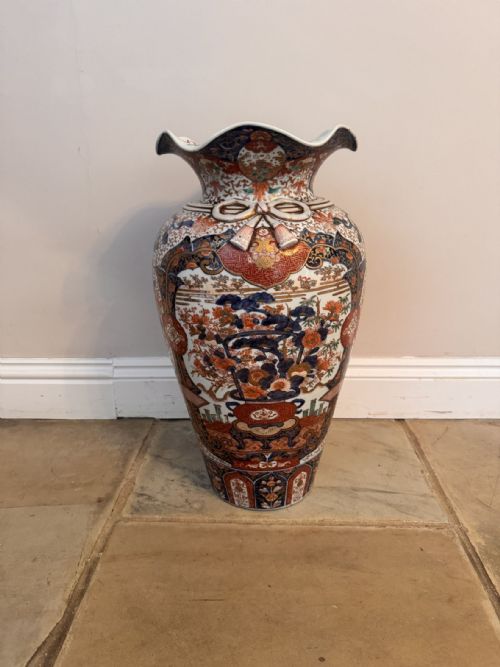
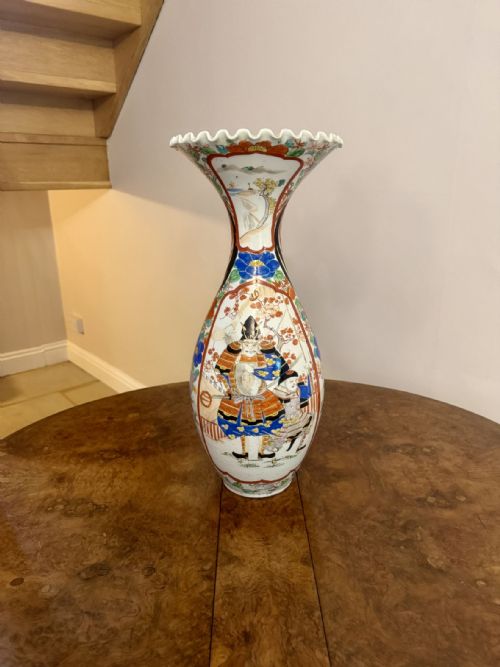
A large Japanese floor vase stands as a striking statement piece designed for substantial rooms, heavily represented by Imari and Satsuma wares from the nineteenth century and the Meiji period.
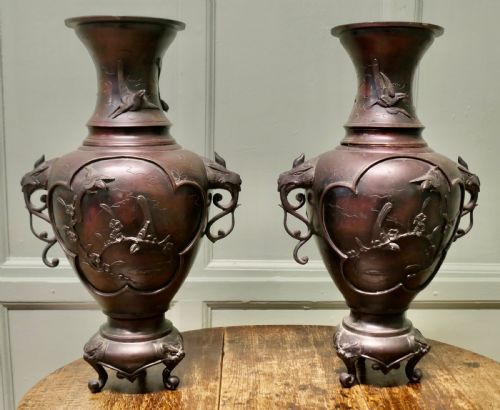
These imposing vessels encompass floor-standing Imari floor standing vases, bronze palace vases, and earthenware vessels featuring detailed mythological motifs like the Ho-o bird and koi.
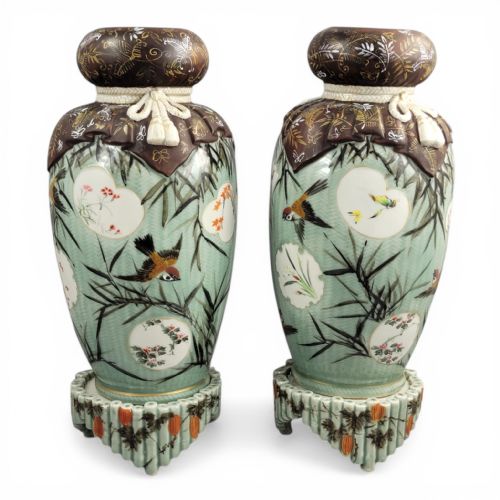
Makers and potteries from Seto and Kutani also produced monumental porcelain and earthenware forms, often accompanied by original matching porcelain stands.
Materials and Construction
Potters and metalworkers utilised ceramic, porcelain, earthenware, and bronze, frequently elevating the body with rich applications of gold leaf, enamel, and gilt.
Cloisonne enamel vases incorporated delicate wirework cells filled with vibrant vitreous pastes, while ceramic examples combined cobalt blue and iron red pigments across traditional palettes.
Large Japanese Floor Vase Retail Price Guide 2026
Typical asking prices for large japanese floor vase among the pieces listed under this phrase on Sellingantiques today, from the lower quarter to the upper quarter. They describe what is for sale here now, not the wider market.
Watch closely for shimmering koi and mythical Ho-o birds swimming and soaring across the enamelled surfaces of these palace vessels.
Assessing Quality
The highest tier is distinguished by exceptional crispness in hand-painted detail, density of gilding, and the presence of signed marks by renowned artists or potteries.
Proportion, balance, and the inclusion of original matching porcelain stands or heavy bronze casting separate ordinary production wares from monumental collector pieces.
Kato Sanhei·Kinkozan
The Large Japanese Floor Vase Glossary
- Imari
- A traditional Japanese ceramic style defined by a distinctive palette of underglaze blue, iron red, and gilt highlights. This decorative scheme was widely exported and highly prized during the nineteenth century.
- Satsuma
- A type of Japanese earthenware featuring an ivory-coloured, crackle-glaze body decorated with polychrome enamels and raised gold. These pieces often depict elaborate figural scenes and nature motifs.
- Meiji Period
- The era in Japanese history spanning from 1868 to 1912, characterised by opening trade with the West and a surge in the production of ornate decorative arts for export.
- Cloisonne
- A technique where metal wires are soldered onto a metal base to create compartments that are filled with enamel paste and fired. This meticulous process yields vivid, multicoloured pictorial surfaces.
- Kutani
- A style of Japanese porcelain known for bold, expressive designs and strong colour palettes, particularly deep greens and reds. Pieces from this tradition often feature flared necks and intricate panel work.
Large Japanese Floor Vase: Frequently Asked Questions
Where should I place a floor vase?
These monumental vessels suit generous entrance halls, wide corridors, or spacious reception rooms where their height and intricate decoration can be appreciated from a distance.
Because of their substantial weight and physical presence, they sit securely directly on the floor or upon their original matching porcelain stands away from narrow pathways.
How do I identify Meiji period pieces?
Meiji period vessels typically date between the late nineteenth and early twentieth centuries, aligning with a prolific era of international export.
Look for refined bronze casting, dense Satsuma crackle-glaze with gilt detailing, or intricate cloisonne enamel work depicting traditional subjects like phoenixes and koi.
What is the difference between Imari and Satsuma?
Imari pieces are made from hard-fired porcelain and ceramic, traditionally decorated in a vibrant palette of cobalt blue, iron red, and gold.
Satsuma wares consist of an earthenware body with a characteristic creamy, crackle-glazed finish that serves as a canvas for elaborate painted figural scenes.
Did these vases originally include stands?
Certain monumental palace vases and porcelain compositions were created alongside dedicated matching original porcelain stands to elevate their overall height.
These integrated stands provide structural balance and complete the aesthetic harmony of the heavier floor-standing forms.