






Large Japanese Ceramic Dish
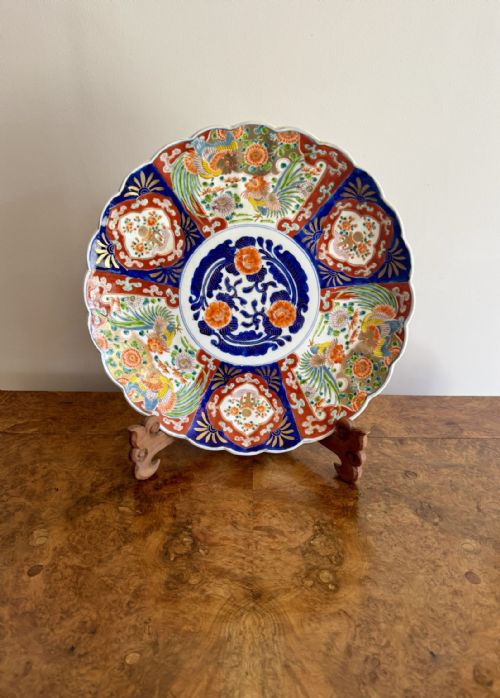
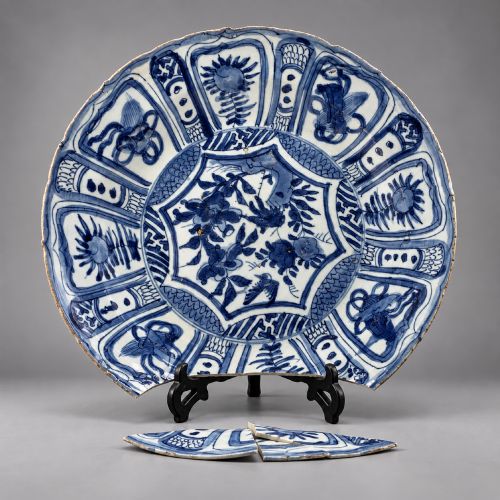
A large Japanese ceramic dish brings dense cobalt, iron red, and gilt decoration to a table or wall from the Meiji and Edo periods.
Large Japanese Ceramic Dish
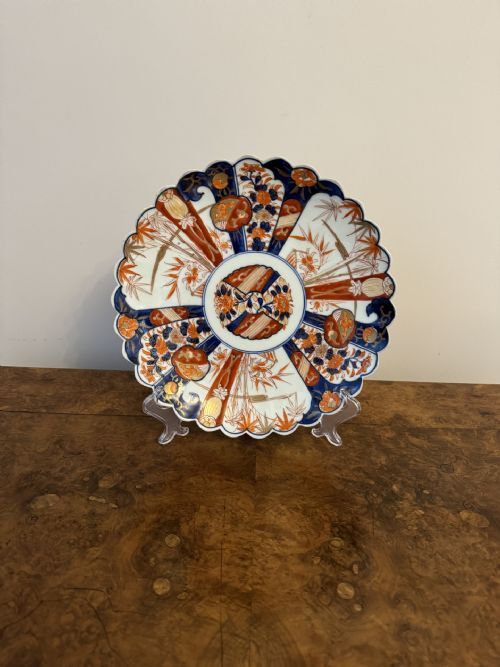
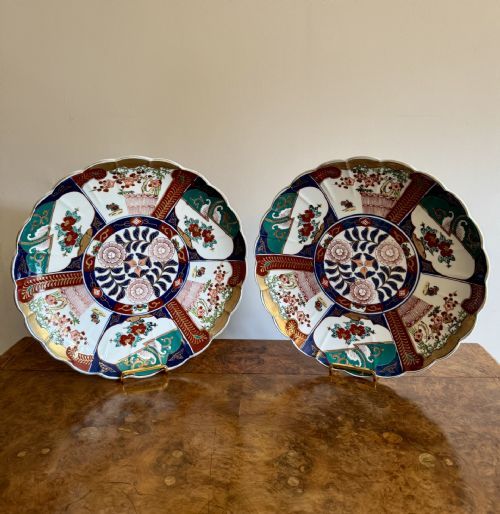
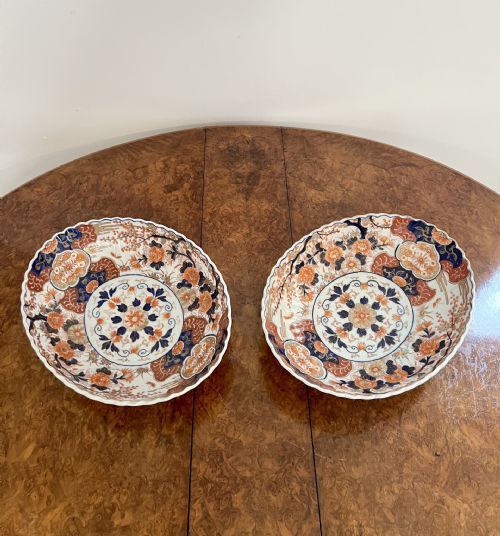
A large japanese ceramic dish encompasses wide chargers, heavy platters, and broad decorative bowls produced for export and domestic use. The majority of specimens encountered on this page belong to the Imari tradition, displaying rich blue and red pigments across porcelain surfaces.
Forms extend from traditional circular chargers with scalloped edges to square plates and deep fruit display bowls. Dating spans from the seventeenth-century Edo period through Victorian and Edwardian import eras into the early twentieth century.
Buyers select these objects for wall display or centrepiece placement, relying on substantial diameters to anchor a room. The visual weight comes from dense geometric borders framing central motifs of flora, fauna, and figures.
How they were made
Potters shaped high-fired porcelain bodies on the wheel or pressed clay into moulds to create stable platters and bowls. Cobalt pigment went beneath the glaze for blue and white designs, while iron red, enamel, and gold leaf were applied over the glaze in secondary firings.
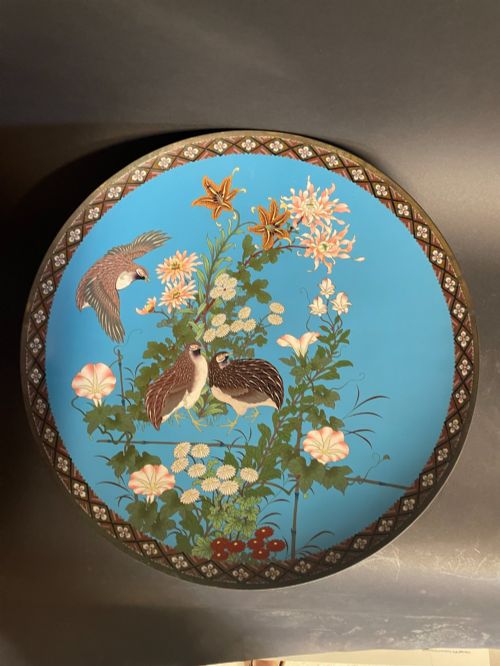
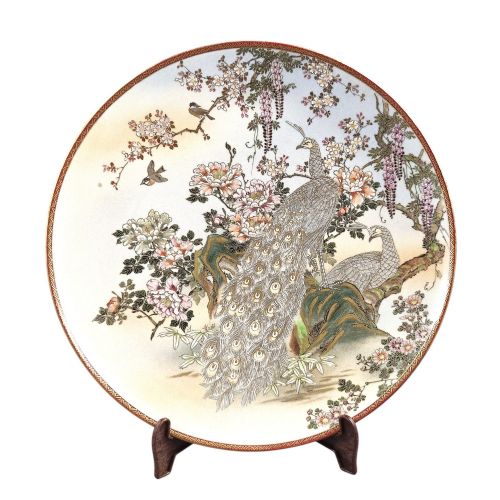
Alternative techniques include cloisonne on ceramic bases, known as totai shippo, where wire cells hold coloured enamels to depict bark, cranes, and foliage. Satsuma pieces employ moriage relief work to raise peonies, wisteria, and peacocks above the matte earthenware surface.
Several chargers proudly depict the Seven Lucky Gods sharing space with industrious koi carp.
What varies in quality
The precision of hand-painted brushwork dictates visual success, separating rapid production ware from pieces executed with careful detail. Crisp cobalt lines and cleanly separated enamel compartments indicate superior control in the workshop.
The richness and retention of applied gold leaf and overglaze enamel distinguish the upper tier of chargers. Heavier porcelain bodies with well-balanced scalloped rims and stable glaze surfaces hold greater appeal for collectors.
The Large Japanese Ceramic Dish Glossary
- Imari
- A style of Japanese porcelain featuring a palette of underglaze blue, iron red, and gilt. Named after the port from which these wares were shipped to Europe.
- Charger
- A large decorative plate utilised for display on walls or tables rather than for serving food. These pieces measure significantly broader than standard dinner plates.
- Totai shippo
- A technique applying cloisonne enamel directly onto a ceramic or porcelain body rather than a metal base. Fine wire creates cells that are filled with coloured enamel.
- Moriage
- A type of raised slip decoration used on ceramic surfaces to create a three-dimensional effect. This technique builds up thick layers of clay or enamel before firing.
- Edo period
- A historical epoch in Japan lasting from sixteen hundred and three to eighteen hundred and sixty-eight. Pieces from this era often show early blue and white or primitive Imari characteristics.
Large Japanese Ceramic Dish: Frequently Asked Questions
How do I hang a heavy charger safely?
Heavy porcelain chargers require a robust, properly sized spring hanger that distributes weight evenly across the rim. Ensure the wall fixing is secured into a stud or uses a rated plaster anchor.
Avoid wire attachments glued to the base, as old ceramic surfaces can fail under sustained tension. Check the grip of the hardware periodically to maintain secure wall display.
Are these dishes food safe?
Antique Japanese ceramic dishes, particularly nineteenth-century Imari and Satsuma wares, feature overglaze enamels containing lead and other metallic compounds. These surfaces are designed for visual display rather than culinary use.
Acidic foods can leach surface toxins from older enamels and damage the delicate gold leaf work. Use these pieces exclusively for dry presentation or decorative placement.
How do I tell Edo period from Meiji period pieces?
Edo period chargers often exhibit heavier bodies, slightly uneven glaze pooling, and looser, more spontaneous cobalt brushwork. The blue pigment tends to show deep variations in tone.
Meiji period production benefited from industrial standardisation, resulting in crisper outlines, denser symmetrical borders, and more lavish application of gold gilt. Markings on the reverse also become more prevalent in the later nineteenth century.