
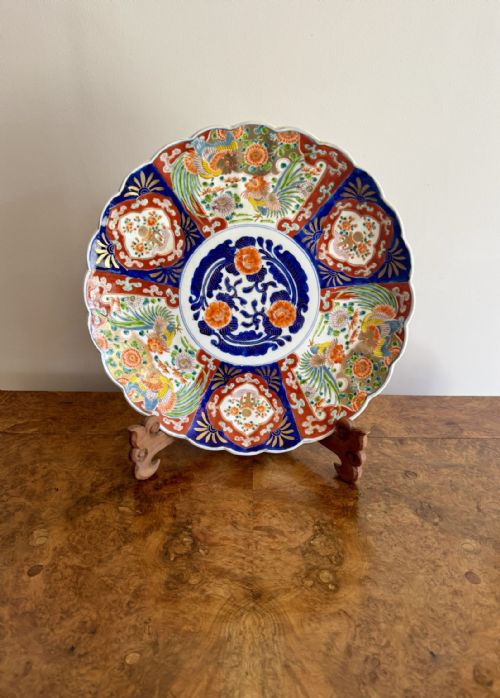



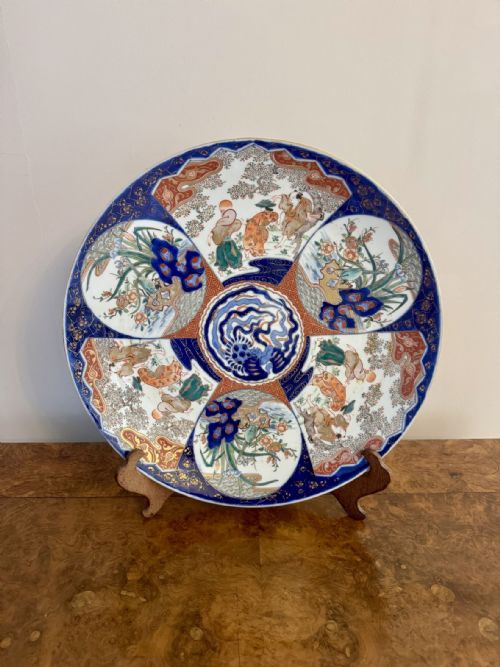

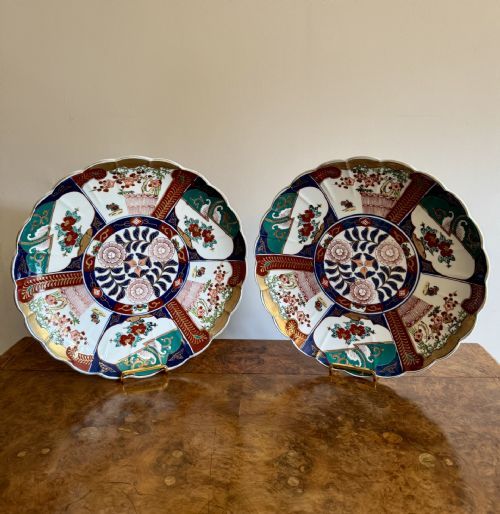


Large Imari Platter
A large imari platter brings vibrant traditional palette work and substantial scale to a room, serving as both a table centrepiece and a wall display.
Large Imari Platter
When searching for a large imari platter, buyers encounter decorative chargers, serving platters, and large plates produced across the nineteenth and twentieth centuries. Japanese Arita wares dominate these listings alongside Victorian English interpretations in ironstone and ceramic.
The forms span deep round chargers, scalloped edge plates, and square plates depicting subjects like the Seven Lucky Gods and koi carp. Examples range from Edo period origins through to Meiji period production and the broader Victorian era.
How they were made
These pieces utilise porcelain, ceramic, earthenware, and ironstone shaped into heavy serving vessels and display chargers. Artisans applied cobalt blue underglaze alongside iron red enamel, often highlighting details with gold leaf and gilt.
The glazing process seals the ceramic body before or after hand-painted application, yielding durable surfaces designed for both utilitarian meat service and decorative wall hanging.
Some platters feature painted carp that look ready to swim right off the porcelain.
What varies in quality
The distinction between standard production and top tier pieces rests upon the precision of the hand-painted brushwork and the complexity of the scrolling foliate borders. Superior examples exhibit crisp detail in motifs such as koi carp and figural groups.
Material density and the richness of the enamel and gold leaf application further separate ordinary items from exceptional chargers. Condition and the preservation of original glaze finishes heavily influence overall merit.
The Large Imari Platter Glossary
- Imari
- A style of Japanese porcelain originating from Arita, characterised by a distinct palette of underglaze blue, iron red, and gilt. This aesthetic was later copied by European potteries.
- Charger
- A large decorative plate or platter traditionally used for ceremonial dining or displayed upright on sideboards and walls. They provide a broad canvas for intricate patterns.
- Ironstone
- A heavy, durable type of earthenware developed in nineteenth-century England to imitate porcelain. It resists chipping and bears bold transfer-printed or hand-painted colour.
- Meiji Period
- The era of Japanese history spanning from eighteen sixty-eight to nineteen twelve, known for prolific porcelain production intended for both domestic use and Western export.
- Underglaze
- Pigment applied directly to the raw ceramic body before the application of a glassy coating and subsequent firing. This technique protects the painted design from wear over centuries.
Large Imari Platter: Frequently Asked Questions
How were large imari platters used?
These large vessels served practical functions for meat and fruit service on dining tables during the Victorian period and earlier. Wealthy households also mounted them on walls or displayed them on sideboard stands purely for decoration.
Over time, the protective glaze and durable ceramic bodies allowed them to transition from daily utilitarian dining objects into cherished decorative collection pieces.
How do I tell Japanese imari from English imari?
Japanese examples typically utilise fine porcelain bodies with hand-painted iron red and cobalt blue pigments applied over or under the glaze. English interpretations often employ heavy ironstone or earthenware substrates stamped with factory marks like Mintons.
The weight, paste texture, and specific floral or figural motifs usually reveal whether a charger originated in Arita or an English pottery.
Are these platters safe for food?
Most antique pieces function primarily as display items or decorative wall chargers rather than active tableware. The age of the ceramic and the presence of historic enamel require careful handling.
Using them for dry fruit display is common, but washing them in dishwashers should be avoided to protect the delicate gilt and enamel surfaces.
How do I date a large imari piece?
Dating relies on examining the ceramic body, the style of the hand-painted motifs, and any factory stamps or reign periods. Edo and Meiji period Japanese items display specific stylistic traits in their scrolling borders and palette density.
English ironstone versions often feature impressed maker marks or registration diamonds that pinpoint the exact year of manufacture.