
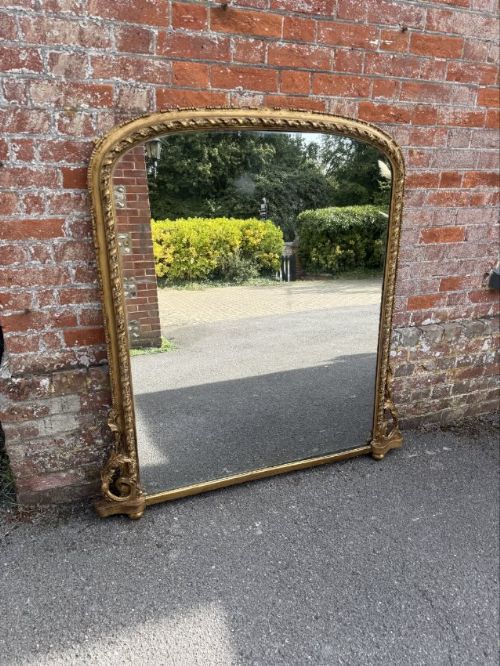
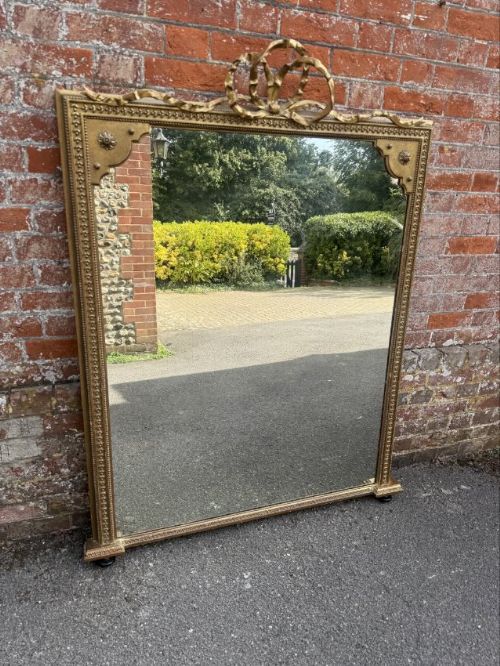
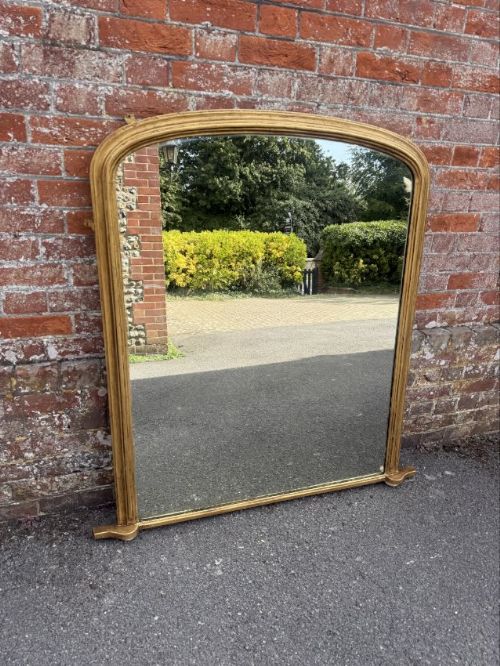
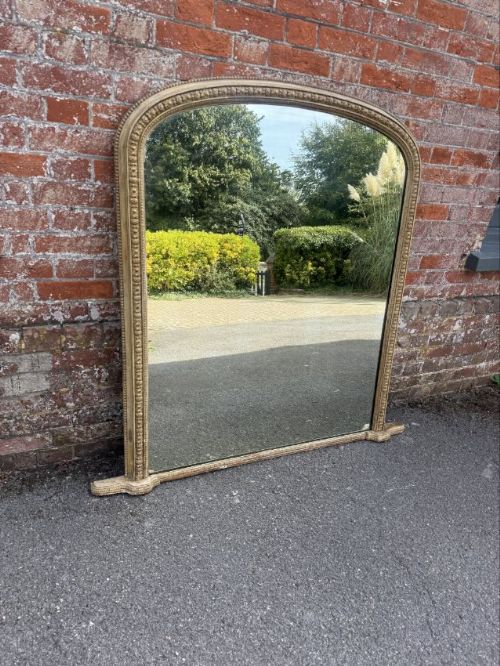

Large Gilt Fireplace Mirror
A large gilt fireplace mirror brings scale and reflection to a room, designed traditionally to sit above a mantelpiece.
Large Gilt Fireplace Mirror
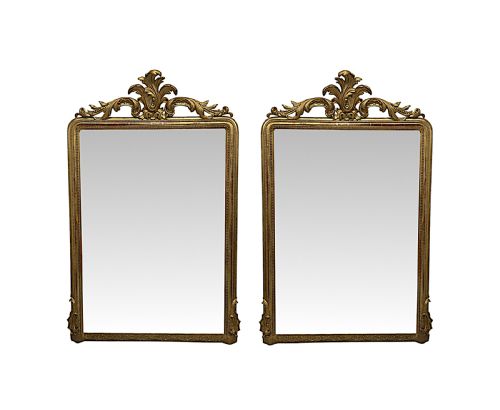
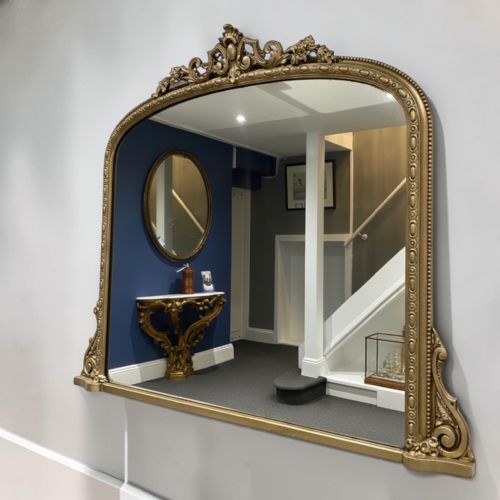
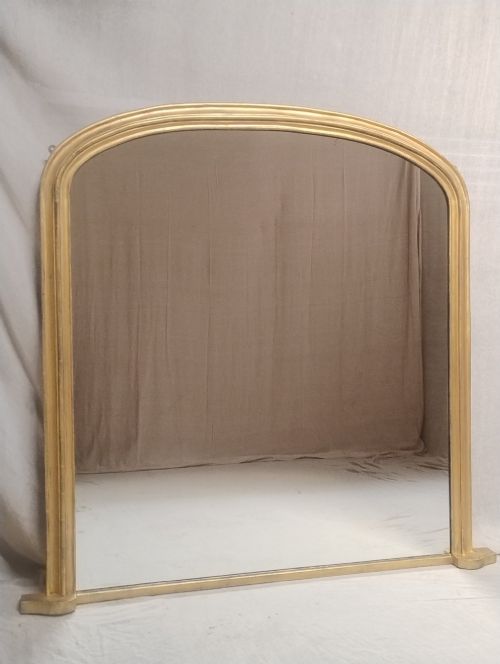
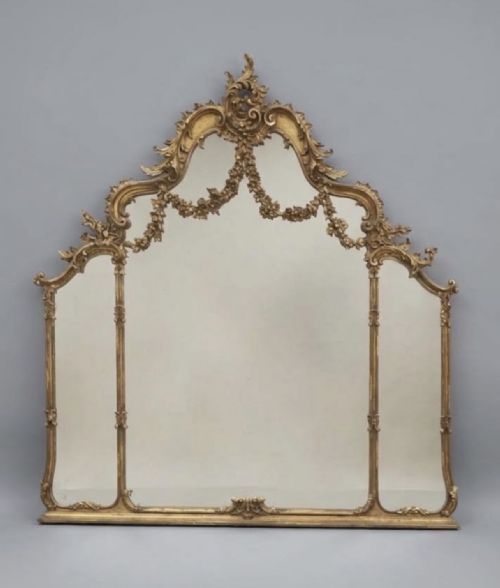
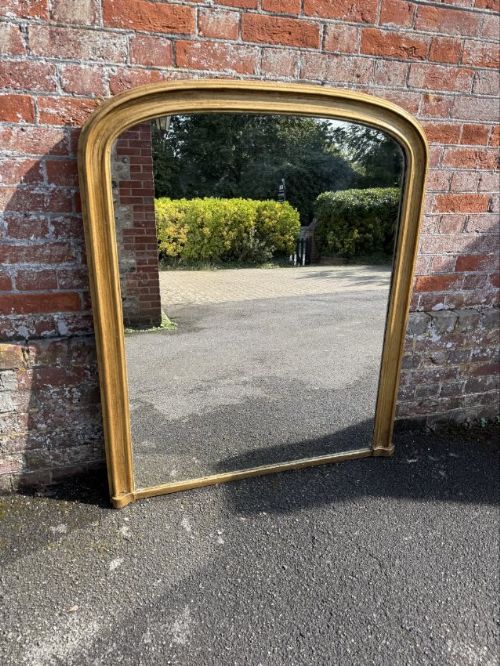
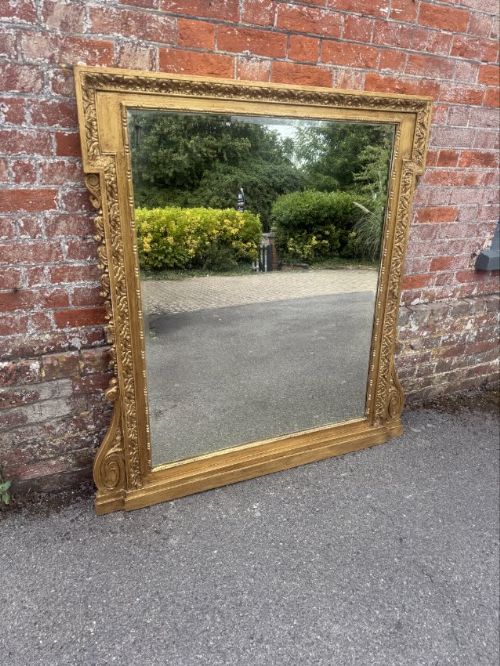
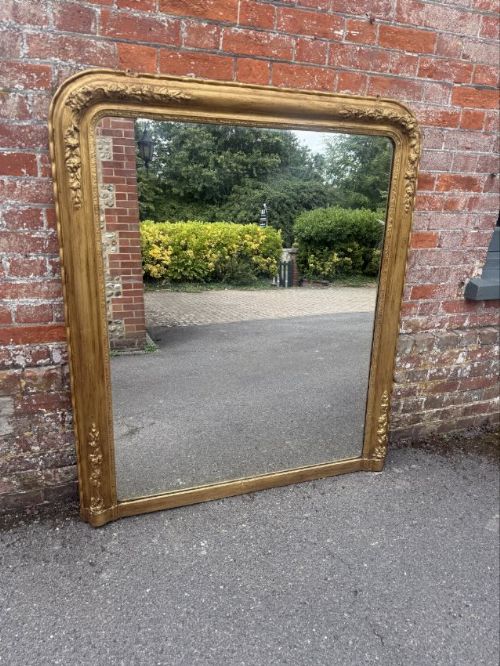
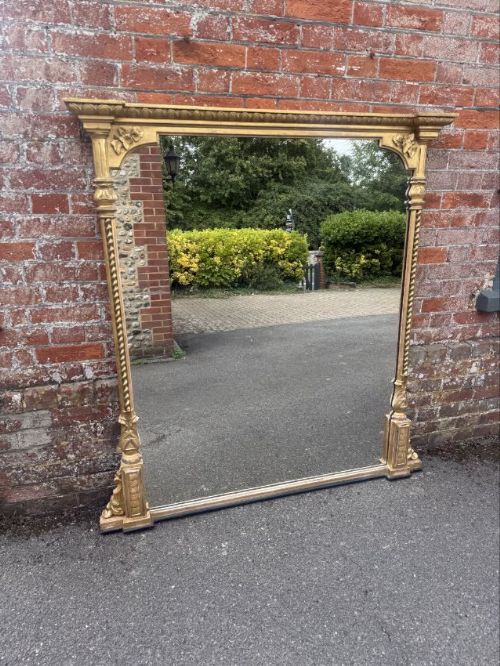
A large gilt fireplace mirror generally takes the form of an overmantel mirror designed to fill the generous wall space directly above a hearth. The versions most commonly encountered on this page date from the nineteenth century, spanning periods from the Regency era through the Victorian decades up to nineteen hundred.
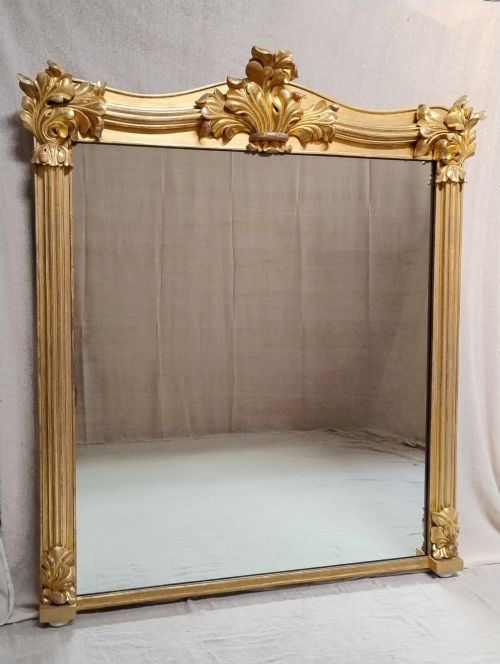
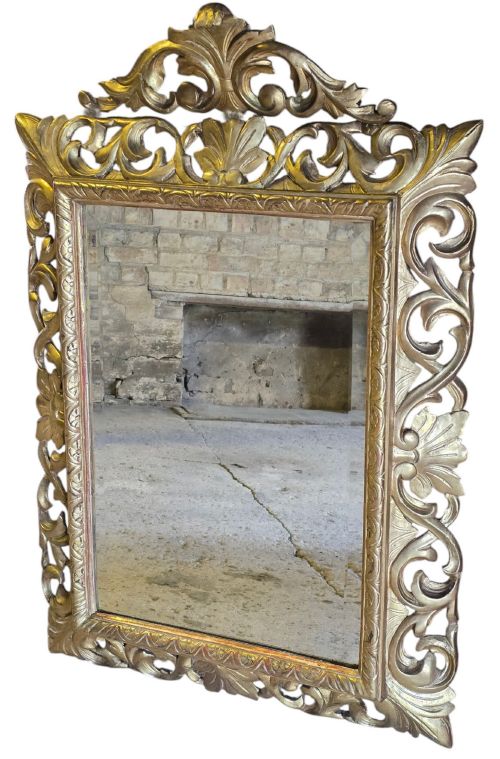
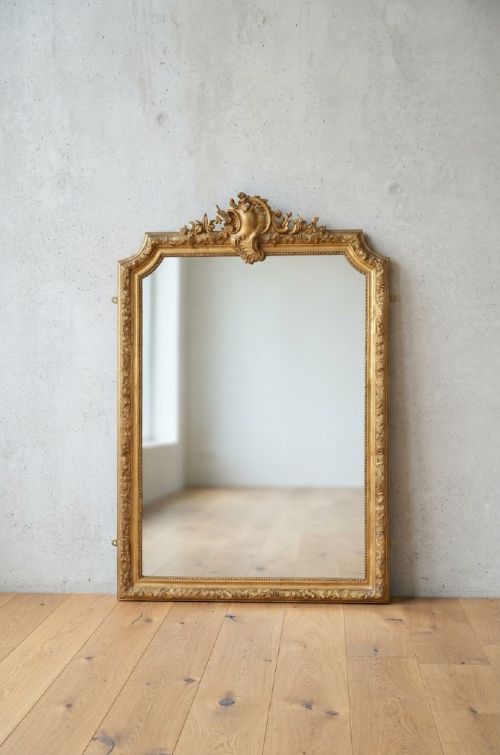
These pieces function primarily as overmantel or wall mirrors, often shaped with arched tops, rectangular frames or ornate crestings. English and French workshops produced the majority of these examples, incorporating distinct regional decorative vocabularies into domestic interiors.
Materials and construction
Makers constructed the structural frames of these mirrors using timber such as wood, applying layers of gesso and composition mouldings to build up relief ornamentation. Artisans then finished the surfaces with gold leaf or gilding to achieve a reflective metallic sheen.
The glazing consists of mirror glass fitted into the timber rebates, occasionally divided into multiple plates in larger triptych or triple plate configurations. Carved details, rope twists, column frames and applied crests required specialist woodworking and gilding techniques.
Several mirrors feature nautical rope twist frames, while others sport cheerful Ho-Ho birds perched proudly upon their crestings.
Factors of quality
The crispness of the carved wood and gesso ornamentation dictates much of the visual distinction across these frames, where deeply modelled relief work separates superior examples from simpler mouldings. Hand-applied gilding and well-preserved gold leaf surfaces maintain a warmer, more nuanced appearance than flat modern metallic paints.
Structural integrity of the heavy wooden carcass and the originality of the mirror glass plates contribute significantly to the standing of an individual piece. Frames retaining their original cresting, backboards and mercury or early silvered glass reflect greater historical preservation.
The Large Gilt Fireplace Mirror Glossary
- Overmantel mirror
- A large mirror specifically proportioned to hang on the wall directly above a fireplace mantel. These pieces were historically designed to complement the width of the hearth below.
- Gesso
- A plaster-like material applied to wood frames as a base for carving and gilding. Artisans could model it smoothly or impress it with decorative motifs.
- Giltwood
- Timber that has been coated with gold leaf or metal leaf. This technique provides the characteristic bright metallic finish seen on period frames.
- Composition
- A moulded mixture of whiting, resin, glue and linseed oil pressed into ornamental shapes. Makers used it to achieve intricate decorative relief on nineteenth-century frames without carving every detail by hand.
Large Gilt Fireplace Mirror: Frequently Asked Questions
Where do you hang a large gilt fireplace mirror?
These mirrors are traditionally positioned on the chimney breast directly above the fireplace mantel. Their horizontal or vertical proportions balance the architectural weight of the hearth.
Beyond the fireplace, they sit effectively above large sideboards or low console tables in reception rooms. The scale requires sturdy wall fixings secured directly into masonry or secure studs.
How do I date a nineteenth-century overmantel mirror?
Dating relies on stylistic clues, frame construction methods, and the type of glass used in the plate. Regency and early Victorian pieces often display classical columns or simpler architectural moulding.
Later Victorian and aesthetic period examples introduce ebonised details, rope twists, or elaborate crestings. Examining the backboards and fixings provides additional confirmation of the manufacturing period.
Are these mirrors heavy to hang?
Solid wood frames combined with thick glass and gesso ornament create substantial weight. Proper installation demands professional brackets or mirror plates screwed securely into wall studs.
It is essential to verify the load-bearing capacity of the wall before mounting. Many owners rest the weight of the frame on the mantel shelf while anchoring the top securely to the wall.
What styles are available in these mirrors?
The selection encompasses Regency, Victorian, Louis Philippe, Rococo Revival, and Chinese Chippendale influences. French chateau and Florentine designs also appear among the nineteenth-century listings.
Details range from restrained architectural columns to exuberant carved cartouches and floral motifs. Each style reflects the prevailing domestic interior fashions of its decade of production.