


Large Floral Tapestry
A large floral tapestry brings room-scale botanical colour and centuries of textile history straight to your wall.
Large Floral Tapestry
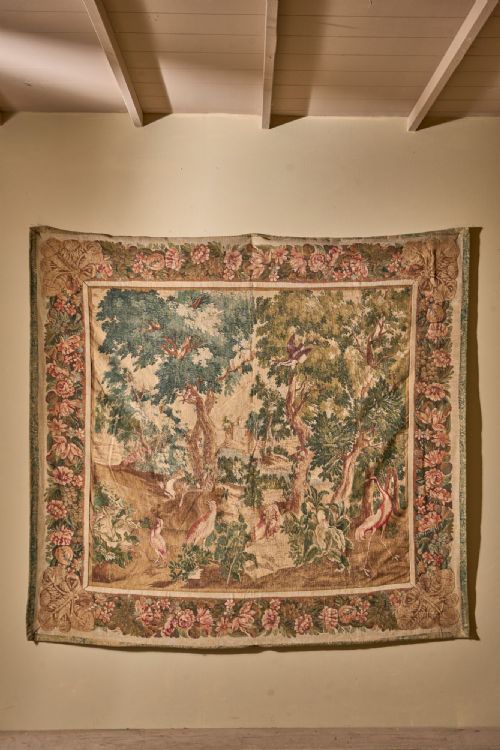
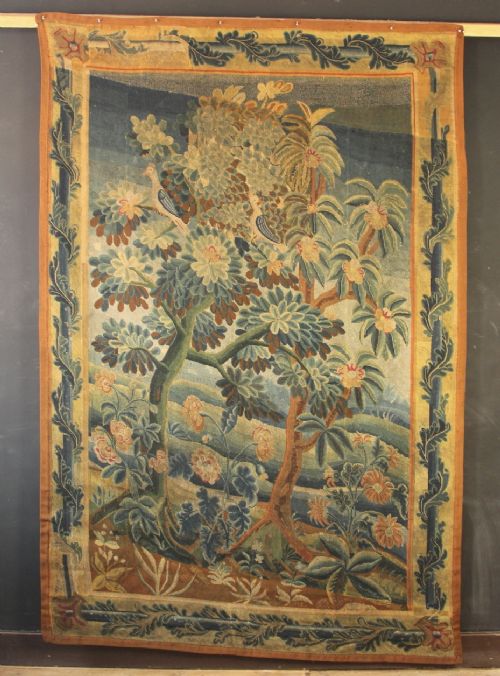
A large floral tapestry is a woven or embroidered textile piece dominated by botanical motifs, floral arrangements, or verdure landscapes. These works function primarily as wall coverings, hangings, carpets, and upholstery for substantial seating.
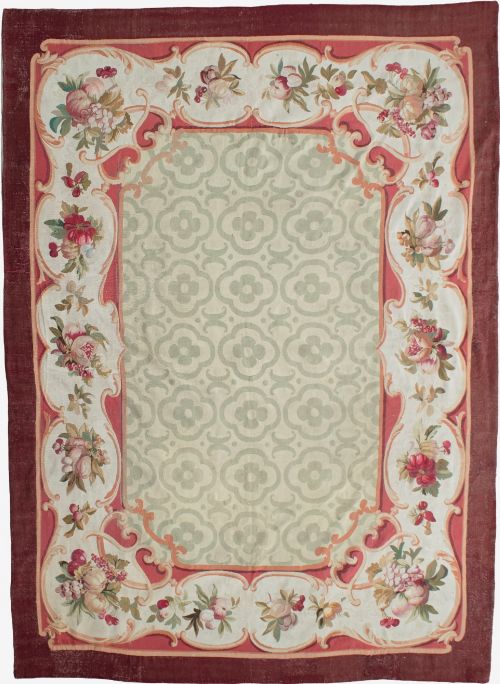
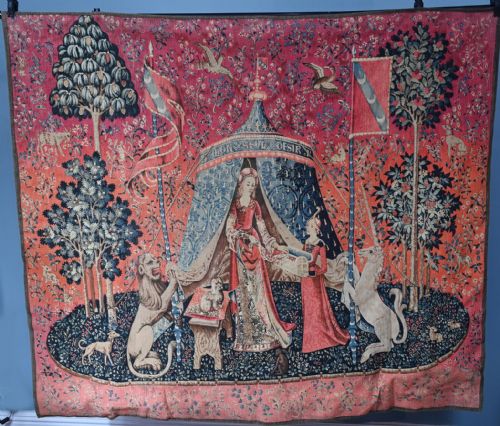
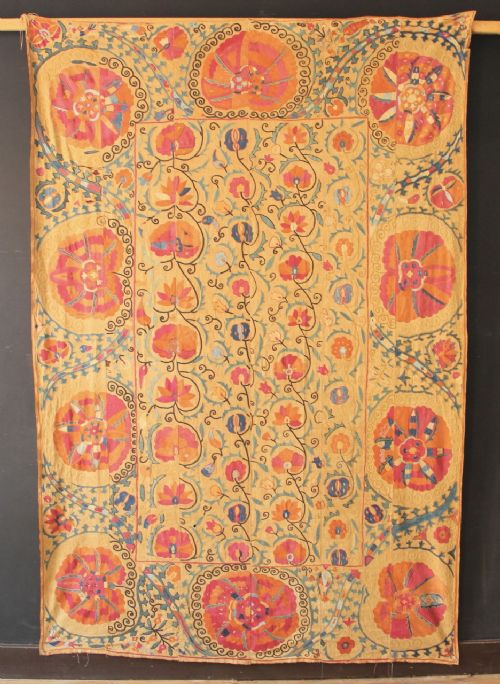
Buyers meet examples spanning several centuries, from early European needlework and verdure designs to later French Aubusson carpets and wall panels. The selection also includes related large-scale textiles such as embroidered suzanis and decorative wall hangings.
The aesthetic ranges from formal French Regence and Baroque styles to rustic Scottish Baronial and English Country House interiors. Such pieces serve to soften large rooms while adding texture and historical depth to an interior scheme.
Materials and construction
These textiles rely on natural fibres, predominantly wool, cotton, and silk, combined to achieve varied texture and depth of colour. Weavers and embroiderers worked these threads into dense surfaces capable of withstanding centuries of use.
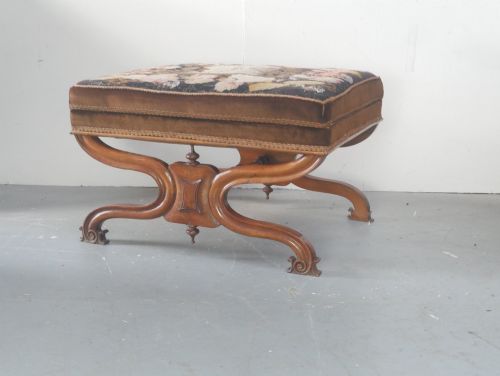
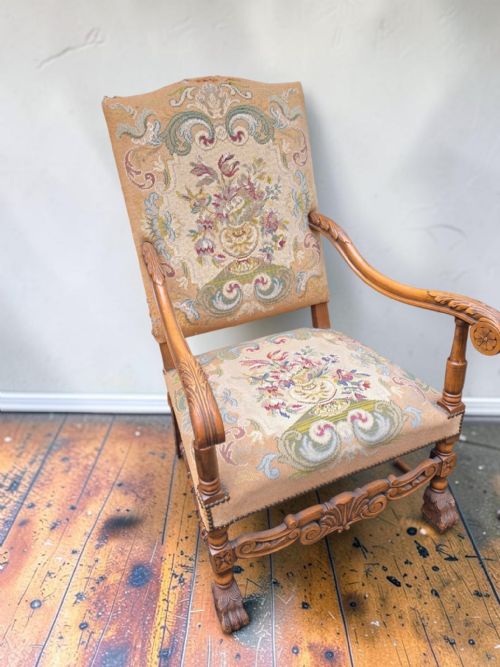
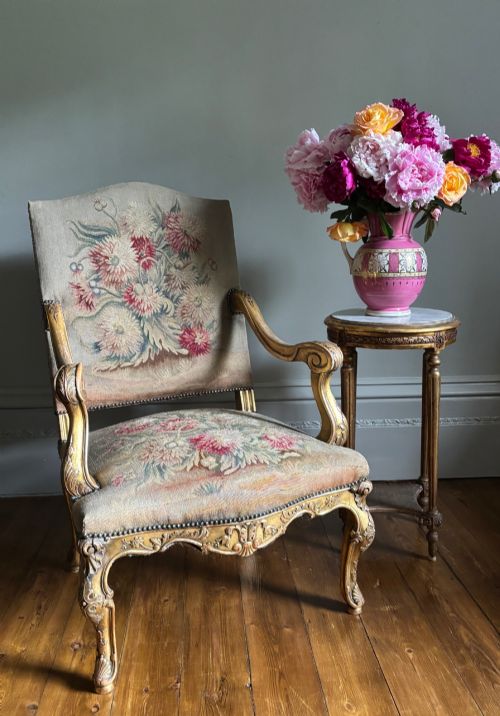
Many structural frames and supporting elements utilise walnut, oak, and giltwood, particularly when the tapestry work is integrated into armchairs, settees, stools, and fire screens. Textile backings and velvet borders often complete the construction of wall-mounted items.
Listings feature pieces spanning from the sixteenth century through to the 1930s, incorporating wool, silk, cotton, walnut, and giltwood.
Distinguishing quality in textile art
Quality rests on the density of the weave or needlework and the complexity of the botanical palette. Tighter fibre tension and finer hand-working allow for subtle shading and intricate floral detail.
The integrity of the underlying materials also dictates standard, with robust wooden frames and stable textile grounds supporting the heavy woven surface. Original condition and the coherence of the design scheme separate standard examples from exceptional ones.
The Large Floral Tapestry Glossary
- Verdure tapestry
- A wall hanging dominated by lush foliage, trees, and botanical elements, often populated by birds or small animals. These scenes create a forest canopy effect across the textile.
- Aubusson
- A style of carpet and tapestry originating from the French town of the same name, known for pastel florals and classical medallion designs. They were produced in workshops patronised by royalty.
- Suzani
- A large, decorative tribal embroidered textile from Central Asia, typically featuring bold floral sunburst motifs and vine patterns. They were traditionally made by brides as part of their dowry.
- Needlework
- Hand-stitched embroidery executed on a canvas or plain-weave ground using wool or silk threads. This technique differs from loom-weaving by building the image through individual stitches.
- Pole screen
- A freestanding fireplace screen featuring an adjustable vertical panel, often displaying a needlework or tapestry insert. It protected gentle faces from the radiant heat of an open fire.
Large Floral Tapestry: Frequently Asked Questions
How do I hang a large floral tapestry?
Heavy textiles require even weight distribution across the top edge. A common method involves sewing a heavy-duty fabric sleeve to the reverse and sliding a flat metal or wooden batten through it, which is then secured to the wall.
Alternatively, a professional restorer can attach hidden vertical linen loops along the back top edge to hook onto a discreet wall-mounted rod. Avoid using direct nails or staples through the textile, as this stresses the historical fibres.
Where should I place a tapestry in my home?
These pieces suit large vertical wall expanses in reception rooms, hallways, or above substantial pieces of furniture like settees and sideboards. They naturally absorb sound and add warmth to stone or plastered walls.
Protect the textile from direct sunlight to prevent fading of wool and silk dyes. Positioning them away from damp exterior walls and direct heat sources ensures the longevity of the natural fibres.
What is the difference between a tapestry and a carpet?
Wall tapestries and decorative hangings are woven on a vertical or horizontal loom primarily for vertical display, featuring pictorial or botanical scenes designed to be viewed from afar. Their structure prioritises drape and visual impact.
Carpets and floor textiles are engineered with a denser, heavier pile or flatweave designed to withstand foot traffic. While both may share floral Aubusson or verdure motifs, their structural backing and fibre density reflect their intended placement.