




Pink Wool Tapestry
These pink wool tapestry pieces bring historic weave and texture into modern spaces.
Pink Wool Tapestry
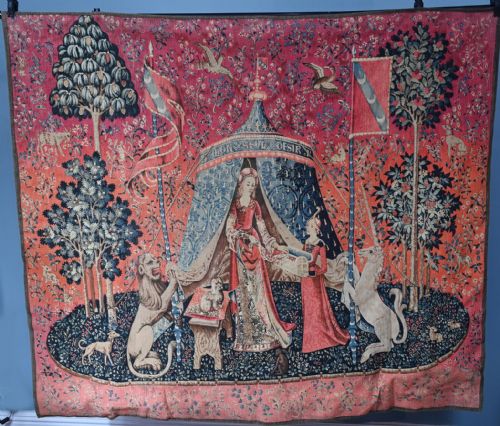
When you search for a pink wool tapestry, you encounter woven textiles spanning from the sixteenth century to the twentieth century. The selection includes wall tapestries, flatweave rugs, cushions, and blankets featuring wool alongside cotton, silk, and timber.
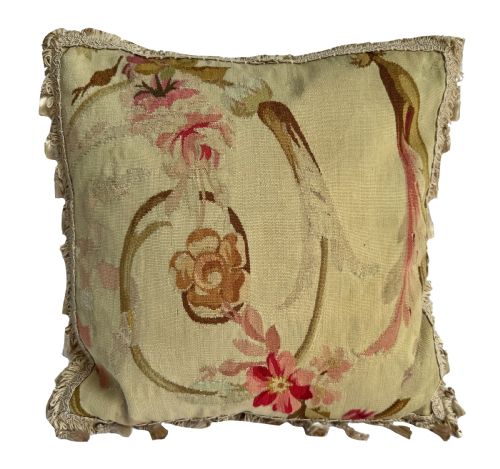
You are most likely to meet nineteenth-century French Aubusson cushions and rugs on this page. These pieces often display floral designs and traditional motifs linked to French Rococo and Victorian styles.
The inventory also reaches back to sixteenth-century French wall coverings and extends across traditional Welsh blankets and Turkmen tribal chuvals. Bessarabian kilims and Victorian ottomans further diversify the forms available.
Materials and construction
The pieces rely primarily on wool, often combined with cotton and silk threads to build intricate patterns and surface depth. Master weavers interlaced these fibres by hand on traditional looms to create durable flatweave carpets, wall hangings, and heavy cushions.
Supporting elements like pasementerie and timber frames appear in items such as upholstered ottoman seats and bordered cushions. The integration of varied textile elements ensures both structural stability and decorative richness across the centuries.
The listings combine nineteenth-century French Aubusson pieces with sixteenth-century wall coverings and twentieth-century Welsh wool blankets.
Assessing quality and craftsmanship
Quality rests on the tightness of the weave and the complexity of the design rendered in wool and silk. Finer examples show precise pictorial detail and careful colour blending, particularly visible in nineteenth-century French Aubusson work.
The integrity of the fibres and the survival of original backing materials dictate the longevity of these textiles. Pieces that retain their structural density and clear iconography demonstrate superior original execution by the weavers.
The Pink Wool Tapestry Glossary
- Aubusson
- A style of tapestry and rug originating from the French town of Aubusson, known for floral and architectural motifs. These pieces date predominantly from the nineteenth century in this collection.
- Kilim
- A flatweave carpet or rug produced in regions such as Bessarabia without a pile. They offer distinct geometric or floral patterns executed in wool.
- Chuval
- A large tribal bag face produced by Turkmen weavers, often utilised as a decorative hanging or rug. These items showcase traditional tribal iconography.
- Pasementerie
- Ornamental trimmings such as edgings, tassels, or fringes applied to cushions and upholstered seats. It provides a finished decorative border to textile furnishings.
- Mille-fleurs
- A background style composed of a multitude of small flowers and plants, frequently seen in medieval and sixteenth-century wall coverings.
Pink Wool Tapestry: Frequently Asked Questions
How do I clean a vintage tapestry cushion?
Vintage cushions containing wool and silk require specialist textile cleaning rather than immersion in water. Gentle surface vacuuming with a mesh guard protects the delicate fibres from damage.
Harsh detergents and scrubbing destroy the historical weave. Consult a conservator for any significant staining or structural repair.
Can I hang a heavy wool rug on the wall?
Wall mounting is possible for many flatweave rugs and smaller tapestries provided the weight distributes evenly. A professional textile specialist can sew a supportive fabric sleeve along the reverse.
Avoid hanging pieces by direct pinning or nailing, as this tears the wool and cotton fibres over time. Distribute the tension across a custom wooden batten or hidden support.
How do I identify an Aubusson piece?
Aubusson items typically feature pastoral scenes, floral bouquets, or neoclassical medallions woven in soft wool and silk palettes. The French aesthetic distinguishes them from bolder tribal flatweaves.
Examining the reverse side reveals the hand-loomed structure characteristic of these historic workshops. Look for dense flatweave construction without a raised pile.
Where should I place a textile in my home?
Keep wool textiles away from direct, strong sunlight to prevent the natural dyes from fading over the decades. Wall coverings and rugs perform best in rooms with stable humidity levels.
Allowing adequate airflow behind wall-mounted pieces prevents moisture accumulation in the historic fibres. Rotate rugs periodically to ensure even wear across the surface.