






Aubusson Wall Hanging
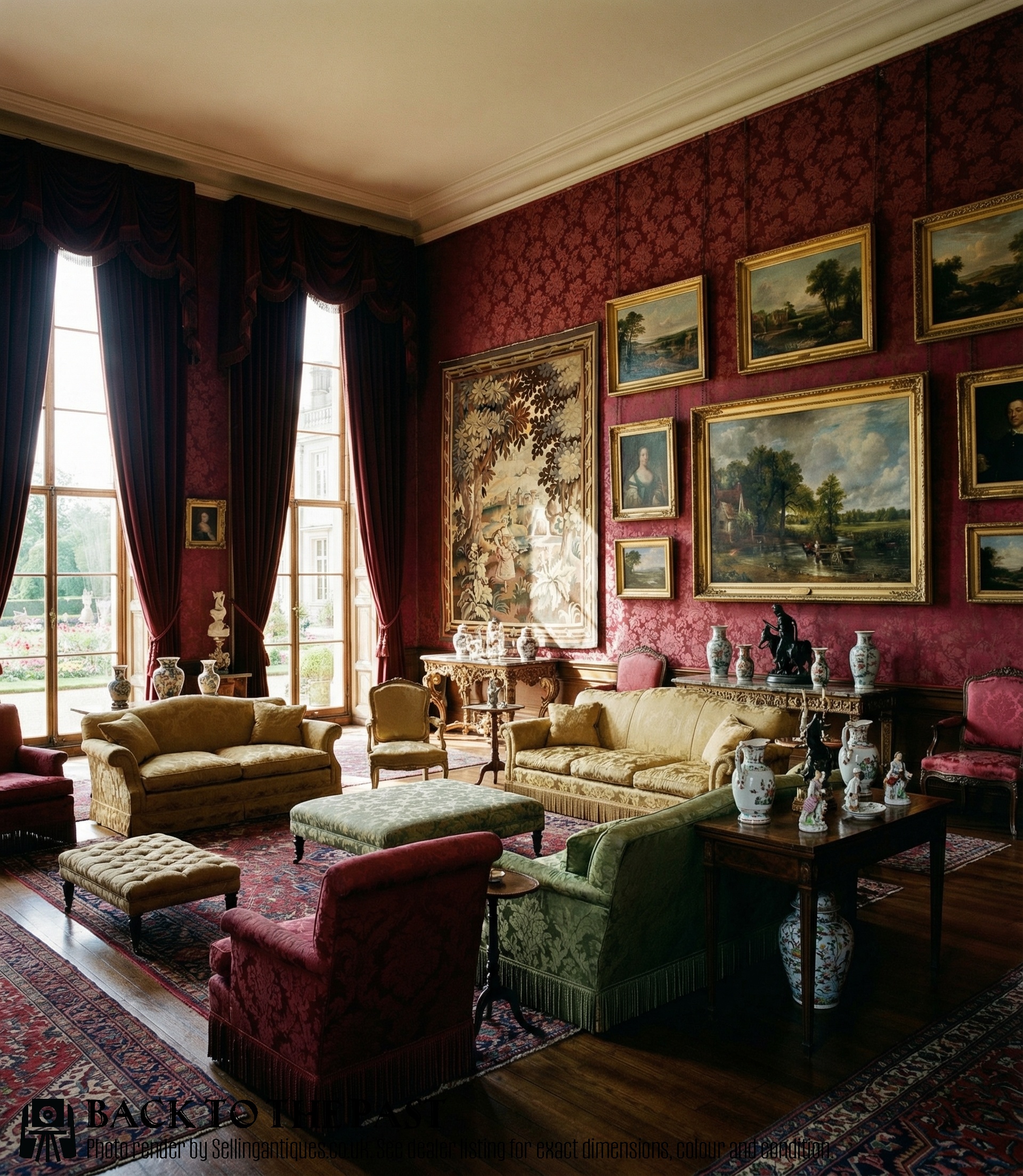
An aubusson wall hanging brings centuries of French textile tradition into a room, offering rich verdure landscapes and historical scenes woven to warm large interiors.
Aubusson Wall Hanging
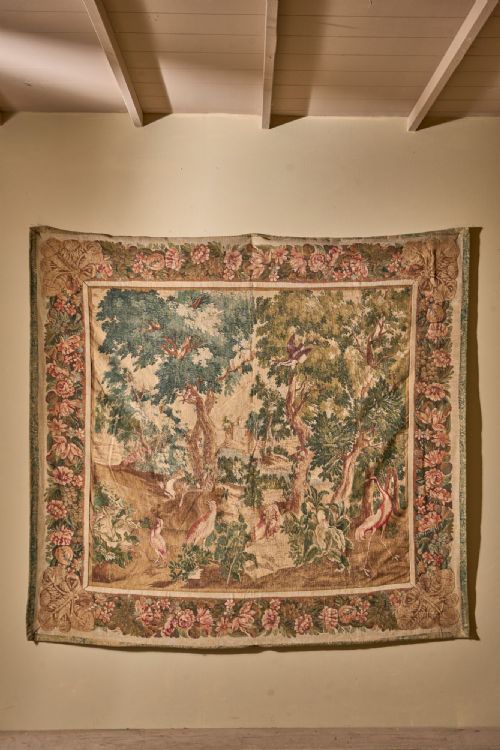
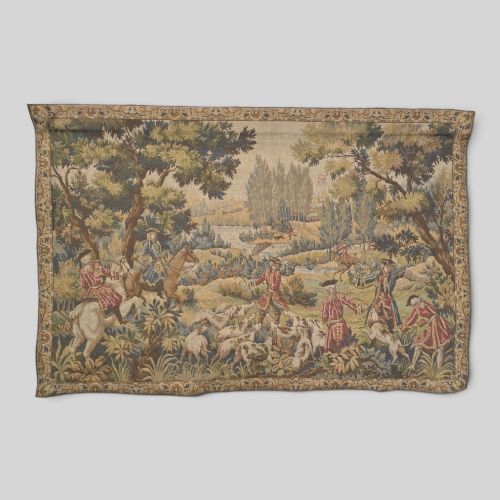
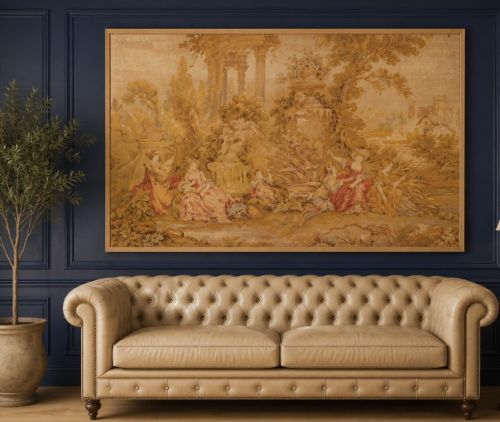
An aubusson wall hanging encompasses woven textile panels originating from France, spanning periods from the seventeenth century through to the twentieth century. These pieces primarily function as wall tapestries, wall art, and framed panels, bringing historical French styles into interior spaces.
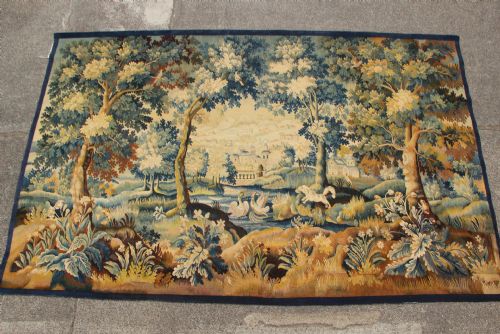
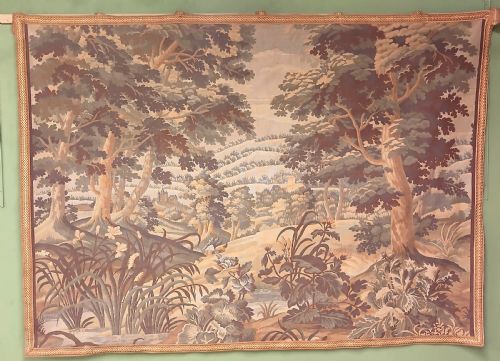
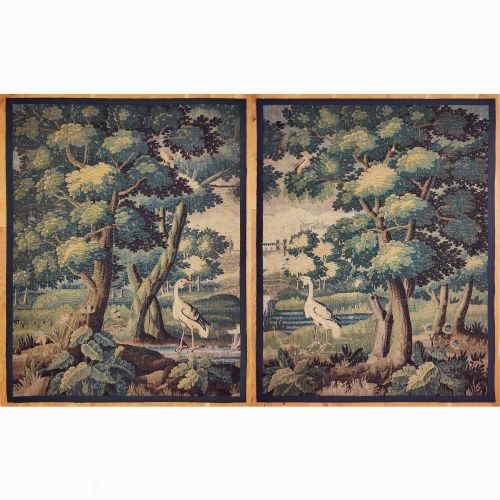
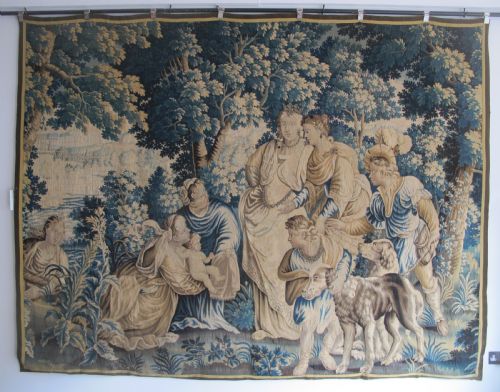
The versions most commonly met on this page include nineteenth century interpretations and verdure scenes featuring foliage and trees. Buyers also encounter specific formats like narrow entre-fenêtre panels designed to fit between windows, alongside pastoral and biblical narratives.
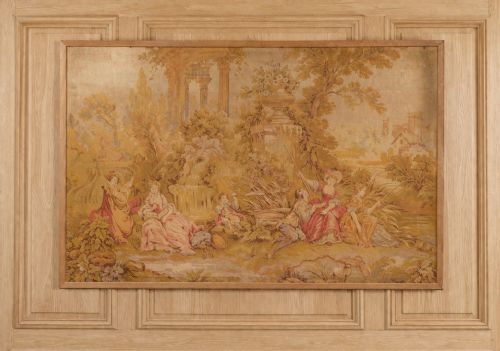
The aesthetic draws heavily on French baroque, rococo, and chateau traditions. Surviving examples range from large room-scale installations down to compact framed panels mounted on timber frames.
Materials and Weaving Technique
The construction relies fundamentally on natural fibres, predominantly wool, silk, and cotton, woven to create dense pictorial surfaces. These textiles often feature linen backings or supports to add stability to the hanging structure.
Many historical pieces are mounted within wooden supports, including walnut frames and timber frames, sometimes accented with brass fittings. The combination of woven textile and rigid framing allows these large panels to hang flat against walls without distorting the fabric.
Early weavers occasionally tucked small hidden animal figures deep inside dense forest foliage for attentive viewers to discover centuries later.
Distinctions in Quality and Execution
The distinction between tiers of quality rests largely on the complexity of the narrative design and the finesse of the weave. Verdure scenes with intricate botanical detail and biblical or pastoral panels demonstrate greater artistry than simpler decorative repeats.
Material selection also defines the upper range, particularly where fine silk highlights are integrated alongside standard wool yarns. The integrity of the original fabric and the condition of supporting wooden frames further influence how well a piece preserves its historical character.
The Aubusson Wall Hanging Glossary
- Verdure tapestry
- A textile featuring a landscape design dominated by trees, foliage, plants, and often birds or animals. These panels were exceptionally popular in seventeenth and eighteenth century French weaving.
- Entre-fenetre
- A tall, narrow tapestry panel specifically proportioned to hang on the wall space between two windows. This specialised form appears frequently in classical French interior decoration.
- Warp
- The vertical or longitudinal threads stretched upon a loom before weaving begins. In these textiles, the warp provides the structural foundation that holds the decorative weft yarns.
- Weft
- The horizontal threads passed through the warp to create the visible image and pattern. Master weavers manipulated these coloured yarns to achieve subtle tonal shifts in landscapes and figures.
- Jacquard
- A later mechanical loom development that automated the production of complex figured textiles. It influenced the manufacture of various nineteenth century and later decorative wall hangings.
Aubusson Wall Hanging: Frequently Asked Questions
How do I hang an aubusson wall hanging?
Most large textiles require a custom sleeve or backing attached along the top edge to distribute weight evenly across a supporting rod. Framed panels can be mounted directly to wall studs using heavy-duty brackets suited to the weight of the timber and glass.
Ensuring proper support prevents stretching or tearing of the historic fibres over time. Professional framing or conservation mounting is recommended for fragile eighteenth century or seventeenth century pieces.
What is a verdure tapestry?
A verdure tapestry depicts a lush, plant-filled landscape, typically featuring stylized trees, rolling hills, foliage, and occasional wildlife or distant chateaus. These scenes were designed to bring the feeling of an outdoor garden into interior rooms.
Originating strongly in French weaving traditions, verdure panels remain among the most recognizable and decorative wall hangings available from this period.
How do I date an antique tapestry?
Dating relies on examining the stylistic markers of the design, such as baroque architectural elements or rococo curves, alongside the types of fibres used. Seventeenth century and eighteenth century examples often display hand-spun characteristics and specific verdure palettes distinct from later nineteenth century revivals.
Documentation, provenance, and the structural construction of the backing or frame also provide crucial clues to the period of origin.