

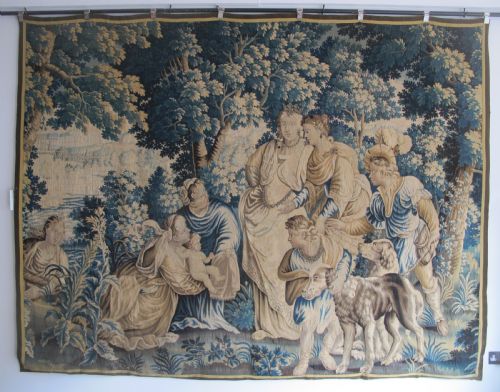


Antique Aubusson Landscape Tapestry
These antique aubusson landscape tapestry pieces bring seventeenth to nineteenth century French pastoral scenes directly to your walls.
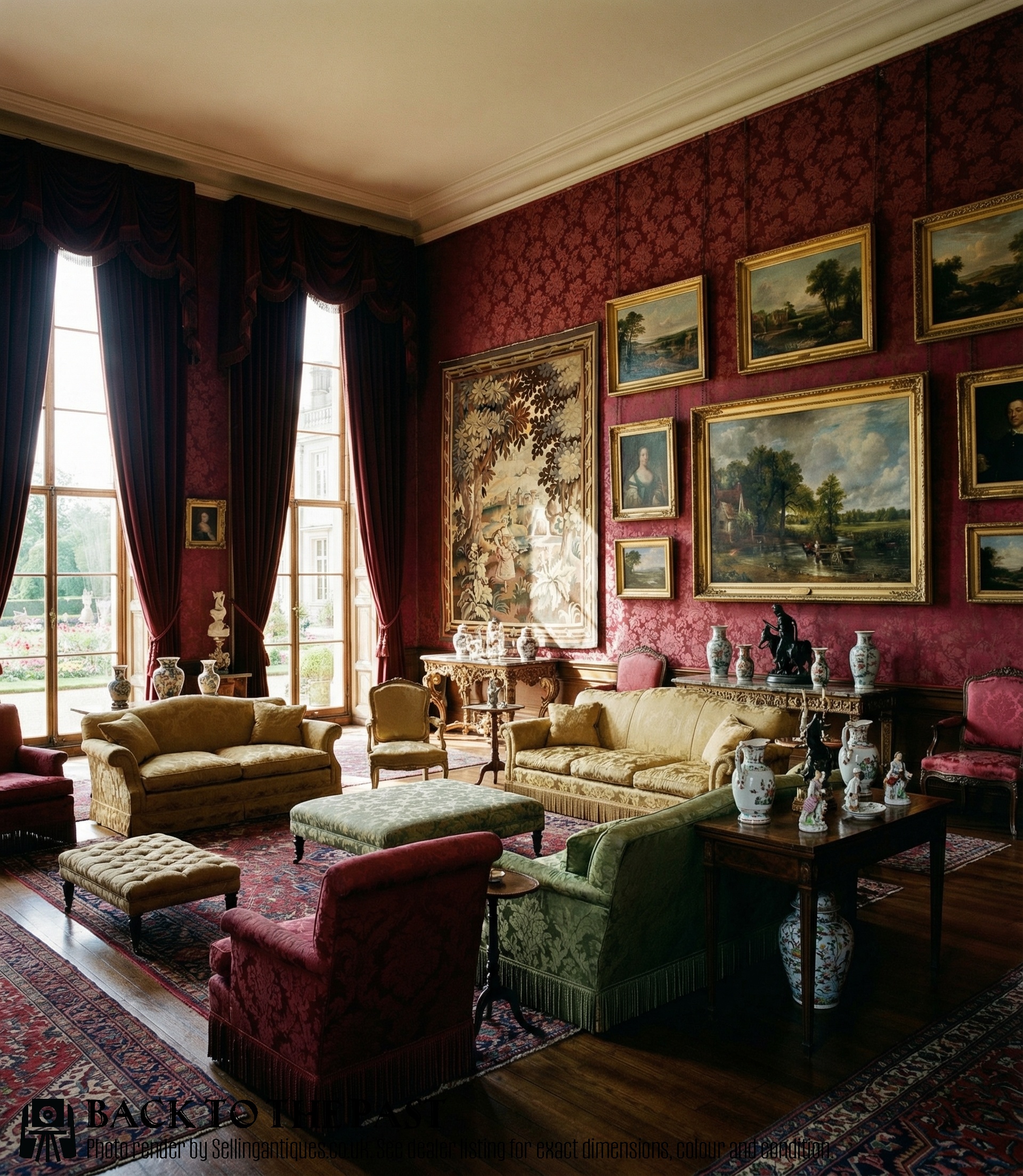
Antique Aubusson Landscape Tapestry
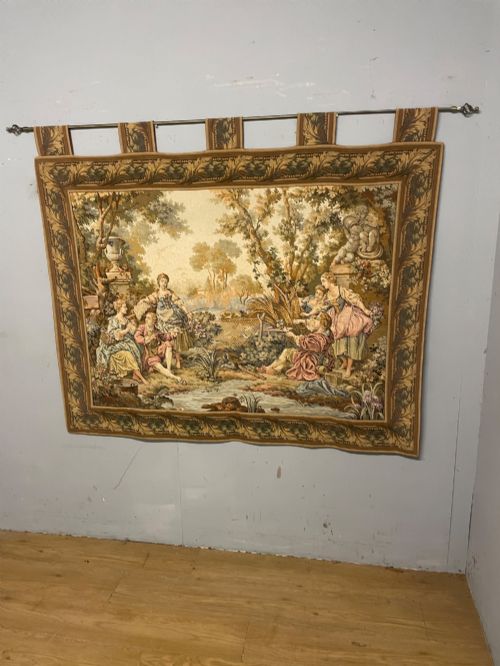
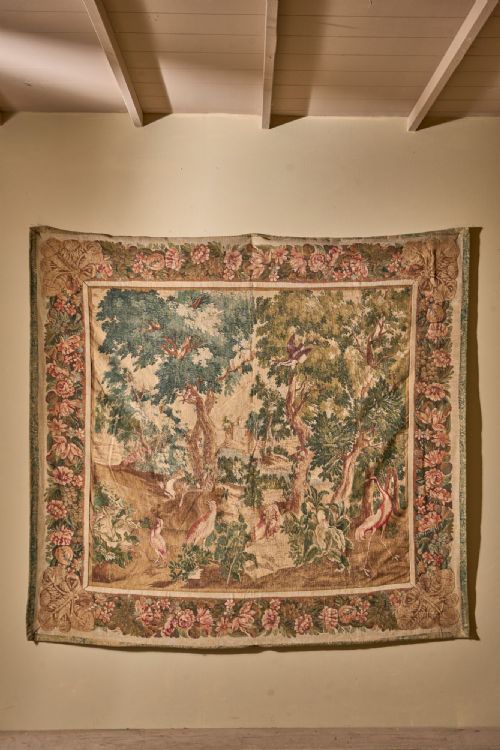
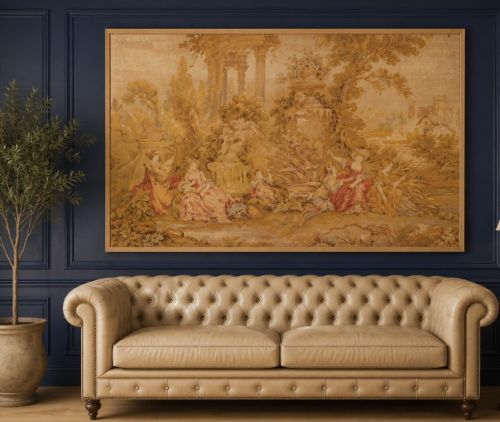
When you search for an antique aubusson landscape tapestry, you are looking at woven textile panels originating from France that depict pastoral scenes, foliage, and architectural elements. The examples available here span several centuries, reaching back to the seventeenth century through to the nineteenth century.
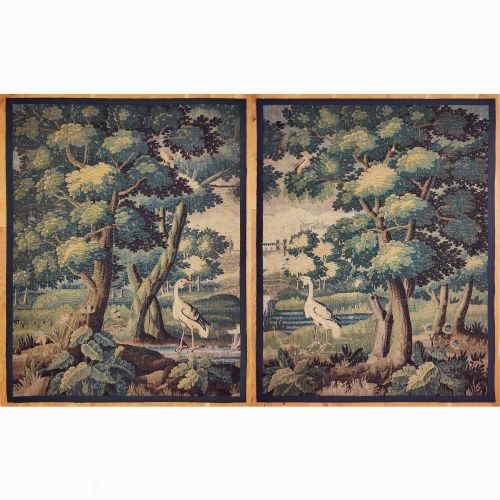
The most common forms you will encounter are verdure tapestries, which feature lush garden foliage and woodland views, alongside larger wall hangings and framed panels. These textiles serve primarily as wall art, bringing historical French decoration into domestic interiors.
Materials and construction
These historical textiles are woven primarily from wool, silk, and cotton yarns upon linen warps, creating a dense and textured surface. The natural dye materials used in earlier centuries yield muted, earthy tones that soften gracefully over time.
Many of these wall hangings retain their original timber frames or incorporate brass hanging elements to support the heavy woven panels. The meticulous weaving technique allows for intricate shading within the landscape and architectural details.
Object forms represented in the current selection include wall panels, verdure compositions, and biblical scenes originating from France.
Assessing quality in historical tapestries
The distinction between standard and superior pieces rests upon the complexity of the landscape design and the fineness of the weave. Earlier seventeenth and eighteenth century works often display greater depth in their foliage and verdure rendering compared to later nineteenth century productions.
Condition and scale also define the hierarchy within these textiles, as larger panels with intact original borders and rich colour palettes command greater attention. The survival of delicate silk highlights alongside wool elements indicates superior initial craftsmanship.
The Antique Aubusson Landscape Tapestry Glossary
- Verdure tapestry
- A wall hanging featuring a stylized landscape design dominated by plants, trees, foliage, and occasionally birds or animals. These scenes create a dense woodland effect across the textile.
- Aubusson
- A style of tapestry originating from the town of Aubusson in France, renowned for woven wall art produced since the seventeenth century. These pieces are celebrated for their pastoral and floral motifs.
- Warp
- The vertical threads held in tension on a loom before the horizontal weft threads are woven through them. In these textiles, the warp is typically composed of sturdy linen.
- Wall hanging
- A large textile panel designed to be affixed directly to a wall for decoration and insulation. They are frequently supported by timber frames or specialised mounting brackets.
Antique Aubusson Landscape Tapestry: Frequently Asked Questions
How do I hang a heavy tapestry?
These large textile panels require even weight distribution across a sturdy timber frame or a specialised wall-mounted batten. Secure the hanging hardware directly into wall studs to safely support the combined weight of the fabric and timber.
Avoid using simple nails or direct pin methods that concentrate tension on a single point of the antique weave. Professional framing ensures the textile remains flat and protected against environmental sagging.
Where should I place a tapestry?
Select an interior wall away from direct sunlight and excessive moisture to protect the natural wool and silk fibres from fading. Living rooms and hallways provide stable indoor environments where large wall hangings can be viewed properly.
Keep these textiles clear of direct heat sources such as radiators to prevent the natural materials from drying out prematurely. Adequate wall space allows the landscape scenes and verdure details to be appreciated fully.
How do I date an antique tapestry?
Dating relies upon analysing the weaving style, the palette of the natural dyes, and the specific motifs present in the landscape. Seventeenth and eighteenth century works often display distinct verdure characteristics compared to nineteenth century revivals.
Examining the construction materials, such as the type of linen warp and the accompanying timber frames, provides further clues to the period of origin. Comparing the stylistic execution to documented historical examples confirms the era.