
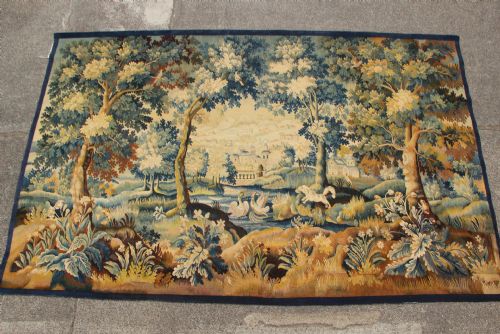
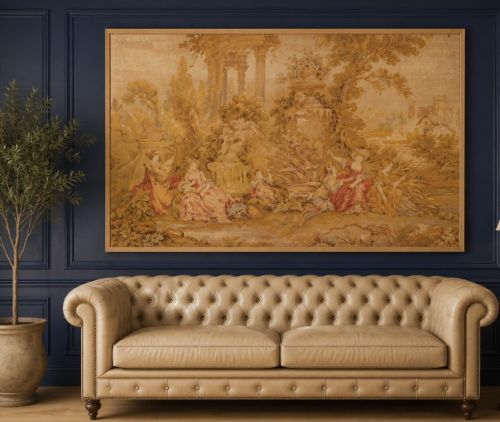


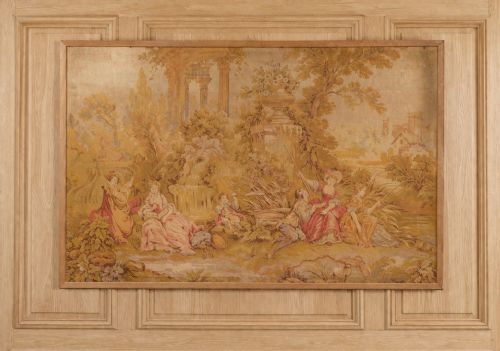


Pastoral Wall Tapestry
These pastoral wall tapestry works bring quiet French chateau scenes into a room through centuries of hand needlework.
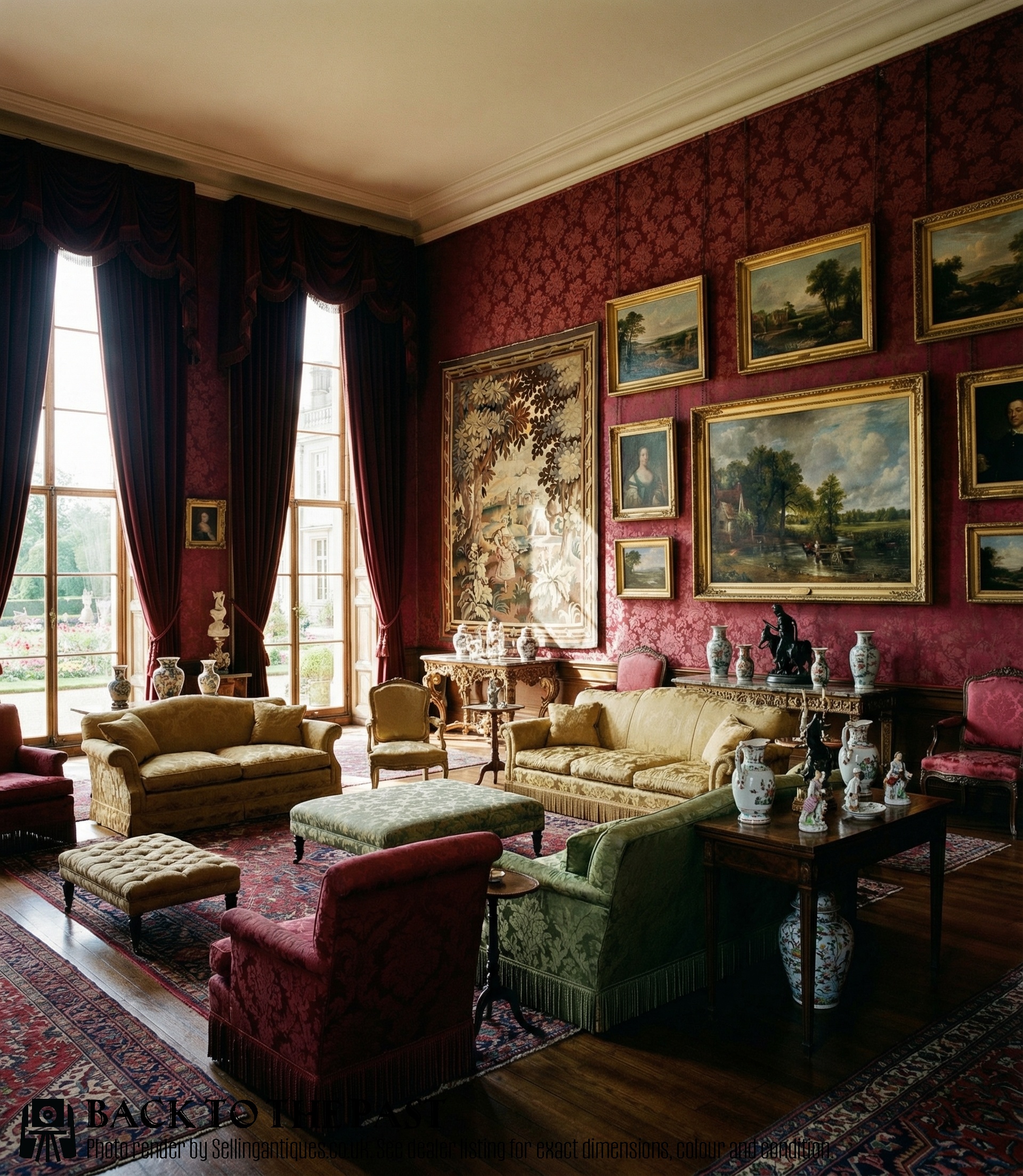
Pastoral Wall Tapestry
A pastoral wall tapestry represents rural scenes, garden figures, and leafy landscapes created through historical textile arts. These pieces span the eighteenth century, the nineteenth century, the Regency era, and the Victorian period.
Buyers meet woven textile panels, framed needlework pictures, and crewel work embroidery originating from France, Aubusson, and the broader continent. Many examples arrive housed within period wood frames, timber frames, or giltwood surrounds.
The dominant aesthetic draws upon French Rococo, French Chateau, and Victorian Rococo Revival styles. Scenes frequently depict figures in gardens or verdant woodlands rendered in fabric.
Materials and construction methods
Craftsmen utilised wool, silk, linen, and canvas as the primary textiles for stitching and weaving these pictorial panels. Threads were manipulated to achieve depth in foliage and figures.
Frames incorporate wood, timber, rosewood, and giltwood, sometimes complemented by glass and gold leaf. Specific pieces utilise verre églomisé glass frames to protect the textile within.
Period origins represented here include the eighteenth century, nineteenth century, Regency era, and Victorian period alongside French Rococo styles.
Assessing quality in historical textiles
Superior execution shows in the fine detail of gros point and petit point stitching, where densely packed threads create nuanced shadows and facial expressions. Less complex needlework relies on broader stitches with simpler colour transitions.
The integration between the textile art and its surround influences the integrity of the piece. Original giltwood, rosewood, or verre églomisé frames indicate a higher level of historical preservation than later replacements.
The Pastoral Wall Tapestry Glossary
- Verre Églomisé
- A framing technique involving cold painting and gilding on the reverse side of glass. This method produces a reflective metallic border around historical needlework.
- Aubusson
- A town in France renowned for manufacturing woven tapestries and carpets since the seventeenth century. Pieces from this origin often feature pastoral garden landscapes.
- Gros Point
- A larger needlepoint stitch executed on coarse canvas. It provides texture and structure to background elements in historical tapestries.
- Crewel Work
- Embroidery executed with wool yarn on a linen or cotton base. This technique creates raised, tactile designs found in early nineteenth-century panels.
Pastoral Wall Tapestry: Frequently Asked Questions
How were these tapestries originally displayed?
Historical pastoral wall tapestry pieces hung directly on stone or plaster walls within chateaux and large homes to insulate rooms and display wealth.
Over time, many of these textile panels were subsequently placed behind glass or mounted inside timber and giltwood frames to protect the fabric from atmospheric wear.
What subjects appear in pastoral needlework?
The imagery typically centres on rural life, garden settings, and verdant woodland views known as verdure scenes. Human figures engaged in quiet leisure often populate the foreground.
These motifs reflect eighteenth-century and nineteenth-century romanticised views of nature and country living popular across France and continental Europe.
How do I distinguish eighteenth and nineteenth-century pieces?
Eighteenth-century examples often display looser French Rococo compositions and hand-woven panel construction without modern backing materials. Aubusson workshops from this era focused heavily on verdure and pastoral themes.
Nineteenth-century and Victorian pieces frequently incorporate tighter woolwork, gros point, or crewel embroidery inside rosewood or verre églomisé frames.
Can these textile panels hang in direct sunlight?
Silk and wool fibres fade when exposed to continuous direct ultraviolet light. Placing them in shaded areas preserves the natural dyed hues.
Using glass-fronted frames helps shield the delicate threads from dust and household moisture while allowing safe wall display.