


Figural Wall Tapestry
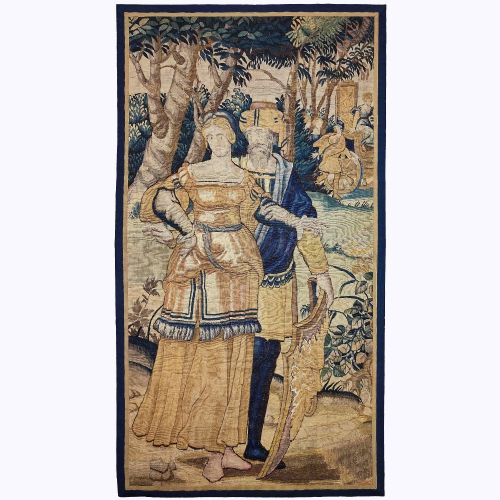
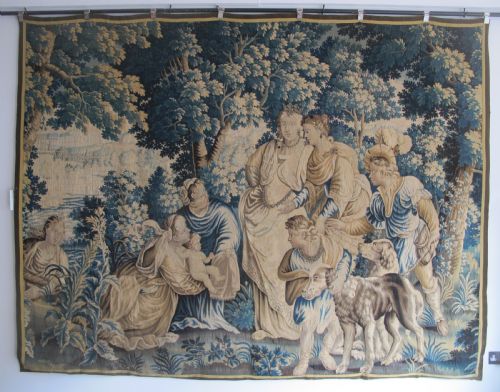
These figural wall tapestry pieces bring narrative textile art into a room, offering centuries of woven character for a wall.
Figural Wall Tapestry
A figural wall tapestry transforms interior spaces through large textile compositions depicting people, biblical scenes, and courtly narratives. When you search for a figural wall tapestry, you encounter wall hangings, framed textiles, and smaller cushion covers that preserve historical craftsmanship.
The selections span from the sixteenth century through the nineteenth century, encompassing Flemish Renaissance and French Baroque aesthetics. Pieces range from large French Chateau wall art to Italian needlepoint panels set in giltwood frames.
Buyers most frequently encounter nineteenth-century interpretations alongside earlier seventeenth-century and eighteenth-century Flemish and Aubusson productions. Smaller domestic items like tapestry cushion covers also appear alongside expansive wall hangings.
Materials and construction
These textiles rely primarily on wool and silk threads woven on looms to build complex pictorial scenes with rich colour variation. Cotton and canvas also appear as foundational or structural elements within the textile panels.
Framed examples utilise traditional woods such as walnut and giltwood to house and display the needlework securely. Glass occasionally protects delicate surfaces, while needlepoint employs distinct stitching techniques on canvas to render figures and background details.
The current selection includes textiles from the sixteenth, seventeenth, eighteenth, and nineteenth centuries, spanning Flemish, French, and Italian origins.
Assessing quality in historical weaves
Quality rests upon the fineness of the weave and the complexity of the figural composition rendered by the artisan. Tightly packed wool and silk threads hold intricate facial expressions and drapery folds with greater clarity than coarser equivalents.
The integrity of the textile surface and the preservation of the original dyes dictate the visual strength of the piece. Masterful workshops achieve depth and perspective through careful colour gradation and skilled juxtaposition of materials.
The Figural Wall Tapestry Glossary
- Aubusson
- A style of tapestry originating from the town of Aubusson in France, known for pastoral and mythological scenes woven without a visible warp thread.
- Flemish
- Pertaining to the historic region of Flanders, celebrated for intricate narrative and figural woven wall hangings during the Renaissance and Baroque periods.
- Needlepoint
- A form of counted thread embroidery stitched onto a stiff open-weave canvas foundation to create dense pictorial designs.
- Giltwood
- Wood that has been coated with a thin layer of gold leaf, commonly utilised on decorative frames housing antique textile art.
- Warp
- The lengthwise threads held stationary on a loom under tension before the transverse weft threads are woven through them.
Figural Wall Tapestry: Frequently Asked Questions
How do I hang a heavy tapestry?
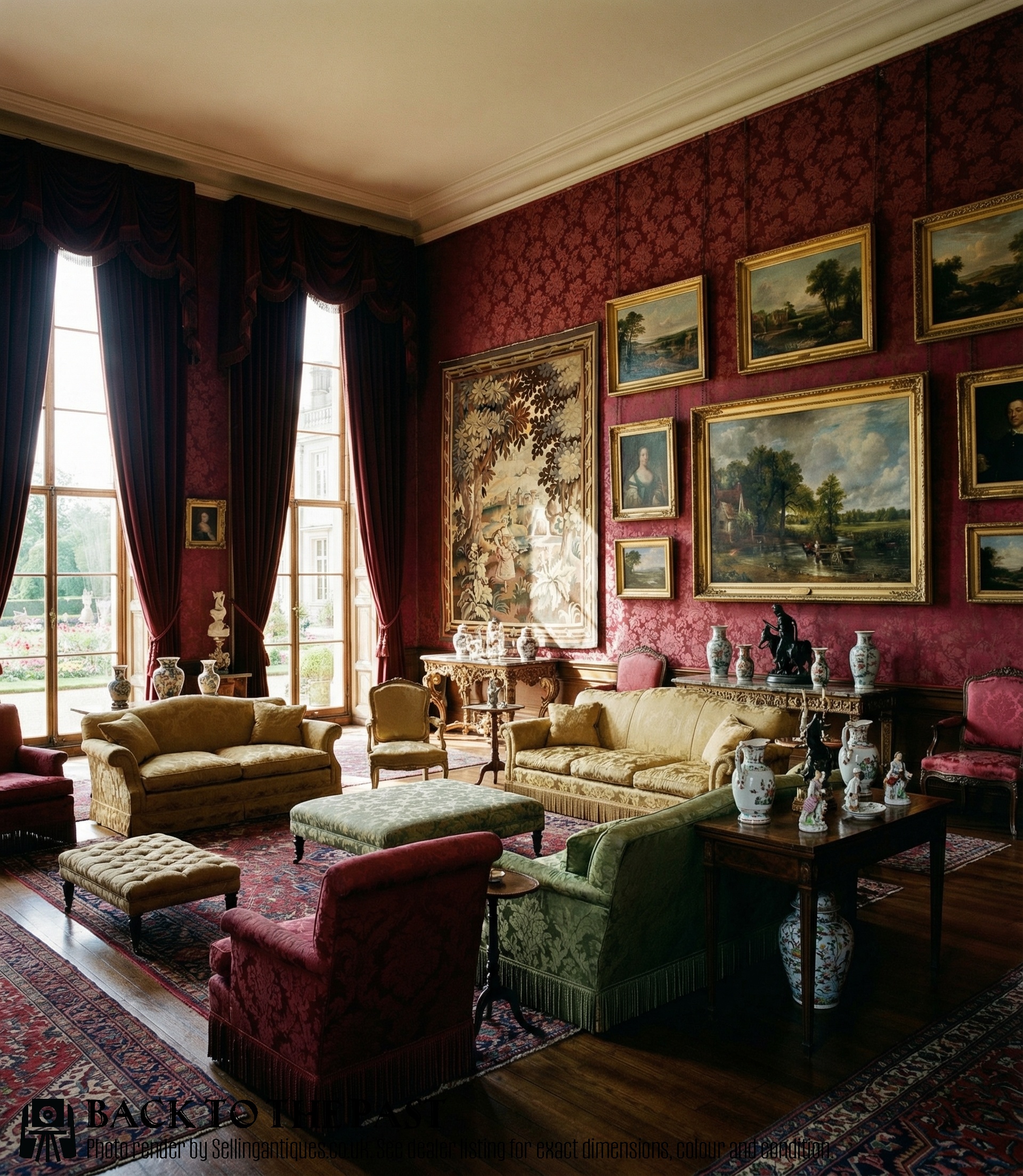
Large textile panels require even weight distribution across a supportive wooden batten or hidden metal rod rather than a single hanging point.
Stitching a fabric sleeve to the reverse top edge allows the weight to transfer safely to the wall mount without stressing the historic weave.
Are cushion covers made from old tapestries?
Many smaller decorative cushions utilise authentic historical tapestry fragments repurposed from larger damaged panels or antique wall hangings during later centuries.
This practice allowed workshops to preserve fine woven pictorial sections that could no longer serve as wall art.
How do I clean antique textiles?
Historic wool and silk panels require professional textile conservation rather than domestic washing or vigorous cleaning methods.
Gentle surface dust removal with a low-suction vacuum through a protective mesh screen helps maintain the fibres without causing structural damage.
What is the difference between weave and needlepoint?
Traditional weaving constructs the image simultaneously with the fabric structure on a loom using warp and weft threads.
Needlepoint involves stitching pictorial designs by hand directly onto an existing woven canvas mesh after the textile base has been manufactured.