


Beige French Tapestry
These beige french tapestry pieces bring centuries of woven artistry into a room, offering tactile warmth and historic charm.
Beige French Tapestry
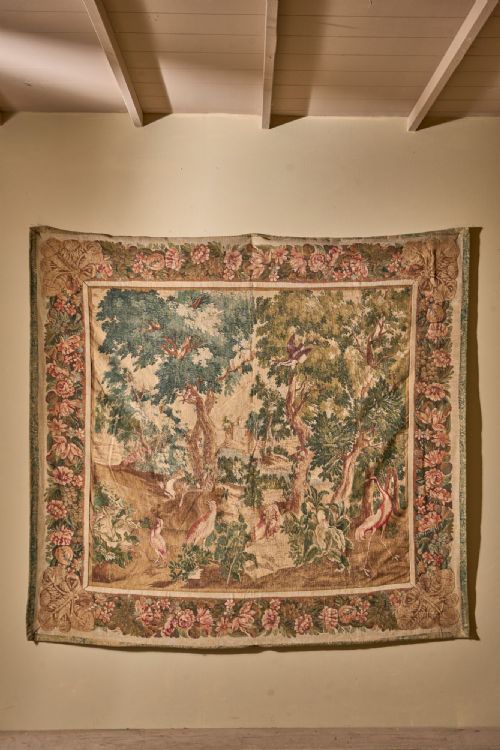
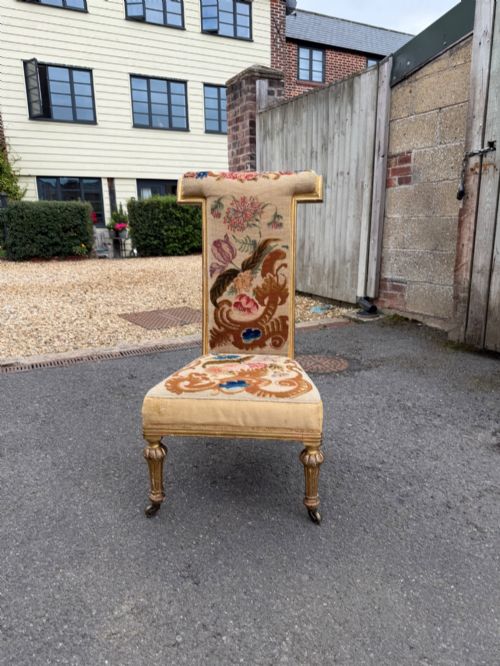
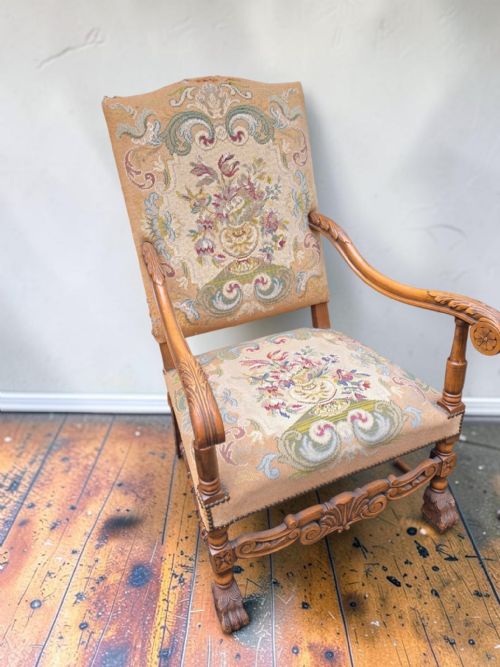
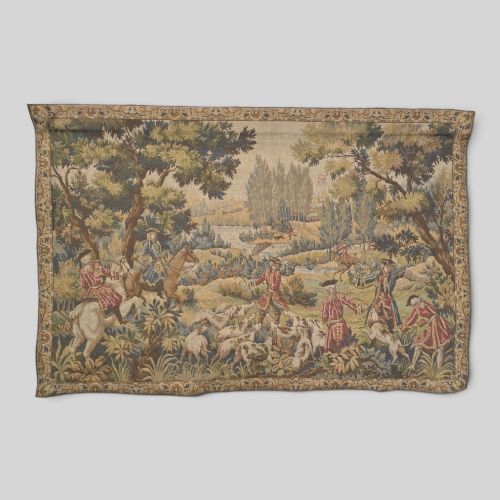
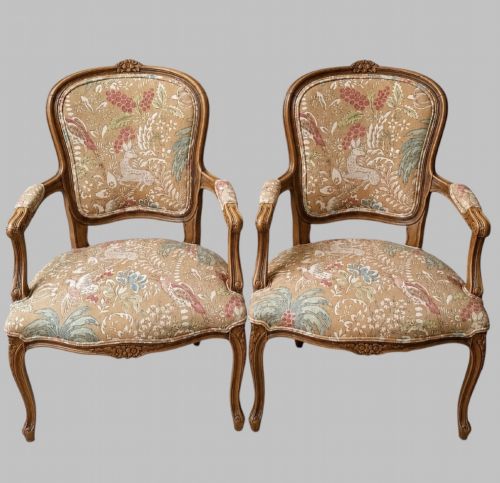
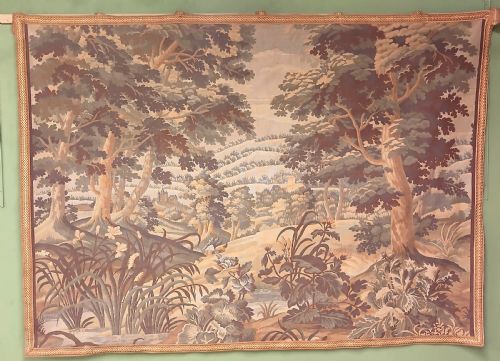
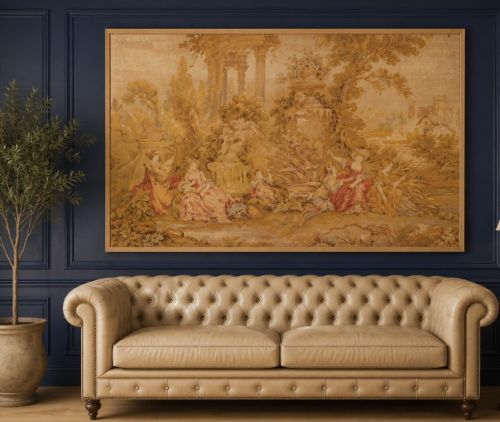
A beige french tapestry encompasses woven wall art, framed panels, rugs, cushions, and upholstered seating from various historic periods. When searching for beige french tapestry, buyers encounter large wall hangings alongside smaller decorative items like cushions and armchairs.
The selections span from the eighteenth century through to the nineteen thirties, drawing on established aesthetics like French Baroque, Neo-Rococo, and French Chateau. Many pieces feature pastoral or floral motifs rendered in muted, neutral tones suited to traditional and modern interiors alike.
Materials and construction
These textiles utilise natural fibres including wool, cotton, and silk, woven or hand-stitched into complex pictorial scenes and repeating patterns. Frame furniture incorporates timber such as walnut, occasionally finished with giltwood.
The techniques combine traditional loom weaving with fine needlepoint and needlework. Artisans mounted many of these textiles onto wooden boards, frames, or structured upholstery for functional domestic use.
Several armchairs are ready for quiet contemplation, having absorbed centuries of parlour gossip and fireside daydreams.
Factors of quality
Quality rests upon the fineness of the weave, the intricacy of the pictorial design, and the integrity of the natural fibres. Pieces displaying subtle colour gradations and well-executed figurative or botanical detail distinguish themselves from simpler compositions.
The underlying structure matters equally, whether examining the stability of a walnut armchair frame or the preservation of a large wall panel. Original framing and professional mounting enhance the longevity and presentation of these historic textiles.
The Beige French Tapestry Glossary
- Aubusson
- A traditional style of tapestry and rug originating from the French town of Aubusson, known for pastoral scenes and floral motifs.
- Entre-fenetre
- A tall, narrow tapestry designed to hang on the wall space between two windows.
- Needlepoint
- A type of canvas work embroidery executed with a single-thread stitch, frequently seen on cushions and chair upholstery.
- Prie Dieu
- A small devotional prayer desk, often paired with upholstered needlework kneeling pads.
- Giltwood
- Timber treated with a thin layer of gold leaf, commonly utilised on decorative furniture frames.
Beige French Tapestry: Frequently Asked Questions
How do I hang a large wall tapestry?
Large wall hangings require even distribution of weight along the top edge to prevent distortion of the woven textile. Many collectors utilise a hidden sleeve or professional mounting board.
Ensure the piece hangs away from direct sunlight to protect the natural wool, cotton, and silk fibres from fading over time.
Where were Aubusson tapestries made?
Aubusson tapestries originated from workshops in the Creuse valley of France, specifically around the towns of Aubusson and Felletin. These centres produced woven textiles for centuries.
The tradition is defined by distinct verdure and pastoral designs created using wool and silk threads.
Can I use tapestry cushions daily?
Tapestry cushions bring historic texture into living spaces, though older needlepoint pieces benefit from gentle treatment. Rotating them regularly distributes wear evenly across the textile surface.
Keep them away from high-moisture areas and heavy friction to preserve the antique fibres.