


Woven Floral Wall Art
Woven floral wall art brings centuries of textile craftsmanship indoors, offering rich botanical motifs rendered in wool, silk and thread to anchor a room.
Woven Floral Wall Art
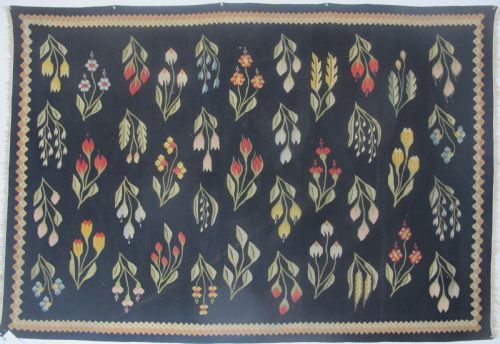
When you search for woven floral wall art, you encounter a variety of textile pieces including large wall tapestries, tapestry panels, wall hangings and needlework pieces. These items bring historical botanical designs into modern spaces through traditional hand-worked methods.
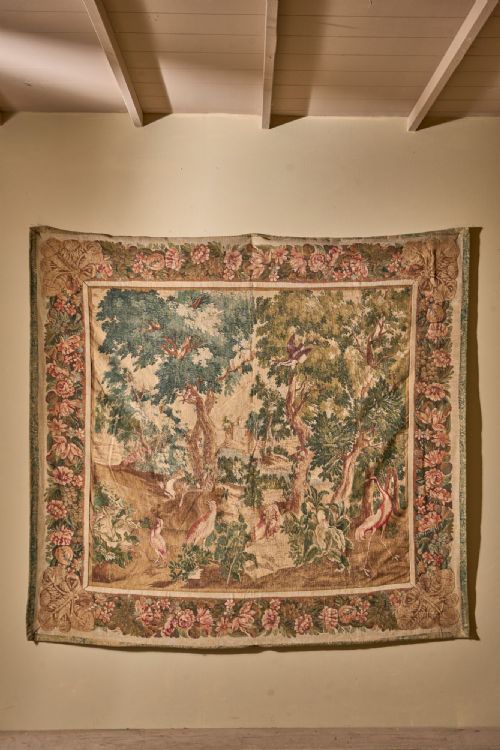
The most frequent examples on this page are French and European pieces spanning the sixteenth century through to the nineteenth century. These range from grand Verdure scenes and Aubusson panels to smaller folk art textiles and cushion covers.
Object types also stretch to include related textile art and distinct wall coverings, alongside occasional painted botanical works on paper. Each version provides a different scale and texture for interior display.
Materials and Construction
These pieces rely on natural fibres, primarily wool, silk, cotton and linen, combined as spun thread to build up complex pictorial surfaces. Artisans wove these materials on specialised looms or worked them by hand as needlework.
Wooden frames and paper supports appear in related works, while the core tradition remains textile-based. The interaction of different thread weights creates the depth seen in historical floral and foliage designs.
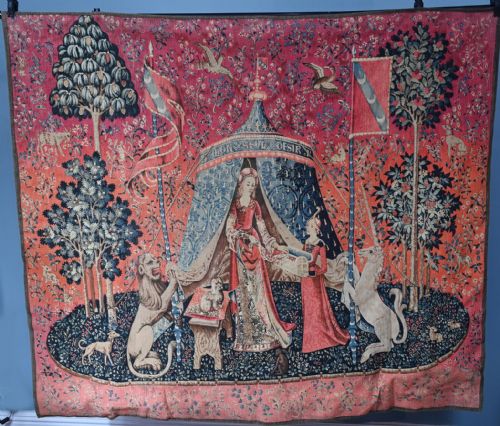
Keep an eye out for rogue unicorns hiding quietly among the sixteenth-century foliage.
Assessing Quality and Execution
The division between standard and superior pieces rests on the complexity of the weave and the skill with which botanical motifs are articulated. Finer examples display subtle tonal gradations in wool and silk that create realistic depth in floral displays.
Preservation of the original textile structure and the integrity of the border designs dictate the visual impact of the hanging. Pieces retaining their original dimensions and rich natural dye palettes stand apart from heavily restored or faded works.
The Woven Floral Wall Art Glossary
- Tapestry
- A form of textile art woven on a vertical loom, where coloured weft threads create a pictorial design. These hangings served both decorative and insulating purposes in historic interiors.
- Verdure
- A type of tapestry featuring a dominant landscape design of trees, foliage, and plants, often incorporating flowers and birds. These woodland scenes were popular across European weaving centres.
- Aubusson
- A style of tapestry originating from the town of Aubusson in France, known for floral and architectural compositions. These pieces often feature soft pastel colour palettes.
- Needlework
- A piece of textile art created by stitching thread directly onto a canvas or linen ground by hand. This technique allows for precise botanical detail in floral depictions.
- Mille-fleurs
- A French term meaning a thousand flowers, describing a background composed of small plants and flowers strewn across a field. This style is characteristic of early tapestries.
Woven Floral Wall Art: Frequently Asked Questions
How do I hang a heavy textile safely?
Support large tapestries by sewing a wide cotton casing to the top reverse edge and sliding a flat wooden batten through it. Secure the batten directly to the wall studs to distribute the weight evenly across the entire textile.
Avoid hanging tapestries using direct nails or clips, as these methods concentrate tension on isolated points and can tear fragile historical fibres over time.
Can I display these pieces in direct sunlight?
Keep historical textiles away from direct sunlight and strong artificial spotlights to prevent natural dyes from fading. Wool and silk fibres degrade rapidly when exposed to continuous ultraviolet radiation.
Use UV-filtering window films or position wall hangings on interior partition walls where light levels remain low and stable throughout the day.
How do I identify the period of a textile?
Examine the weave structure, fibre types and stylistic conventions of the floral motifs to narrow down the era. Sixteenth-century pieces often feature dense mille-fleurs grounds, while eighteenth-century examples lean towards naturalistic verdure landscapes.
Compare the border designs and colour palettes with documented examples from known European weaving regions such as Aubusson or Flanders to confirm the historical context.