


Large Floor Standing Mirror
A large floor standing mirror commands a room, reflecting light and space through periods from Regency mahogany to French chateau gilt.
Large Floor Standing Mirror
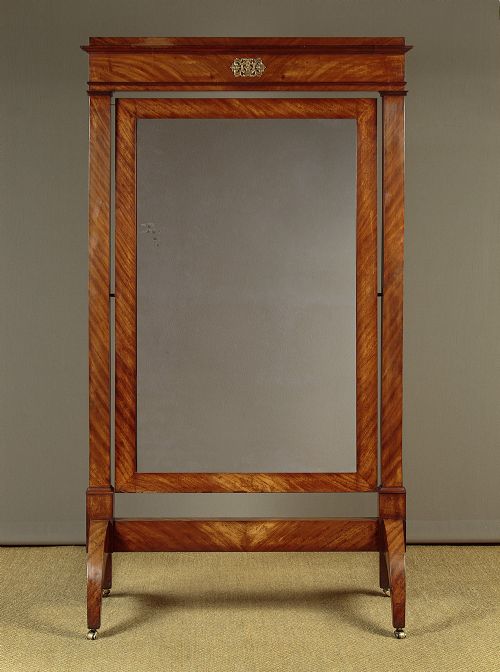
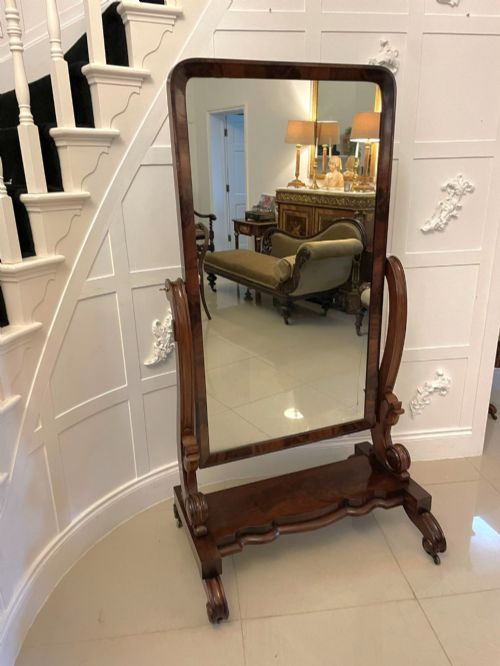
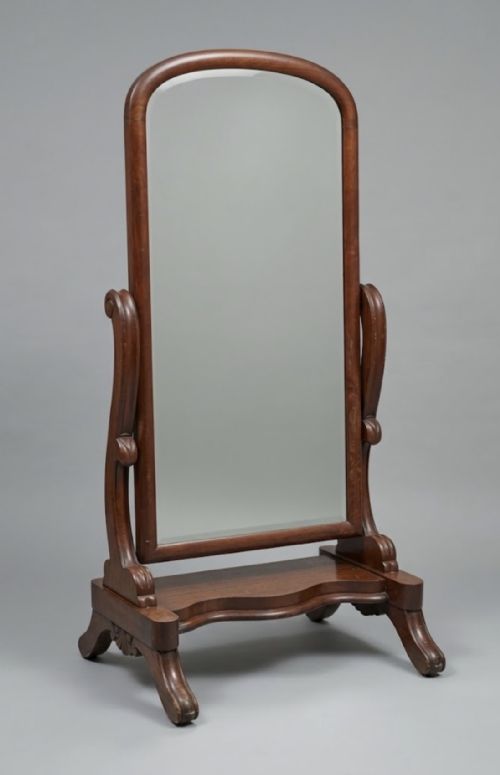
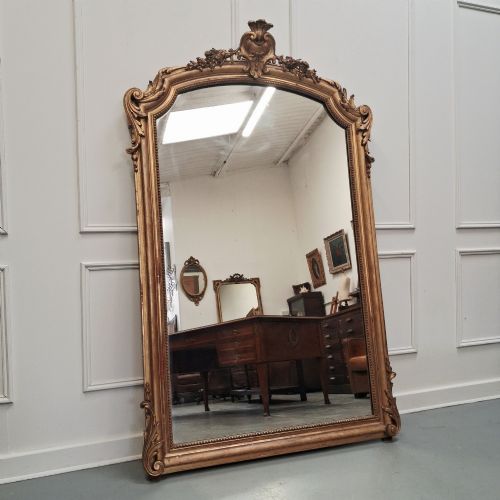
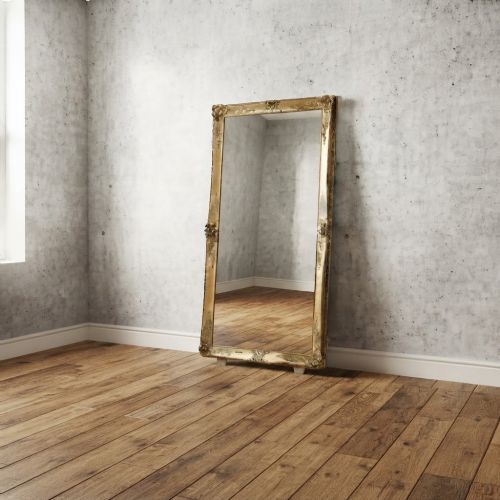
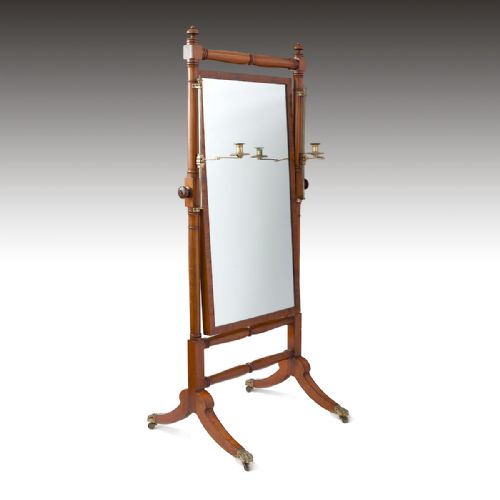
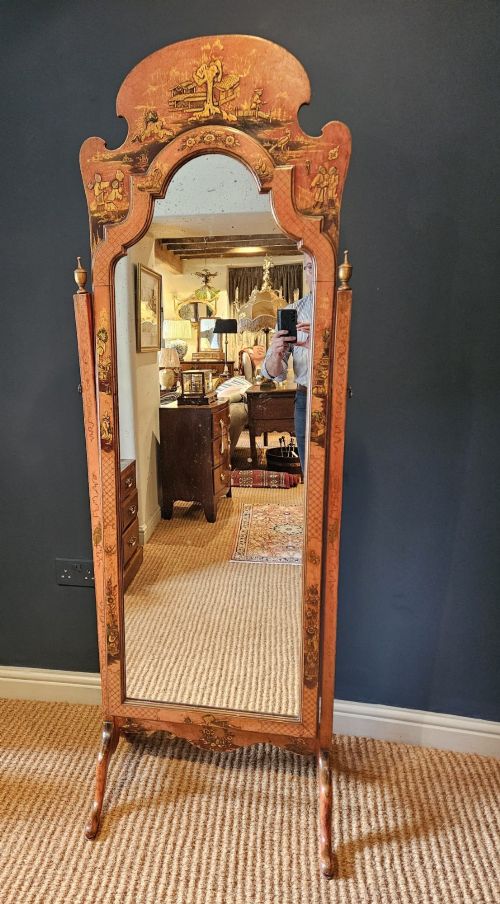
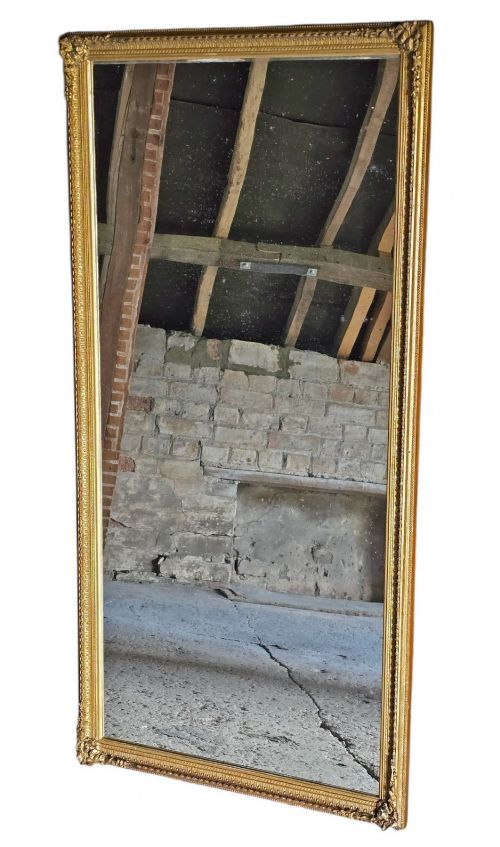
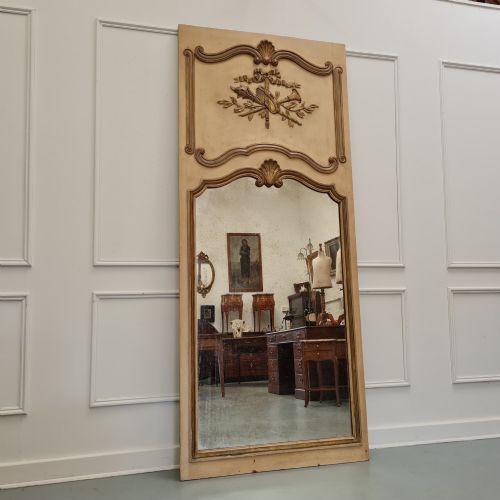
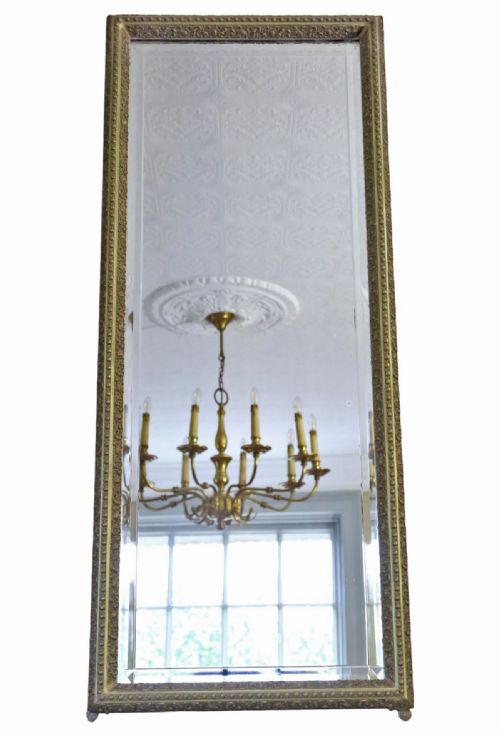
A large floor standing mirror typically takes the form of a cheval mirror, a swinging glass plate suspended in a freestanding frame, or a tall leaner mirror designed to stand directly against a wall. These substantial pieces emerge from the nineteenth century onward, with Victorian and Regency examples appearing alongside French chateau and Edwardian pieces.
Materials and Construction
Frames rely on structural timbers such as mahogany and pitch pine, shaped and joined to support the heavy glass plates safely. Cabinetmakers utilised carved wood and gesso to build elaborate crests and mouldings, applying gold leaf, silver, or paint to the finished surfaces.
Glass is set within sturdy uprights, often supported by brass pivots in cheval configurations or secured by heavy backing boards in wall and leaner formats. Gilding and painted finishes range from bright gold leaf to distressed silver and muted tones.
Large Floor Standing Mirror Retail Price Guide 2026
Typical asking prices for large floor standing mirror among the pieces listed under this phrase on Sellingantiques today, from the lower quarter to the upper quarter. They describe what is for sale here now, not the wider market.
Listings span the nineteenth century, featuring materials from solid mahogany and pitch pine to carved gesso, gold leaf, and brass.
Craftsmanship and Proportion
Quality rests in the balance of proportion and the depth of carving, where hand-carved wood and gesso ornamentations display crisp detail rather than soft moulding. Substantial timbers like solid mahogany provide the necessary rigidity for pivoting frames without warping under the weight of the glass.
The integrity of the original gilding or paint finish distinguishes finer pieces, alongside the retention of original brass hardware and pivoting mechanisms. Superior examples maintain structural stability in the floor supports, ensuring the swinging glass remains balanced.
Gillow·Versace
The Large Floor Standing Mirror Glossary
- Cheval mirror
- A freestanding mirror suspended on vertical pivots within a frame, allowing the glass plate to swing. The term derives from the French word for horse, referencing the four-legged frame.
- Gesso
- A plaster-like mixture applied to wood frames as a base for gilding or painting. It is built up in layers and carved while wet to create relief ornament.
- Giltwood
- Timber coated with gold leaf or gold paint. It defines many high-status mirrors from the Regency and Victorian periods.
- Trumeau
- A decorative wall mirror often integrated into wood panelling or placed above a mantelpiece. These pieces frequently incorporate painted panels or carved motifs above the glass.
- Overmantel mirror
- A large glass designed to sit directly above a fireplace mantel. Many examples are adapted for floor standing use due to their impressive scale.
Large Floor Standing Mirror: Frequently Asked Questions
How do I secure a floor standing mirror?
Most large leaner mirrors rely on their substantial weight and slight backward tilt against the wall for stability. Wall anchoring brackets are recommended for added safety, particularly in busy rooms.
Cheval mirrors are self-supporting through their own four-legged frames, though placement on level flooring prevents any rocking motion during use.
Can these mirrors be used freestanding?
Cheval mirrors are specifically designed to stand independently on the floor using their own hinged stands and supporting legs. They allow the user to adjust the tilt of the glass plate freely.
Leaner mirrors are built for the floor but require contact with a vertical wall to remain upright safely, bringing height without permanent wall fixings.
How do I date a nineteenth-century mirror?
Dating relies on timber choices, such as solid mahogany in earlier Regency and Victorian pieces compared to pitch pine in later Victorian examples. Carving styles, hardware types, and construction methods on the reverse of the frame provide further chronological markers.
Gilt and gesso techniques also shift across decades, moving from Regency classical restraint to ornate Victorian and French revival ornamentation.
What is the difference between a cheval and a leaner mirror?
A cheval mirror incorporates an integrated wooden frame with pivoting side supports, allowing the mirror plate to swing back and forth on its own base. It occupies space independently in the middle of a room or dressing area.
A leaner mirror is a tall plate in a fixed frame that rests directly against a wall, providing a wide vertical reflection without mechanical pivots.