


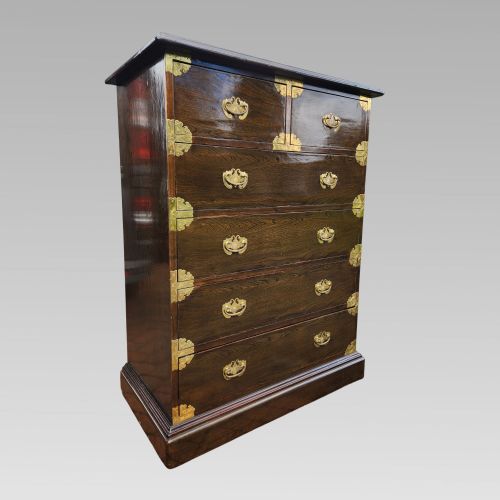

Large Drawer Cabinet
Large drawer cabinet pieces offer serious multi-drawer capacity, uniting utility and presence through centuries of domestic and commercial storage history.
Large Drawer Cabinet
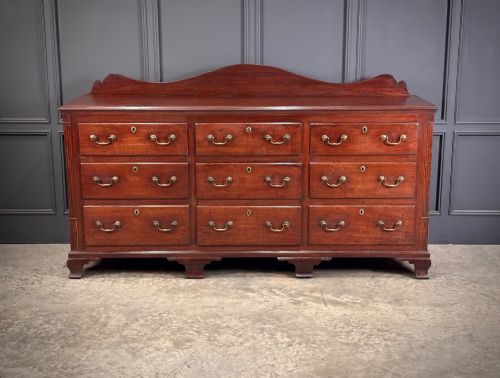
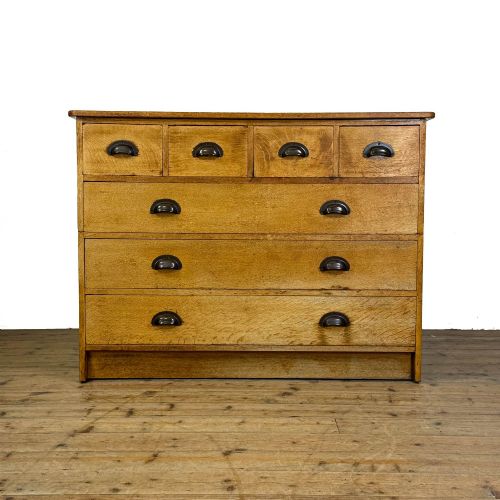
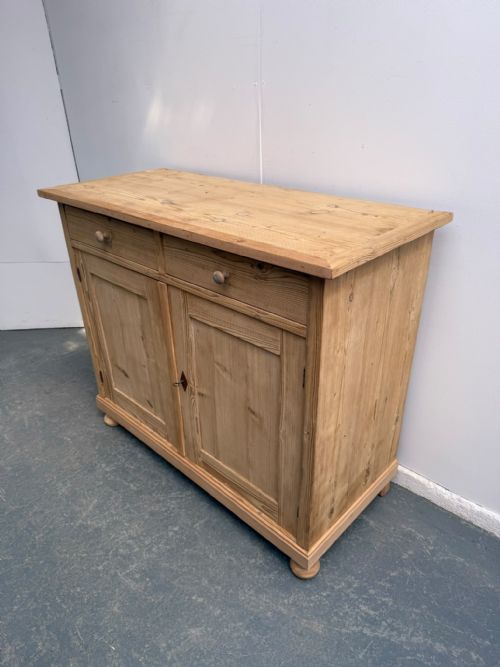
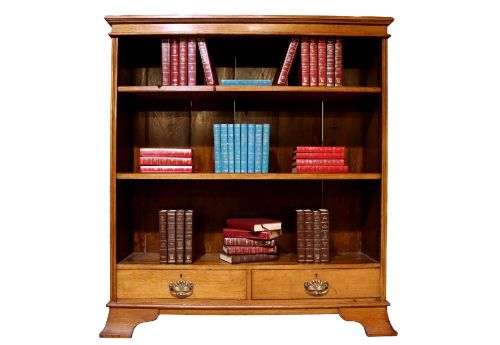
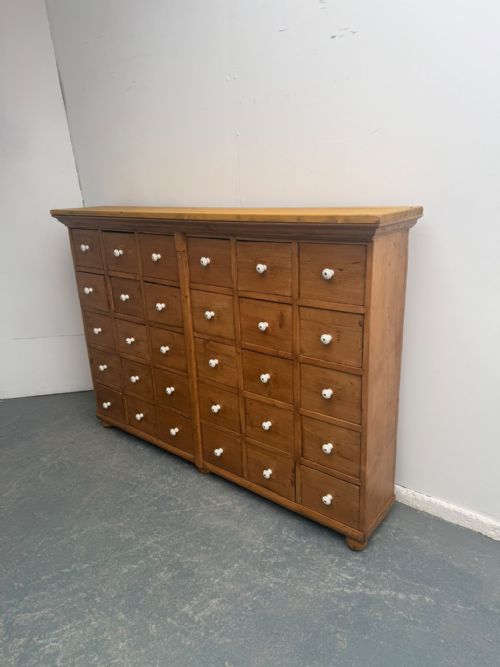
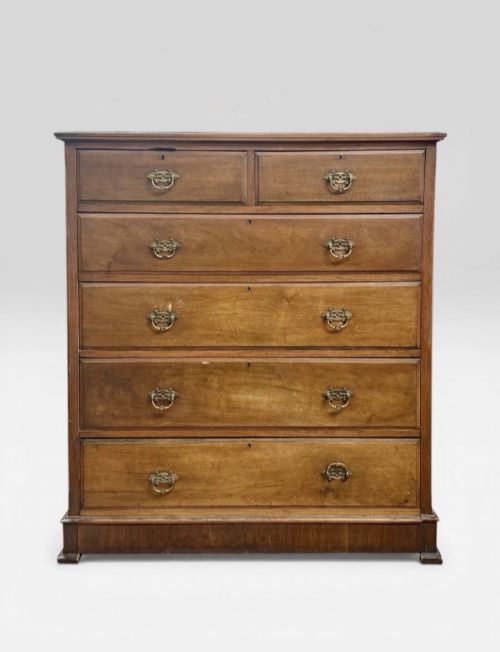
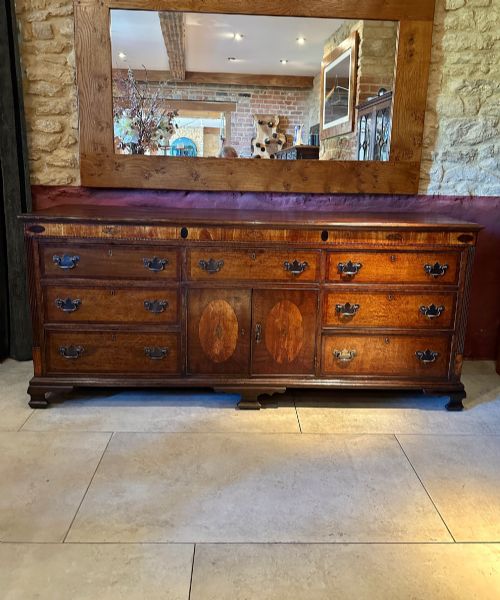
A large drawer cabinet brings together robust multi-drawer forms designed for sorting, filing, and display across various periods. When exploring this selection, a buyer encounters everything from substantial mahogany chests to multi-drawer shop fittings and utilitarian office filing units.
The architectural scale of these items defines them, often taking the form of monumental banks of drawers, tallboys, or apothecary units. Domestic bedroom chests and commercial shop counters share floor space here, reflecting how large storage furniture crossed freely between trade and home.
Origins span Georgian workshops, Victorian commercial establishments, and mid-century industrial spaces. Walnut, mahogany, pine, and oak dominate the offerings, matched with period brass and iron hardware.
What varies in quality
The standard of timber selection and drawer construction dictates the hierarchy of quality among these large cabinets. Fine examples display uniform grain alignment, thoughtful timber matching across expansive drawer banks, and robust internal framing that prevents sagging.
Originality of hardware and surface finish significantly impacts the standing of a piece. Cabinets retaining their primary brass pulls, locks, and uncompromised patination sit at the upper end of the scale compared to those with replaced elements.
Some multi-drawer shop fittings carry enough individual compartments to misplace your keys fifty times over.
Shannon
The Large Drawer Cabinet Glossary
- Bank of drawers
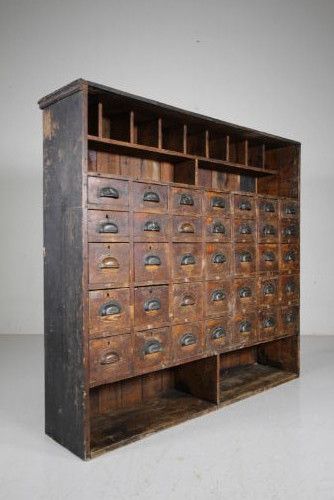
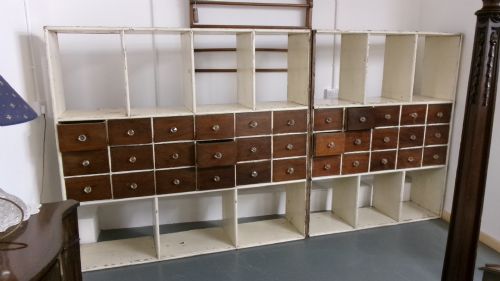
- A multi-drawer storage unit, typically originating from a shop, office, or workshop, built to hold large quantities of small items. These commercial forms often feature dozens of individual pull drawers.
- Linen press
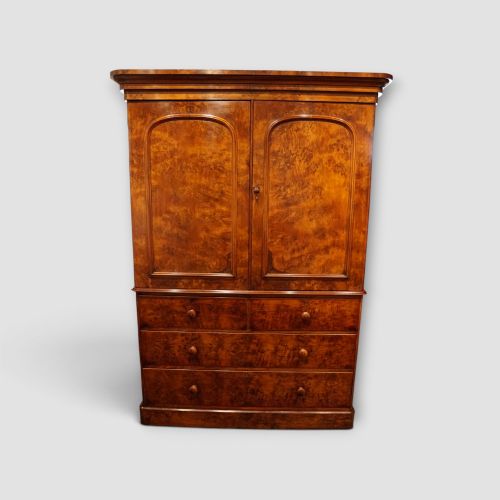
- A tall cabinet featuring upper cupboard doors enclosing sliding trays or shelves, positioned above a base section of large drawers. They were traditionally built for storing textiles and bed linens.
- Plan chest
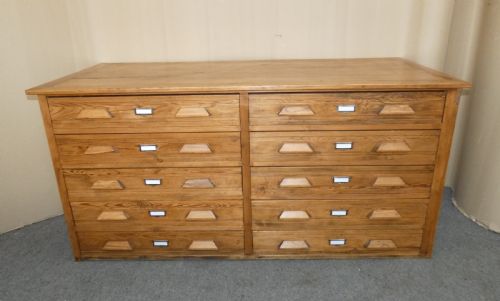
- A wide, shallow multi-drawer cabinet designed specifically for flattening and storing architectural drawings, maps, or large artworks. They are typically constructed from pine or oak with numerous low-profile drawers.
- Tallboy
- A tall chest of drawers consisting of a chest placed upon another chest or a stand, maximising vertical storage space. Georgian and Victorian versions often combine larger lower drawers with smaller upper tiers.
- Wellington chest
- A tall, slender locking chest of drawers secured by a hinged vertical side pilaster that fastens with a key. This locking mechanism protected the contents of every drawer simultaneously.
Large Drawer Cabinet: Frequently Asked Questions
Where were multi-drawer cabinets used?
These large storage units served diverse environments, ranging from domestic bedrooms and libraries to commercial chemist shops and administrative offices. Retail spaces utilised massive bank of drawers setups for haberdashery and specimen storage.
Industrial workplaces adopted them as filing cabinets and plan chests for maps and blueprints. Their adaptability allowed them to transition easily from utilitarian workspaces into residential settings.
How do I date a large chest of drawers?
Dating relies on examining construction techniques, timber choices, and hardware styles across the piece. Georgian iterations frequently utilise mahogany with hand-cut dovetails and period brass drop handles.
Victorian and later industrial examples often feature pine, oak, or applied scumble paint finishes alongside stamped metal pulls. Drawer linings and backboards offer further clues to the period of manufacture.
Are these cabinets heavy to move?
Substantial timber construction and massive multi-drawer configurations make these pieces exceptionally heavy. Many forms, such as large banks of drawers and plan chests, require multiple people for transport.
Some tall configurations separate into upper and lower sections to ease manoeuvrability during relocation. Checking structural assembly points helps determine how a cabinet dismantles.
What is scumble paint?
Scumble paint is a decorative translucent glaze technique applied over a base coat to simulate wood grain or create textured patterns. It frequently appears on period industrial and commercial filing cabinets.
This finish protected the underlying timber while offering a decorative surface suited to busy retail or office environments. Surviving original scumble paint remains an appreciated feature among collectors.