

Large Display Cabinet
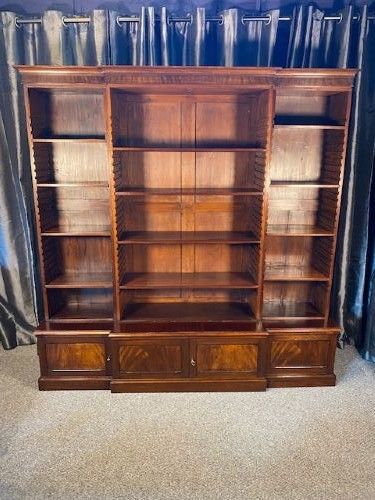
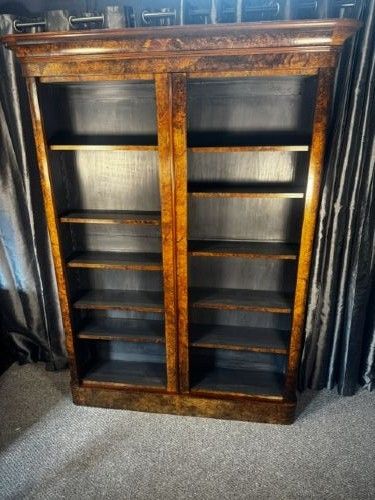
When you need a large display cabinet, you are looking at architectural mahogany, walnut, and satinwood furniture built to showcase collections and libraries.
Large Display Cabinet
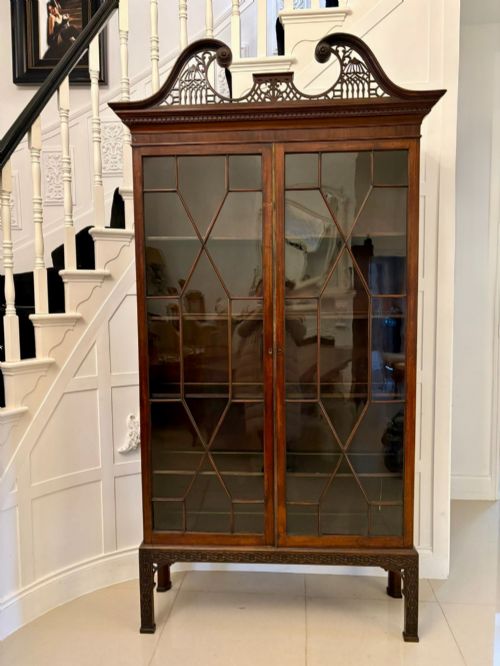
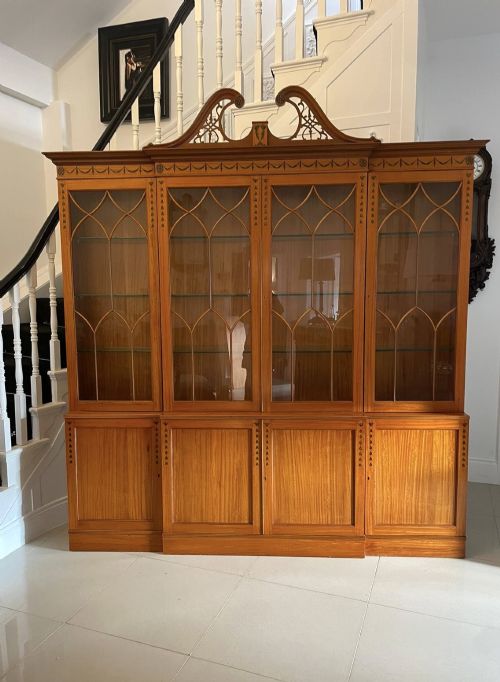
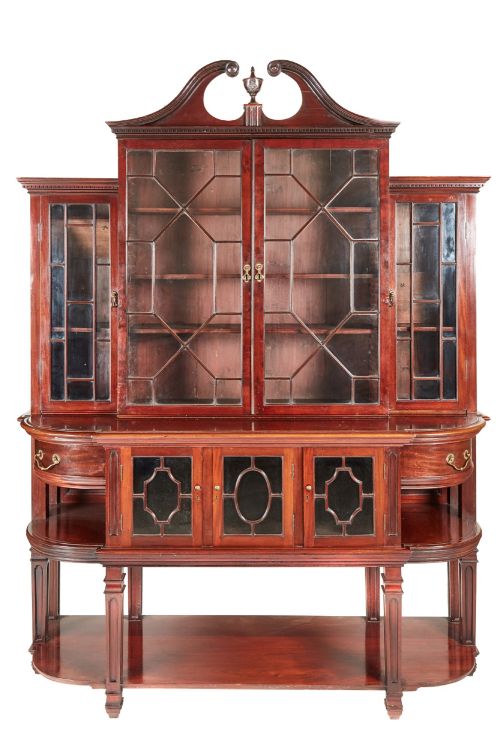
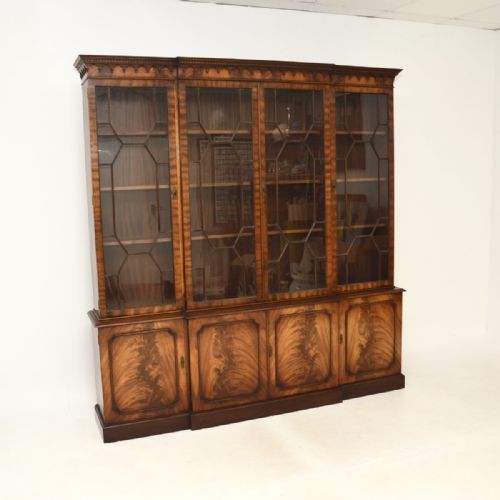
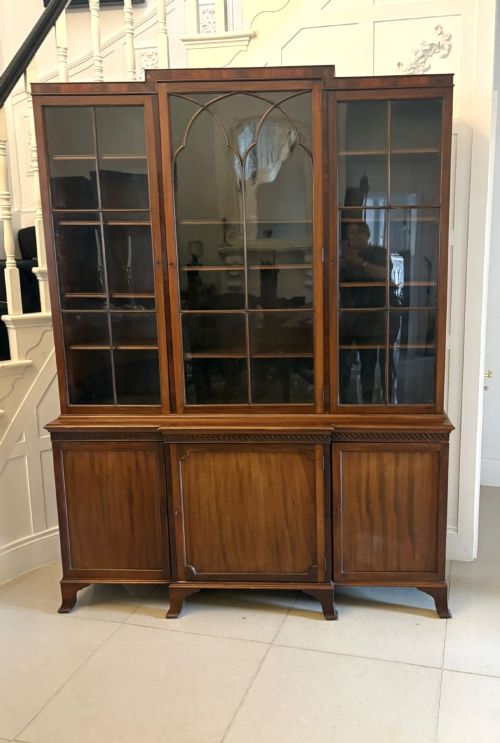
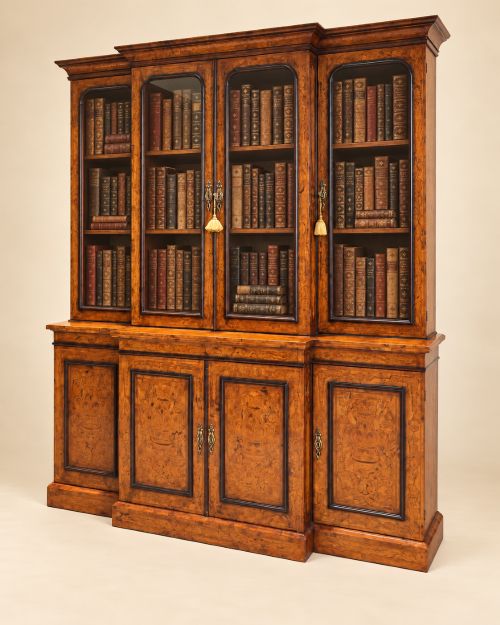
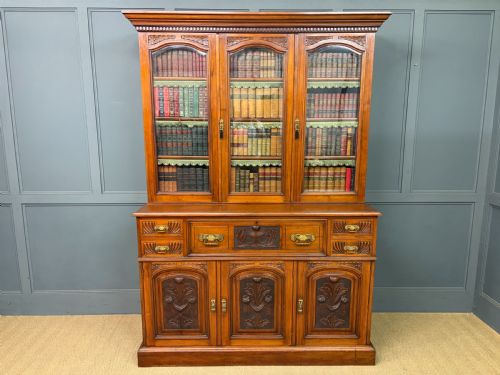
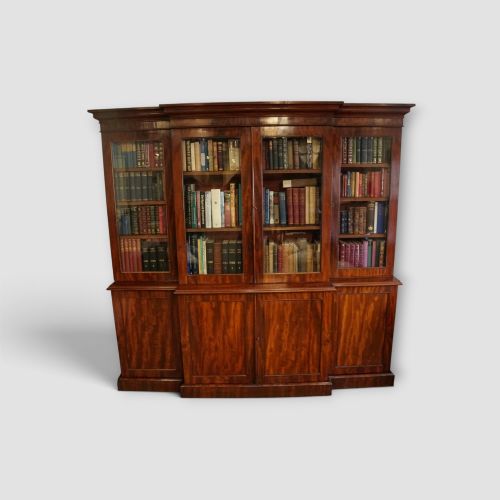
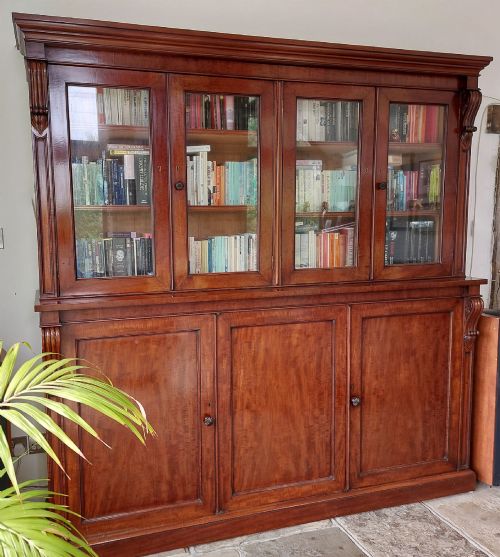
A large display cabinet spans the styles of the eighteenth and nineteenth centuries, appearing frequently in breakfront, glazed bookcase, and freestanding vitrine forms. These pieces originated as grand library bookcases, parlour cabinets, and shop display cases designed to protect and exhibit books, porcelain, and curiosities.
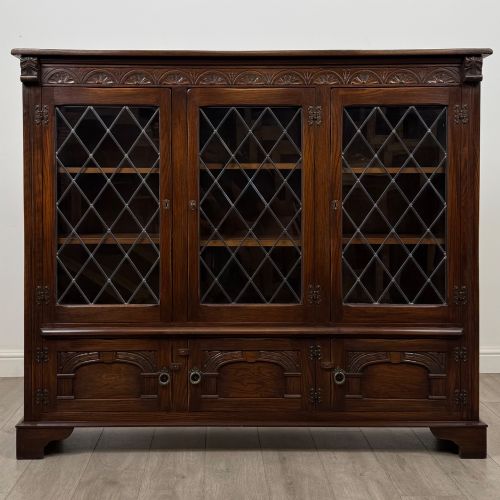
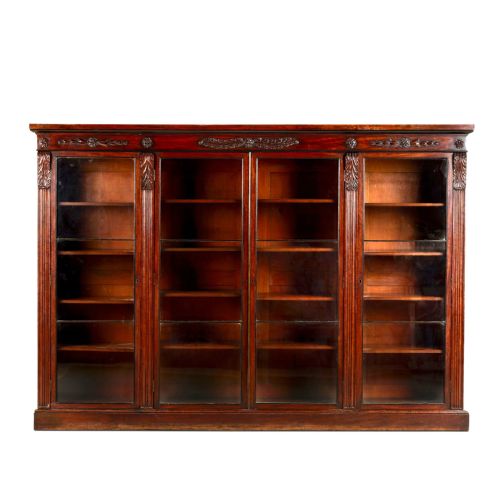
You will most commonly encounter mahogany, walnut, and pine versions dating from the Victorian and Edwardian eras, alongside satinwood and oak examples. Many feature glass panel doors with astragal bars, ranging from simple geometric configurations to elaborate Gothic revival tracery.
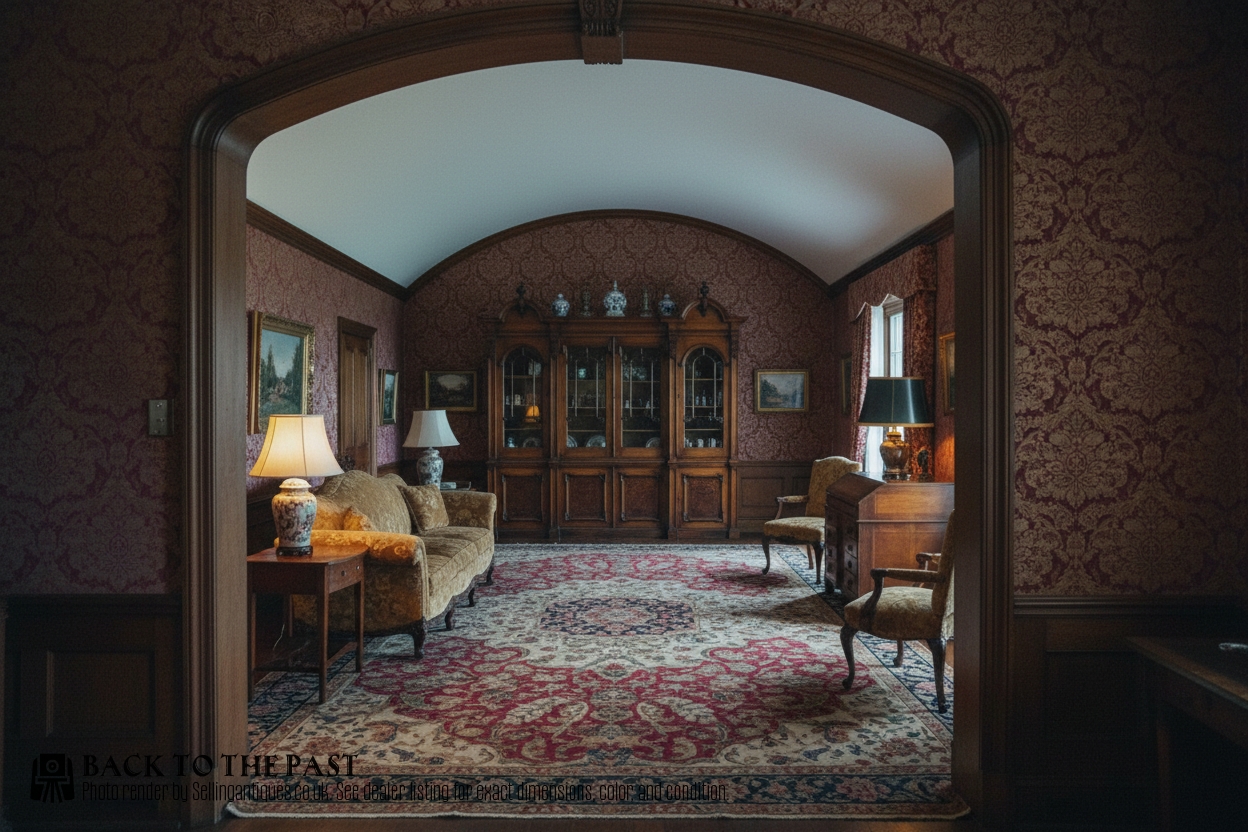
The scale of these items commands attention in a room, often featuring tiered shelving, enclosed lower cupboards, or mirrored backs. They bridge the gap between functional storage and formal interior decoration.
How They Were Made
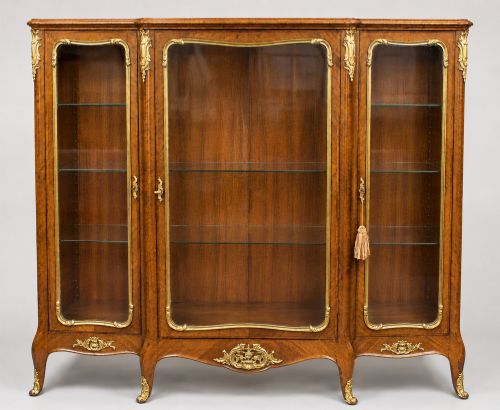
Cabinet makers utilised dense hardwoods such as mahogany, walnut, and satinwood, frequently applying burr veneers or flame figuring to the primary surfaces for visual depth. Carved wooden ornamentation, brass mounts, and ormolu details accent the structural carcass.
Glass panes are held by delicate wooden astragal bars, while interior shelving often remains adjustable to accommodate volumes of varying heights. Joinery relies on traditional dovetail techniques in the drawer construction and sturdy mortise and tenon framing for the heavy doors.
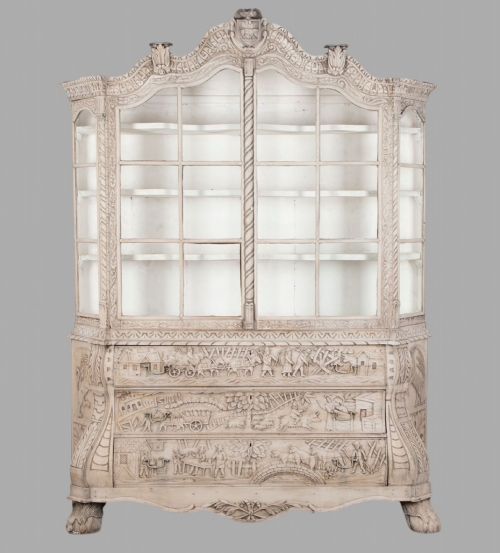
The archive records frequent examples of Dutch marquetry cabinets alongside British breakfront bookcases.
What Varies in Quality
The distinction between tiers rests upon the selection of timber veneers and the precision of the cabinetmaker's hand-cut joints. Superior examples display continuous grain matching across large breakfront facades and finely cast ormolu mounts rather than mass-produced brasswork.
The complexity of the glazing bars and the presence of original hand-blown glass panes elevate a piece significantly. Structural integrity in the heavy plinths and cornices dictates how well the cabinet withstands centuries of use.
Gillows
The Large Display Cabinet Glossary
- Astragal
- The wooden framing bars that divide a glass window or cabinet door into smaller panes. They provide structural support while creating geometric patterns across the frontage.
- Breakfront
- A cabinet design where the central section projects forward from the flanking wings. This configuration breaks up the flat plane of large library bookcases.
- Ormolu
- Gilded bronze mounts applied as decorative highlights to furniture frames. Makers cast and chased these metal elements to adorn high-status cabinets.
- Vitrine
- A glass-sided display cabinet designed primarily for porcelain and small objects of vertu. These pieces often sit on slender legs or elaborate stands.
- Marquetry
- Inlaid patterns formed by fitting contrasting veneers into a prepared wooden ground. Artisans used floral and pictorial motifs to embellish cabinet doors.
Large Display Cabinet: Frequently Asked Questions
How do I light a dark interior?
Many period cabinets feature solid wooden frames that block ambient light from reaching the shelves. Placing battery-operated LED strip lights behind the front stiles illuminates collections without altering the historic timber.
Choose warm white bulbs to replicate traditional lighting and protect sensitive bindings from excessive heat.
Can shelves hold heavy books?
Original shelving in nineteenth-century bookcases often consists of solid mahogany or oak supported by wooden bearers. While built for dense volumes, check that adjustable shelf pins are secure before loading heavy sets.
Distribute weight evenly across the board length to prevent central bowing over time.
How do I clean antique glass?
Historic glass panes often contain bubbles and uneven thickness from early manufacturing methods. Clean these delicate surfaces using a lint-free cloth and a mild vinegar solution applied to the cloth rather than sprayed directly.
Avoid commercial ammonia cleaners that can degrade aged wooden frames and antique putty.
Where should I position my cabinet?
Large display pieces require stable floor surfaces and steady ambient humidity to prevent wood shrinkage and door warping. Keep cabinets away from direct sunlight and active heat sources to protect polished veneer surfaces.
Allow clearance for doors to swing open fully without striking adjacent walls or furniture.