


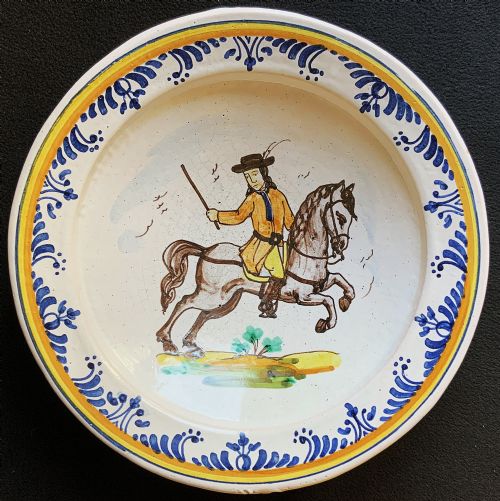
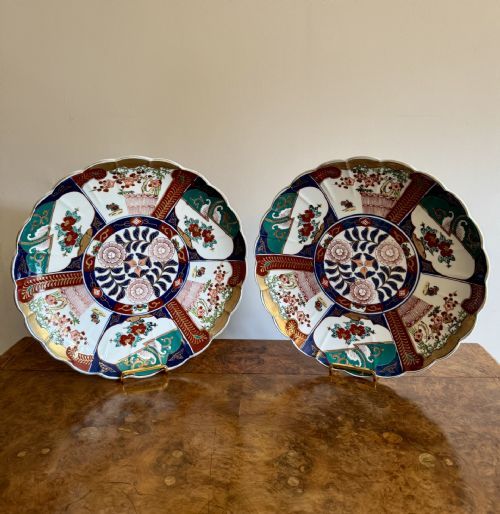


Large Decorative Wall Dish
A large decorative wall dish brings scale and colour to a room, offering an immediate focal point for an empty wall.
Large Decorative Wall Dish
A large decorative wall dish is a substantial circular plate or charger intended for display rather than dining. These pieces fill wall space with pattern, narrative scenes, or metallic sheen.
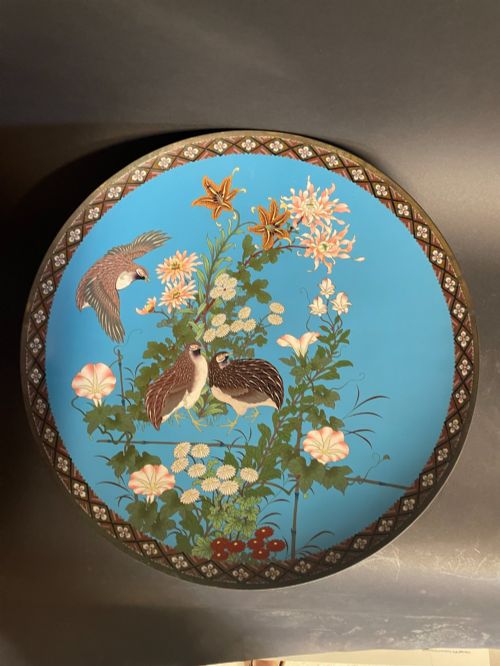
The selection here draws heavily on Japanese porcelain and earthenware from the Meiji period, alongside European ceramics and metalwork. Japanese Imari and cloisonné examples dominate the group.
Forms range from deep earthenware chargers to flat brass trays and porcelain plates, spanning periods from the nineteenth century into the early twentieth century.
How they were made
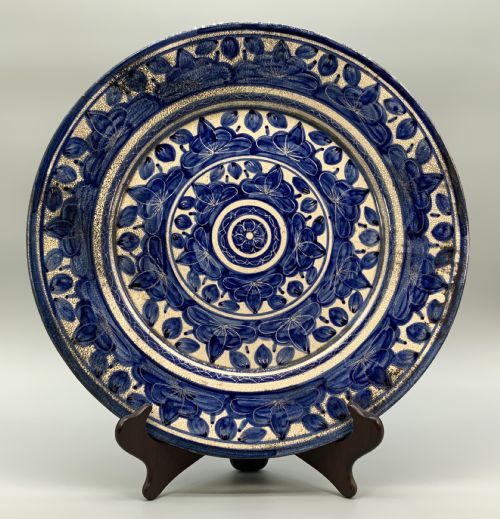
Ceramic examples rely on porcelain, earthenware, or faience, shaped by hand or wheel before receiving hand-painted glazes, cobalt blue, or polychrome enamels. Firing fixes the pigments into a hard, glossy finish.
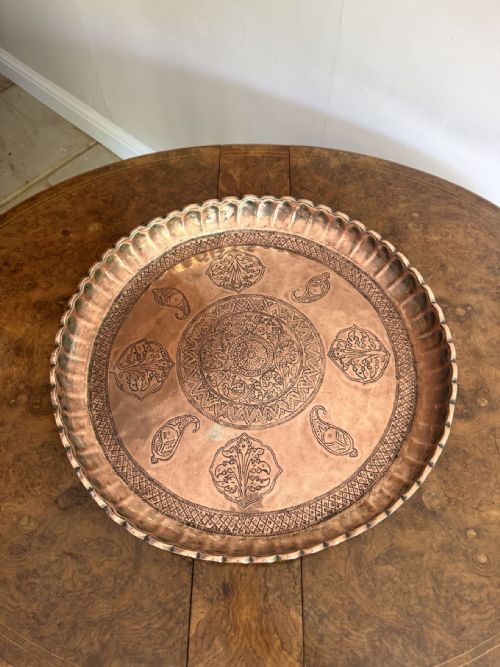
Metal versions utilise brass, copper, and silver plating, often decorated with mixed metal applications, embossing, or engraved surface patterns. Cloisonné pieces incorporate fine wire cells fused to a metal base and filled with coloured enamel.
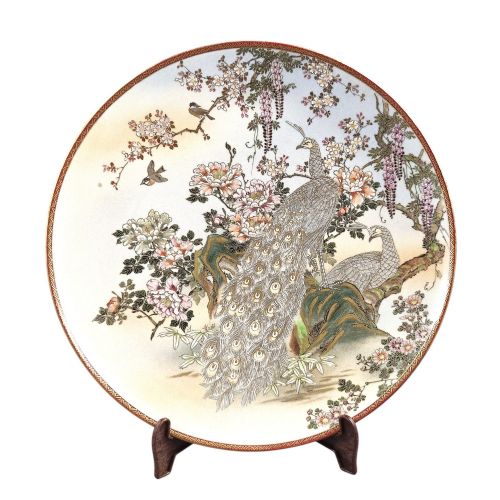
Techniques combine traditional Asian ceramic traditions with European revival styles, resulting in varied surface textures from smooth glaze to raised moriage details.
The listings combine Japanese export porcelain from the Meiji period with European brass trays, Delft faience, and nineteenth-century earthenware.
What varies in quality
Quality rests in the precision and complexity of the decoration, from the density of an Imari floral border to the fineness of wirework in cloisonné enamel. Stronger pieces display deliberate brushwork and confident handling of pictorial subjects.
Material choice and weight dictate the presence of the object on a wall, with heavier metals and dense porcelain offering greater structural integrity. The clarity of glaze and the retention of original gilding or enamelling determine the visual impact.
The Large Decorative Wall Dish Glossary
- Charger
- A large ornamental plate intended for display on a sideboard or wall rather than for serving food. These pieces measure significantly wider than standard dinner plates.
- Imari
- A style of Japanese porcelain featuring a palette of cobalt blue, iron red, and gold. The decoration typically combines floral and geometric motifs.
- Cloisonné
- A metalwork technique where fine wires form raised compartments on a surface to hold enamel paste. Subsequent firing fuses the coloured glass to the metal base.
- Faience
- Tin-glazed earthenware produced in Europe, often decorated with blue and white or polychrome pigments. It mimics the appearance of imported Asian porcelain.
- Moriage
- A decorative ceramic technique using raised slip to create textured, three-dimensional patterns on the surface. It appears frequently on Japanese Satsuma ware.
Large Decorative Wall Dish: Frequently Asked Questions
How do I hang a heavy charger safely?
Displaying a large dish requires a sturdy wall bracket or a spring-loaded hanger designed to distribute the weight evenly across the rim. Ensure the wire or hook engages firmly with the wall structure.
Avoid relying on simple adhesive discs or light picture wire for heavier ceramic and metal pieces. Check the fitting periodically to maintain security.
What is the difference between Imari and Satsuma ware?
Imari ware is a hard porcelain characterised by glossy glazes and a strong palette of underglaze blue, iron red, and gilt. The designs focus on intricate panel layouts and floral borders.
Satsuma ware utilises a cream-coloured earthenware body with a crackle glaze, often embellished with detailed pictorial scenes and raised enamels. Both originated in Japan but serve different decorative effects.
Can these dishes be cleaned with water?
Dusting with a dry, soft cloth is usually sufficient for routine maintenance of ceramic and metal display pieces. Moisture can damage exposed earthenware or delicate enamels if water seeps into unglazed areas.
Harsh cleaning agents should be avoided entirely, as they strip patination from brass and copper or dull the glaze on antique porcelain.
How do I identify the period of a metal tray?
Nineteenth-century metalwork often shows hand-hammered marks, riveted construction, or mixed metal details rather than the uniform machine stamping found in later manufacturing. Examining the reverse side reveals construction methods and tool marks left by the maker.
Weight, patination of the metal, and the style of engraving help distinguish older Victorian and Edwardian examples from modern reproductions.