


Large Decorative Fruit Bowl
A large decorative fruit bowl anchors a room with scale and presence, bringing together rich colour and historic craftsmanship.
Large Decorative Fruit Bowl
A large decorative fruit bowl serves as a striking centrepiece for a dining table or sideboard. These substantial vessels appear in various forms across the nineteenth and twentieth centuries, reflecting changing domestic tastes.
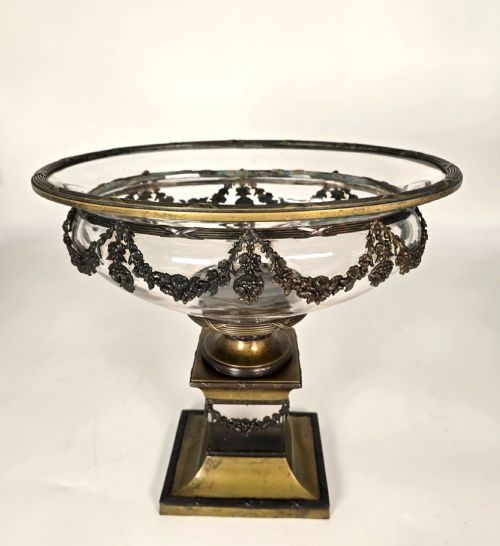
The selection ranges from Chinese export porcelain and Japanese Imari ceramics to pressed opalescent glass and heavy metalwork. Buyers encounter both pedestal bowls designed to elevate fruit and wide open dishes meant to display a full harvest.
Originating across Britain, continental Europe, and East Asia, these pieces utilise traditional forms adapted for display. Each period brings distinct characteristics, from Edwardian cut glass to Art Deco moulded glass and Arts and Crafts copper.
How they were made
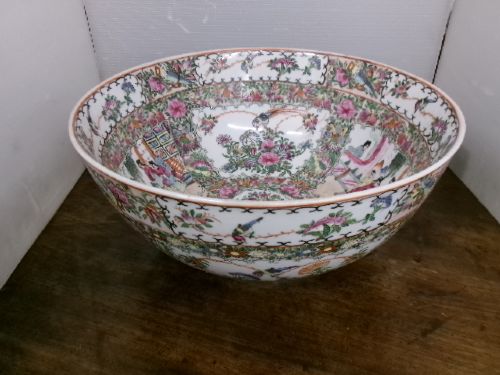
Pottery and porcelain bowls rely on skilled hand painting, cobalt blue motifs, and enamel decoration fired at high temperatures. Makers such as Doulton Burslem and factories producing Chinese Canton ware applied detailed glazes that survive in vibrant condition.
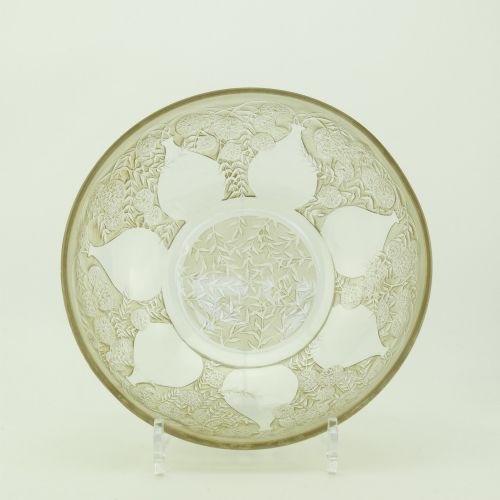
Glass vessels involve complex moulding, cutting, or opalescent treatments, often associated with makers like Rene Lalique. Bronze mounts and brass additions provide structural support and decorative contrast to the glass and ceramic bodies.
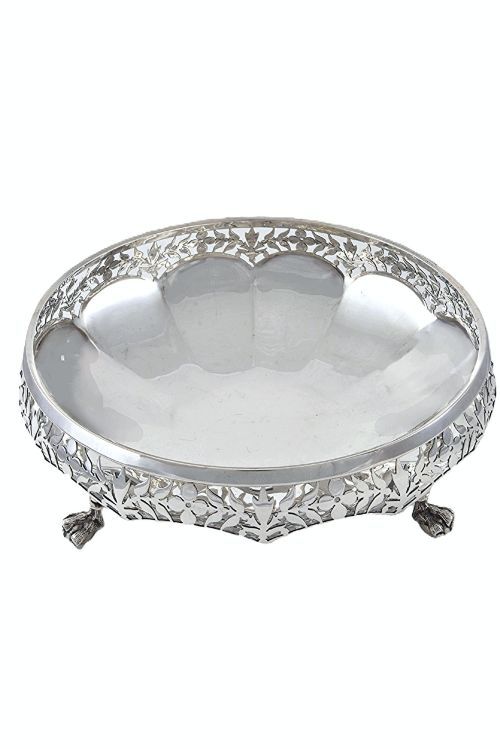
Metal bowls incorporate beaten copper, applied cabochons, and cloisonné enamel work. Artisans hammered, chased, and mounted these pieces to create durable yet ornamental forms suitable for formal interiors.
The selection includes regional British wares by Maling alongside French pedestal bowls, Japanese Imari ceramics, and Chinese punch bowls.
What varies in quality
The crispness of hand-painted motifs and the depth of the glaze separate standard production from superior examples. Finely executed brushwork on porcelain and precise enamel placement indicate higher workshop standards.
The weight and clarity of the glass or metal directly influence the tactile appeal of the piece. Thick opalescent moulding, sharp hand-cut facets, and substantial bronze or copper mounts demonstrate superior material selection.
Rene Lalique·Doulton Burslem·Maling·Charlotte Rhead Bursley Ware
The Large Decorative Fruit Bowl Glossary
- Opalescent glass
- Glass that diffuses light to display milky or glowing secondary colours. This technique gained prominence during the early twentieth century.
- Cloisonne
- Enamel decoration held within thin metal wire compartments soldered to a metal base. Japanese workshops utilised this method for intricate bird and floral patterns.
- Imari
- Japanese export porcelain decorated in underglaze blue, iron red, and gilt. These patterns became popular in European interiors during the nineteenth century.
- Punch bowl
- A large vessel originally used for serving mixed drinks at social gatherings. Their generous proportions make them suitable for displaying large quantities of fruit.
- Pedestal bowl
- A vessel raised on a distinct foot or stem. This form lifts the display above the surface of the furniture.
Large Decorative Fruit Bowl: Frequently Asked Questions
How were large decorative fruit bowls used?
These large vessels originally served functional roles on dining tables or sideboards, holding fruit, punch, or floral displays.
Over time, their decorative qualities became primary, leading to placement as prominent interior centrepieces.
How do I identify an Art Deco bowl?
Art Deco examples often feature moulded opalescent glass, geometric flower heads, or stylised motifs associated with the nineteen-twenties.
They frequently display heavier proportions and characteristic manufacturing techniques of the period.
Are these bowls suitable for daily use?
Many ceramic, glass, and metal bowls remain robust enough to hold fruit or display items in a modern home.
Care must be taken with delicate hand-painted surfaces, historical glazes, and mounted antique metalwork.
What is Chinese export porcelain?
This category includes porcelain manufactured in China specifically for Western markets, often featuring hand-painted cobalt blue or famille rose motifs.
These pieces combine traditional Eastern craftsmanship with shapes tailored for European dining customs.