





19th Century Canton Bowl
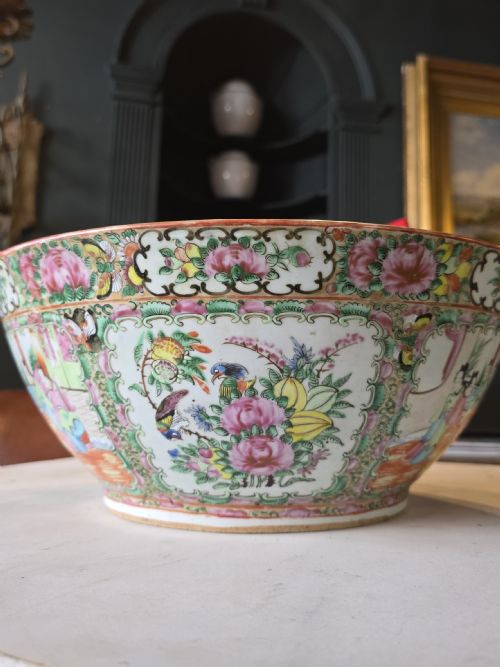
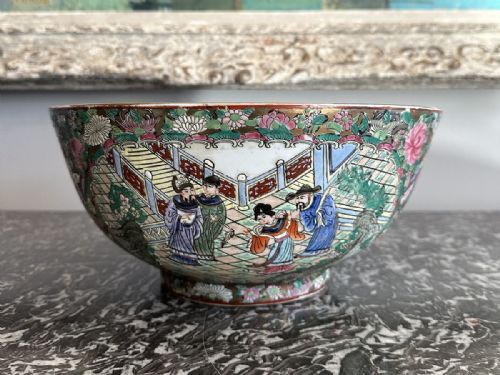
A 19th century canton bowl brings vibrant palette panels and intricate court scenes directly from Qing dynasty export workshops into modern rooms.
19th Century Canton Bowl
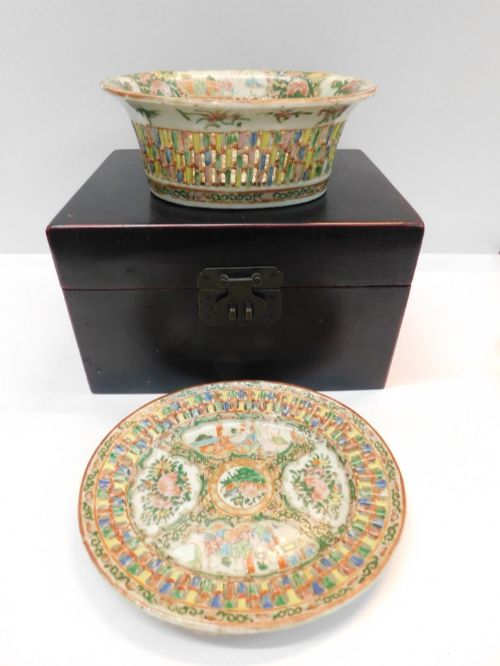
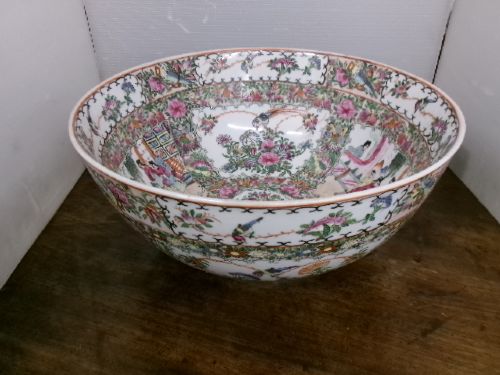
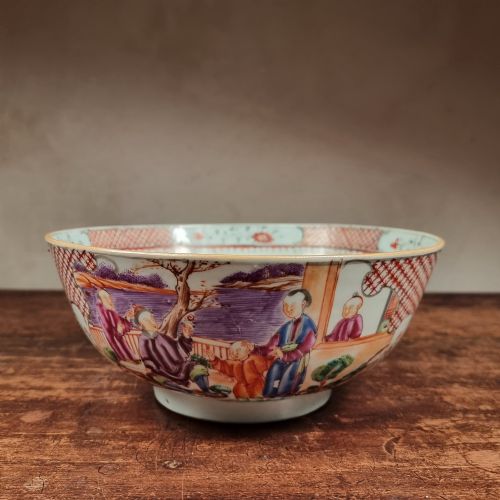
A 19th century canton bowl is a distinctive form of Chinese export porcelain typically associated with the Qing dynasty. These vessels appear in various formats on this page, including large punch bowls, pedestal dishes, and smaller decorative bowls.
The aesthetic bridges domestic Chinese production and Western tastes of the period. Collectors frequently encounter decorative bowls and baskets featuring characteristic Cantonese Famille Rose palettes and dense border patterns.
Originating primarily from the Canton province during the 1800s, these objects served both functional dining purposes and decorative display. The surviving pieces demonstrate the high output and enduring popularity of nineteenth-century Chinese export wares.
Materials and production methods
Potters shaped these vessels from white porcelain, applying overglaze enamel pigments by hand. Artisans utilised gold leaf and gilding to accentuate intricate borders and figurative panels.
Certain heavier examples incorporate copper or gilt bronze mounts for structural support and decorative enhancement. The combination of porcelain, enamel, and metallic detailing defines the physical construction of these objects.
Listings feature porcelain forms spanning the entire nineteenth century, incorporating enamel, gilding, and gilt bronze mounts across punch bowls and tea sets.
Distinctions in craftsmanship and design
The distinction between standard export items and finer examples rests upon the precision of the hand-painted details. Superior pieces display crisp facial expressions on figures and meticulously rendered bird and butterfly motifs.
The application of overglaze enamel and gold leaf also determines quality. Stronger examples maintain rich, unblemished pigments and generous gilding that resists rubbing across the complex surfaces.
The 19th Century Canton Bowl Glossary
- Famille Rose
- A major palette of Chinese ceramic glazes introduced in the Qing dynasty, dominated by opaque pink or rose enamels. This colourway forms the visual foundation for the majority of Canton porcelain.
- Qing Dynasty
- The final imperial dynasty of China, ruling from sixteen forty-four to nineteen twelve. Pieces from this era often carry specific reign marks or stylistic markers associated with the period.
- Chinese Export
- A term for goods manufactured in China specifically for Western markets. These objects reflect a synthesis of Eastern manufacturing techniques and European decorative preferences.
- Gaiwan
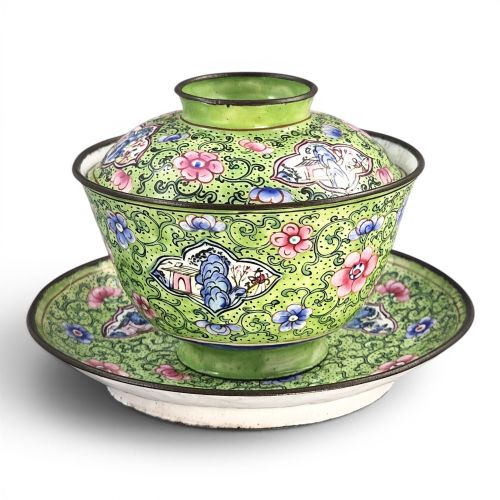
- A traditional Chinese tea set consisting of a bowl, lid, and saucer without a handle. Examples appear in enamel among nineteenth-century export wares.
- Reticulated
- Describes ceramic or porcelain work featuring openwork patterns cut into the clay before firing. This technique appears on chestnut baskets and stands.
19th Century Canton Bowl: Frequently Asked Questions
How do I date a 19th century canton bowl?
Dating relies on stylistic clues, palette characteristics, and baseline period markers recorded in the historical record. Nineteenth-century examples often display specific Qing dynasty export traits that separate them from later reproductions.
Examination of the porcelain body and enamel texture provides further context. Comparing pieces against documented archive items helps establish accurate production decades within the eighteen hundreds.
What is the difference between Famille Rose and Rose Medallion?
Famille Rose refers broadly to the pink enamel palette used across Chinese export porcelain. Rose Medallion is a specific sub-style featuring distinct panels of birds, flowers, and figures arranged in geometric patterns.
While all Rose Medallion pieces utilise Famille Rose enamels, not all Famille Rose ceramics follow the medallion layout. Both styles appear frequently within nineteenth-century Canton production.
How were these bowls originally used?
Export bowls served practical functions at Western dining tables, particularly as punch bowls for communal drinks. Large vessels held beverages or fruit, while smaller dishes formed parts of broader tea services.
Over time, many of these items transitioned into purely decorative objects. Their striking exterior and interior painting made them natural centrepieces for nineteenth-century parlours.
Where should I display a large Canton bowl?
Large punch bowls and jardinières require stable surfaces such as heavy sideboards, dining tables, or dedicated pedestals. Their substantial diameters demand space to allow unobstructed viewing of the hand-painted panels.
Placing pieces away from direct, harsh sunlight protects the delicate overglaze enamels and gilding. Proper clearance ensures the complex exterior and interior motifs remain fully visible.