
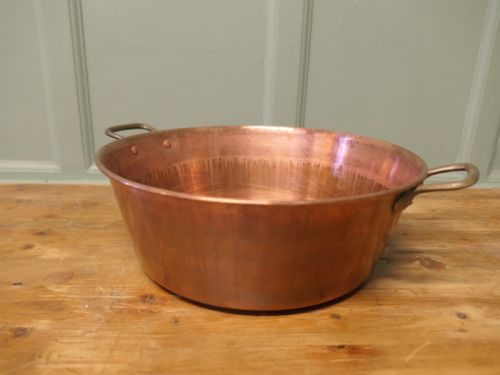
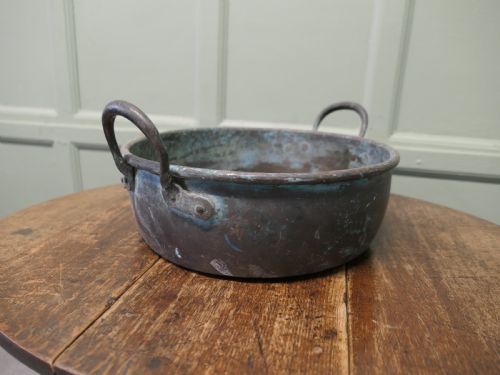


Large Copper Bowl
A large copper bowl brings warmth and utilitarian weight to a room, functioning as a practical vessel or a decorative centrepiece.
Large Copper Bowl
When you search for a large copper bowl, you encounter a variety of heavy metal vessels spanning several centuries. The most common forms on this page are preserving pans, jam pans, and decorative jardinières originating from the nineteenth and eighteenth centuries.
These items transition easily from utilitarian kitchenware to decorative display pieces. Examples range from plain Georgian and Victorian cookware to ornate Arts and Crafts pedestal bowls set with cabochons and Japanese cloisonné enamel chargers.
The assortment includes specialised forms such as wine coolers, grain measures, and cream setting pans. Each piece reflects the functional domestic and workshop demands of its period.
How they were made
The construction of these pieces relies heavily on hammered and riveted copper, often combined with brass handles, iron fittings, or tin linings. Artisans shaped sheet copper manually, creating durable vessels designed for heavy culinary or agricultural use.
Decorative variations incorporate specialised techniques such as cloisonné enamel, silver plating, and cabochon stone settings. These added materials transform utilitarian cookware and vessels into refined Arts and Crafts or Meiji period display objects.
Listings feature items spanning the eighteenth, nineteenth, and twentieth centuries, incorporating materials like brass wire, iron, and enamel alongside solid copper.
What varies in quality
Quality in these vessels depends on the thickness of the metal sheet, the integrity of the riveted joints, and the crispness of any applied decoration. Heavier gauge copper provides greater structural rigidity and demonstrates superior craftsmanship.
The presence of maker marks, signatures, or specialised embellishments such as Ruskin cabochons elevates a piece from standard utilitarian gear to a notable decorative work.
Hodges & Sons·Barker Ellis
The Large Copper Bowl Glossary
- Preserving pan
- A wide, shallow cooking vessel designed for boiling fruit and sugar, typically featuring two iron or brass handles. These pans often show heavy bottom wear from kitchen hearth use.
- Jardiniere
- An ornamental pot or stand intended for holding plants or flowers. These items frequently feature decorative handles and polished surfaces for interior display.
- Cloisonne
- A decorative metalwork technique where enamel is applied within compartments created by soldering wire to the metal body. Japanese examples from the Meiji period frequently utilise this method.
- Cabochon
- A polished, convex gemstone or coloured glass set without facets into a metal mount. Arts and Crafts metalworkers frequently applied these cabochons to pedestal bowls.
- Wine cooler
- A large vessel designed to hold ice and bottles for chilling, often fashioned from heavy copper or silver on copper. These pieces sometimes include lion mask rings or sturdy handles.
Large Copper Bowl: Frequently Asked Questions
How were copper preserving pans used?
These pans were designed for heating large quantities of fruit and sugar over an open fire or hearth. Their wide, shallow shape allowed moisture to evaporate quickly during jam and preserve making.
The heavy copper construction distributed heat evenly across the base, preventing the contents from burning during prolonged boiling.
How do I clean a copper bowl?
Maintenance depends on whether you prefer a bright polished finish or a natural aged patina. Proprietary copper cleaners remove oxidation, while mild soapy water preserves the historic surface.
Avoid harsh abrasives that scratch the metal surface and diminish the historic character of older pieces.
Can I use an antique copper bowl for cooking?
Many older pans feature bare copper or worn tin linings that are unsuitable for modern acidic food preparation. Vessels intended for display or decorative planting should remain off the stove.
If you plan to cook, ensure the interior retains a safe, intact lining appropriate for food contact.
How do I date an old copper bowl?
Dating relies on observing construction details such as hand-cut dovetail joints, handmade iron handles, and riveted seams rather than machine welding. Eighteenth and nineteenth century pieces display distinct hammering marks left by the maker's hand.
Stylistic cues like Arts and Crafts cabochons or Meiji period enamelling also provide specific chronological markers.