
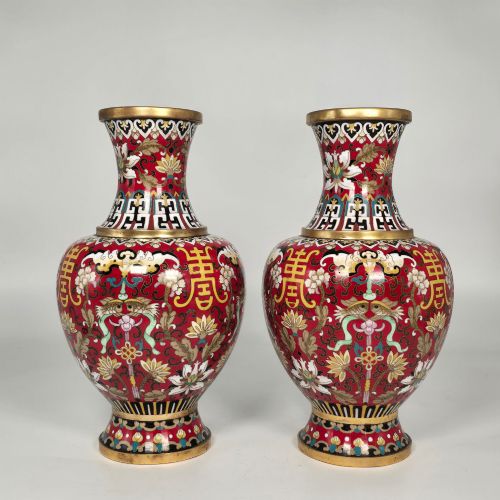
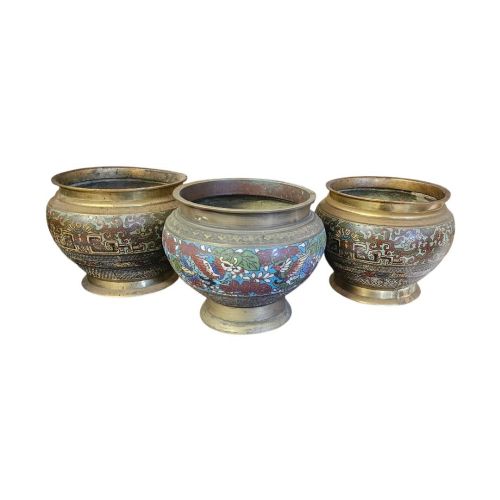


Large Cloisonne Vessel
These large cloisonne vessel examples bring substantial presence through intricate wirework and vibrant enamel fields.
Large Cloisonne Vessel
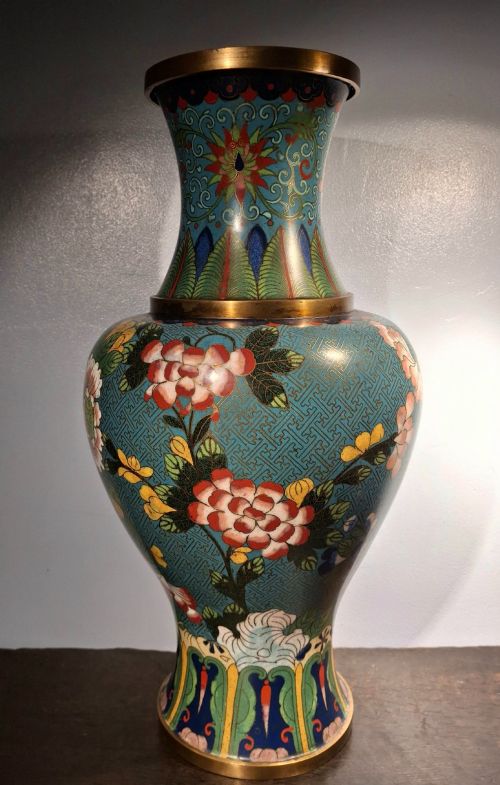
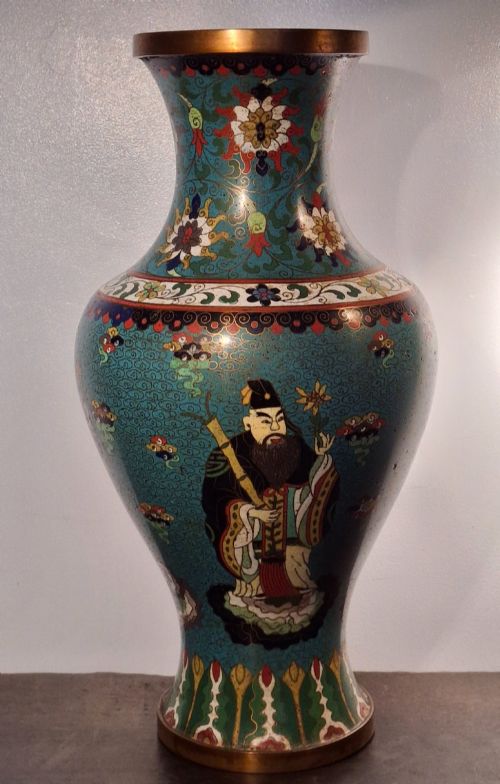
A large cloisonne vessel stands out in any room through its sheer scale and intricate wirework craftsmanship. When you look for a large cloisonne vessel, you find pieces ranging from Chinese Qing Dynasty forms to Japanese Meiji period creations. The selection here brings together heavy bronze and brass bodies adorned with colourful enamel fields.
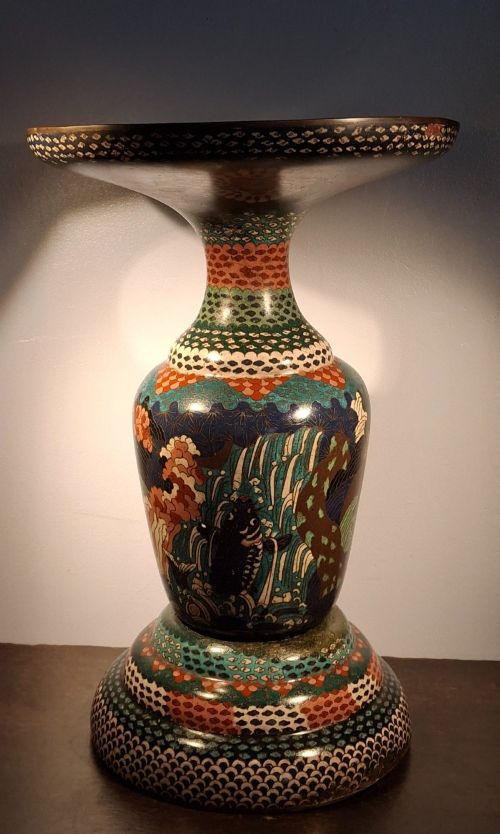
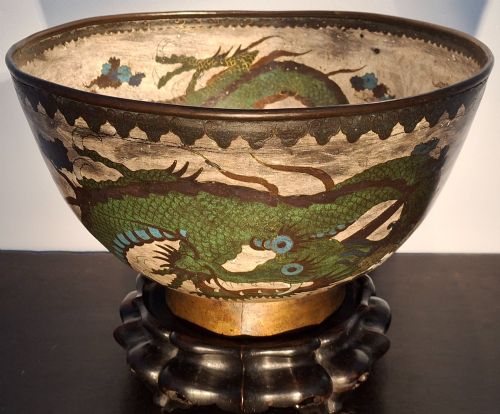
Forms span from monumental temple water dispensers and garden jardinieres to lidded koros, vases, and decorative bowls. Many pieces arrive complete with custom hardwood stands that elevate the metalwork. You meet works featuring koi fish, dragons, birds, and traditional botanical motifs across the surface.
Origins divide primarily between Chinese workshops and Japanese Meiji makers working around eighteen-eighty to nineteen-hundred. The nineteenth century yields the vast majority of these substantial bronze and brass forms. Each object demonstrates the ambition of makers working at a grand scale.
Materials and construction
Craftsmen built each large cloisonne vessel upon a heavy metal foundation of bronze, copper, or brass. Artisans soldered thin metal ribbons, known as cloisons, onto the exterior to map out complex decorative patterns. This intricate wire framework creates the compartments that hold the coloured vitreous pastes.
Workers filled each individual cell with enamel paste before firing the piece in a kiln at high temperatures. The firing process melts the glass powders, fusing them permanently within the metal gridwork. Subsequent grinding and polishing reveal the sharp metallic outlines alongside the lustrous coloured fields.
Listings feature items from the nineteenth century, including specific dates around eighteen-eighty, eighteen-ninety, and nineteen-hundred.
Measures of quality
Quality reveals itself in the discipline of the wirework and the density of the enamel fill. Master craftsmen maintained uniform ribbon thickness and precise alignment throughout complex pictorial scenes of dragons and birds. Inferior examples show uneven cell walls and pitted enamel surfaces lacking depth.
The weight of the bronze or brass body provides another clear indicator of foundational substance. Substantial vessel walls support larger enamel expanses without warping during the intense kiln firing process. The integration of carved hardwood stands further distinguishes the finer pieces in this category.
The Large Cloisonne Vessel Glossary
- Cloisonne enamel
- A metalworking technique where thin wires form raised cells that hold coloured glass paste before firing. This method creates distinctive patterned surfaces across bronze and brass bodies.
- Champleve enamel
- A process where troughs or cavities are gouged directly into a bronze surface to receive enamel paste. The metal base remains visible as thick borders framing the coloured areas.
- Koro
- A traditional incense burner featuring a perforated lid designed to release aromatic smoke. These vessels often sit upon three feet and display intricate wirework decoration.
- Jardiniere
- A large ornamental pot or bowl used to hold plants or floral arrangements. In this category, bronze and brass examples often feature elaborate bird or dragon motifs.
- Meiji Period
- The era of Japanese history lasting from eighteen-sixty-eight to nineteen-twelve. This period produced monumental vessels with highly detailed bird and water imagery.
Large Cloisonne Vessel: Frequently Asked Questions
How are these large vessels cleaned?
Dusting with a soft, dry cloth preserves the polished bronze and delicate enamel surfaces safely.
Avoid chemical polishes and water immersion, as moisture damages old metal foundations and unsealed joints.
Can these jardinieres hold live plants?
These decorative bowls and jardinieres were historically designed to display large plants or serve as standalone ornamental objects.
Using an inner plastic liner protects the historic bronze and enamel interior from moisture and soil erosion.
What is the difference between Chinese and Japanese pieces?
Chinese pieces often utilise thicker bronze foundations and heavier champleve or cloisonne work influenced by Qing traditions.
Japanese Meiji items frequently display meticulous, fine-wire pictorial scenes featuring birds, koi, and dragons against dark enamel fields.