
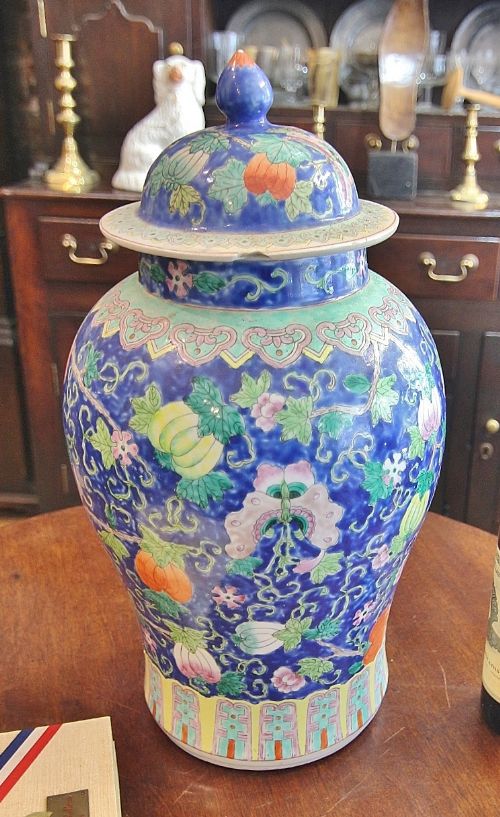


Large Ceramic Temple Vase
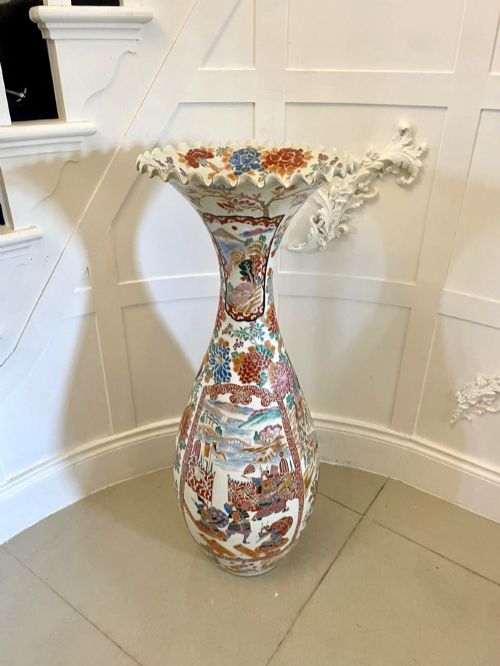
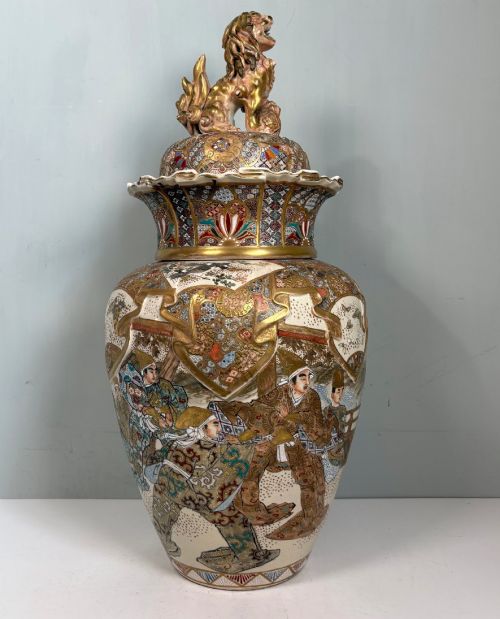
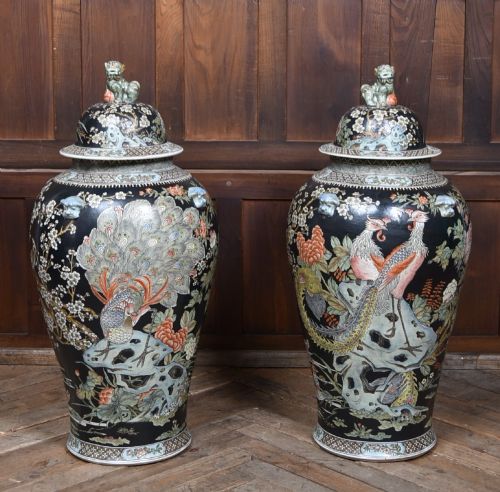
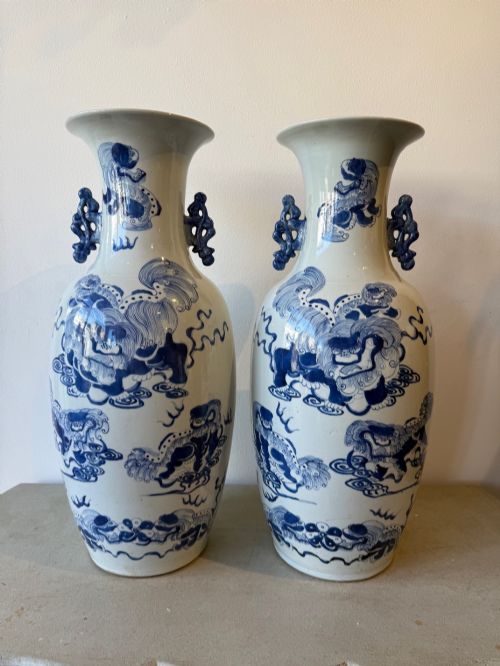
A large ceramic temple vase commands space with bold proportions and intricate painted detail, representing centuries of Asian and European ceramic artistry.
Large Ceramic Temple Vase
When you search for a large ceramic temple vase, you encounter grand vessels created for display in significant interiors, often standing as floor vases or monumental palace jars.
The selections span the nineteenth and twentieth centuries, drawing heavily upon Japanese Meiji, Edo, and Chinese Qing styles.
You will regularly find Japanese Imari, Satsuma, and Kutani wares alongside Chinese blue and white, Famille Rose, and Cantonese pieces.
Materials and construction methods
Potters utilised ceramic, porcelain, earthenware, and ironstone to form these substantial bodies, often building them as lidded vases, jars, and urns.
Decoration relied upon careful glaze application, vibrant enamel work, and applied gold leaf or gilding to highlight intricate patterns.
Many examples incorporate specialised panels, such as lacquer details or specific colour palettes like Mazarine blue.
Listings feature nineteen-century and early twentieth-century pieces, spanning 1880, 1890, 1900, 1920, and 1940.
Judging the standard of a vessel
Quality rests upon the crispness of the hand-painted detail and the controlled application of enamels and gilding across a large surface area.
Balance and symmetry in substantial floor-standing vessels determine success, as does the depth and consistency of the underlying glaze and ceramic body.
Samson
The Large Ceramic Temple Vase Glossary
- Imari
- A traditional Japanese style of porcelain featuring a distinctive palette of underglaze blue, iron red, and gold. It originated in the Edo period and remained popular through the nineteenth century.
- Satsuma
- Earthenware pottery originating from Satsuma province in Japan, characterised by an ivory-coloured, crackle-glazed surface decorated with detailed enamel and gilding.
- Famille Rose
- A major palette of Chinese ceramic glaze introduced in the Qing dynasty, dominated by opaque pink or rose enamel colours derived from colloidal gold.
- Kutani
- Japanese porcelain or earthenware from Ishikawa prefecture, known for bold designs and vibrant colour schemes including deep greens and golds.
- Ironstone
- A type of durable earthenware developed in the nineteenth century as a robust alternative to porcelain, capable of holding rich cobalt blue and gilt decoration.
Large Ceramic Temple Vase: Frequently Asked Questions
Where were temple vases displayed?
These large vessels were designed to anchor significant rooms, often placed directly on the floor or upon dedicated stands in grand halls and reception spaces.
Their commanding height and decorative presence allowed them to serve as focal points within interior schemes.
How do I distinguish Imari from Satsuma?
Imari pieces utilise hard porcelain bodies painted in underglaze blue, iron red, and gilt with geometric and floral motifs.
Satsuma pieces employ a creamy earthenware body covered in a fine crackle glaze, carrying dense pictorial scenes rendered in enamel and gold.
Are these vases always supplied with lids?
While many examples on this page are described as lidded vases or urns, others were made open-topped as floor vases or palace jars.
Lidded forms often retain their original matching covers, which substantially completes the silhouette of the piece.
What periods do these pieces represent?
The available selection centres primarily on the nineteenth century, including specific dates from the 1880s and 1890s, alongside examples from the early twentieth century.
Stylistic influences reach back further, incorporating eighteenth-century Kangxi period designs reinterpreted in later manufacturing.