


Large Central Asian Carpet
A large central asian carpet anchors a room with rich tribal geometry and saturated madder reds, offering lasting warmth and distinct cultural heritage.
Large Central Asian Carpet
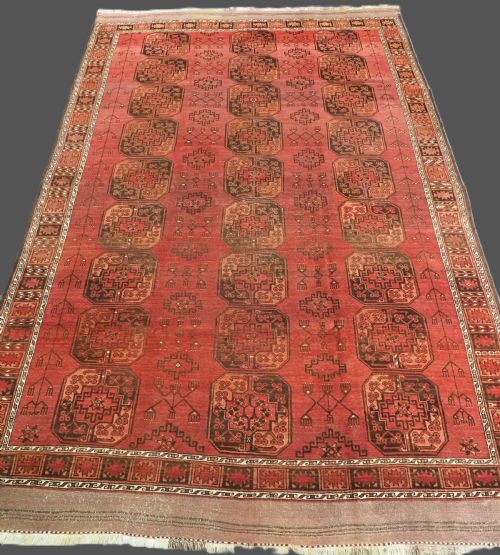
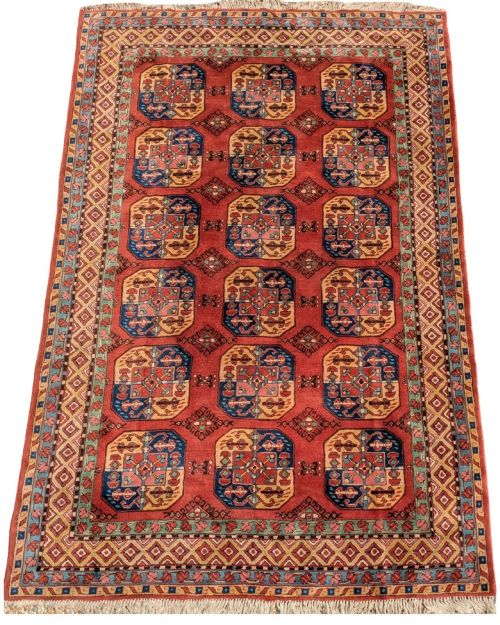
When you search for a large central asian carpet, you encounter heavy tribal floor coverings created by nomadic and village weavers across the region. These textiles include main carpets, room-sized village pieces, and large tribal room rugs originating from nineteenth and early twentieth century traditions.
The pieces on this page are predominantly attributed to Turkmen groups such as the Ersari, Tekke, and Kizyl Ayak, alongside Karakalpak, Uzbek, and Afghan village weavers. They typically display large geometric gul motifs, repeating lattice fields, and deep red or madder colour palettes.
Buyers selecting these items look for substantial floor coverings that bring authentic tribal character and room-scale presence to domestic interiors. The selection spans the middle to late nineteenth century up to the early twentieth century, capturing a period of traditional village and tribal production.
Materials and construction methods
These carpets rely on wool and hand-spun wool foundations and pile, combined with cotton elements in specific regional structures. Weavers utilised natural dyes to achieve deep red, brown, and ivory tones that mellow gracefully over decades of use.
The construction involves dense knotting designed to withstand heavy domestic wear, producing resilient floor coverings that maintain their structural integrity. Weavers worked on traditional horizontal or vertical looms, translating ancestral tribal patterns into enduring formats.
Nomadic weavers occasionally inserted deliberate small wool colour shifts into repetitive borders, ensuring the evil eye could find no flaw in perfection.
Distinctions in quality and execution
Quality in these carpets rests upon the handling of natural dyes, where depth and variation in the red tones create visual movement across the field. Subtlety in the saturation of the wool separates standard village output from superior tribal weaving.
Execution of the geometric gul motifs and the crispness of the secondary borders indicate the weaver's control over proportion and symmetry. Handling of the wool pile, from tight, dense knotting to softer village structures, defines the durability and tactile weight of each piece.
The Large Central Asian Carpet Glossary
- Gul
- A primary octagonal medallion or repeated floral guls found across Turkmen and Central Asian tribal carpets. These motifs often act as clan emblems and structure the central field of the rug.
- Beshir
- A regional style associated with Ersari weavers along the Amu Darya river, known for unusual prayer designs, boteh motifs, and ikat-influenced elements. These pieces diverge from standard tribal repetition with more fluid botanical layouts.
- Chuval
- A large tribal bag face produced for household storage, often displaying large guls and detailed elem panels. Collectors prize surviving examples for their fine knotting and complete original sides.
- Torba
- A smaller nomadic storage bag hung inside a yurt or tent, featuring wide horizontal bands of geometric ornament. They share the deep madder palette and wool construction of larger floor carpets.
- Karakalpak
- Textiles woven by the Karakalpak people living south of the Aral Sea, notable for bold tribal graphics and distinctive handling of traditional gul designs.
Large Central Asian Carpet: Frequently Asked Questions
Where were these carpets originally made?
These carpets were produced by nomadic and settled tribal groups across historical regions of Central Asia, including modern-day Turkmenistan, Afghanistan, and Uzbekistan.
Weavers worked within specific tribal confederations, passing down traditional dyeing and patterning techniques through generations.
How do I care for a tribal wool carpet?
Regular gentle vacuuming without a rotating power brush helps remove grit from the wool pile while protecting the structure.
Professional cleaning tailored to antique vegetable-dyed textiles ensures the natural colours remain stable and bright over time.
How can I tell different tribal designs apart?
Distinctions rely primarily on the shape and arrangement of the main repeating guls, secondary ornaments, and border structures.
Ersari and Tekke pieces, for example, feature distinct octagonal or quartered medallion configurations paired with specific palette choices.
Are these carpets suitable for heavy foot traffic?
Many of these pieces were built as durable floor coverings intended for demanding daily use in village and nomadic settings.
Their heavy-duty wool pile and sturdy hand-spun foundations allow them to handle active living spaces when placed over a supportive underlay.