




Large Bronze Urns
Large bronze urns bring classical severity and Japanese weight to a room, standing as heavy focal points forged to command attention.

Large Bronze Urns
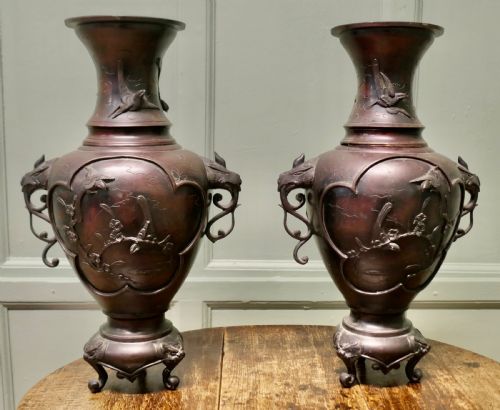
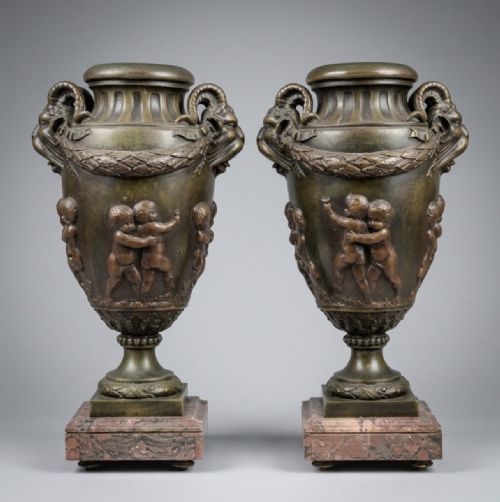
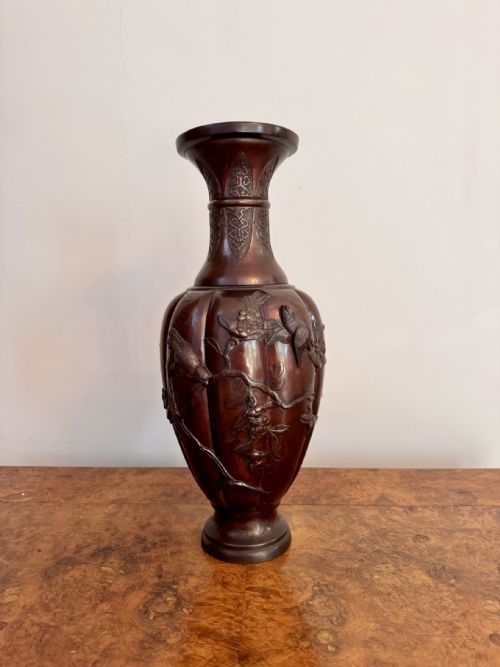
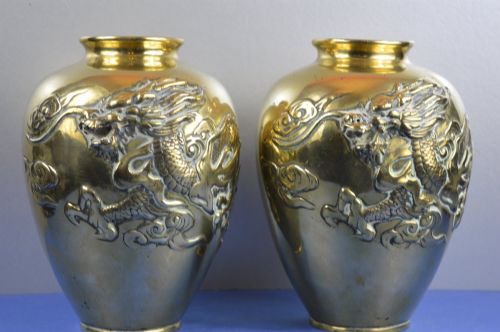
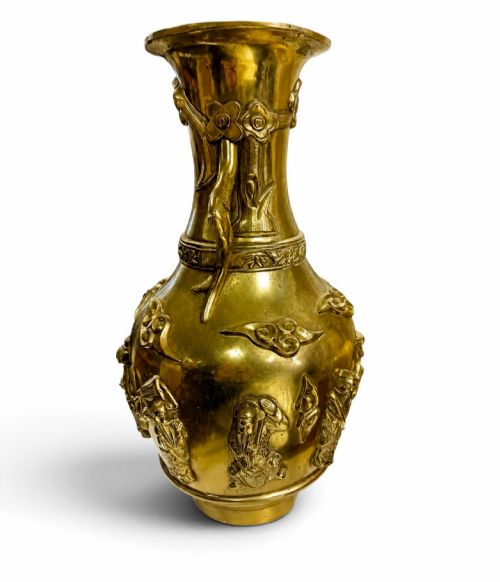
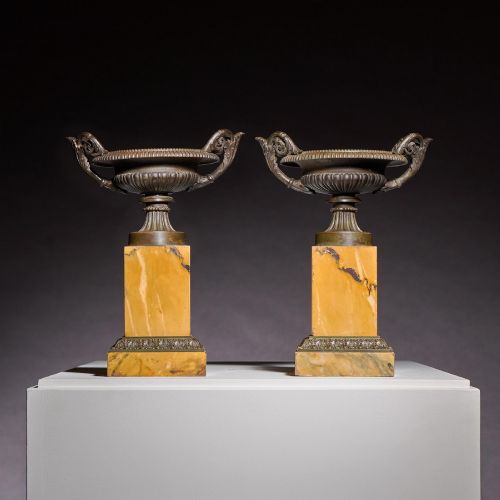
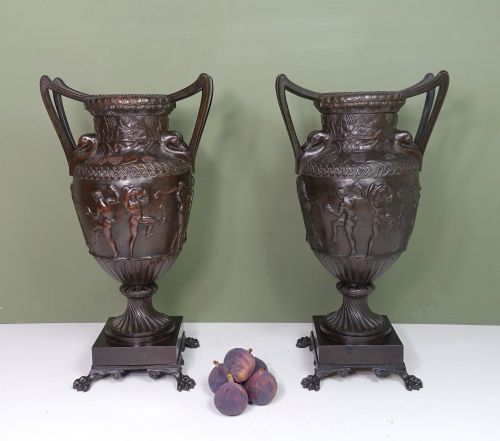
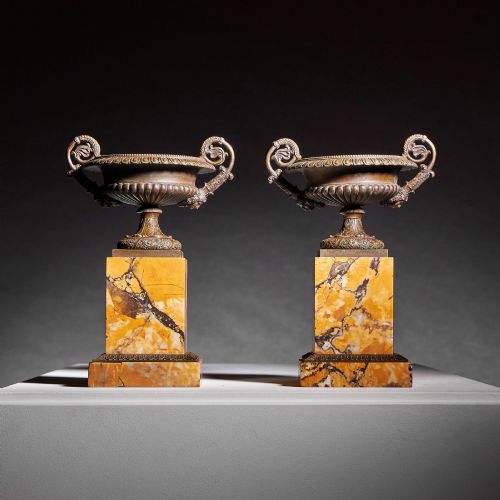
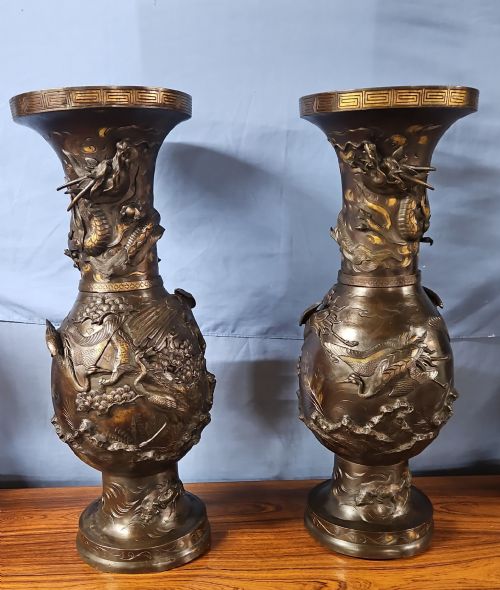
When you examine large bronze urns on this page, you encounter pieces spanning the nineteenth century alongside later works from nineteen hundred and nineteen thirty. The selection divides primarily between French neoclassical interpretations such as campana shapes and Grand Tour tazzas, and Asian craftsmanship including Japanese Meiji period vases and Chinese dragon vessels.
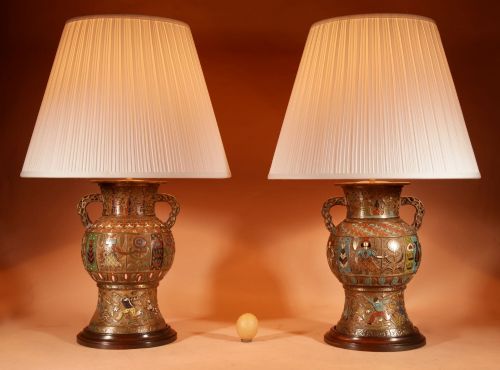
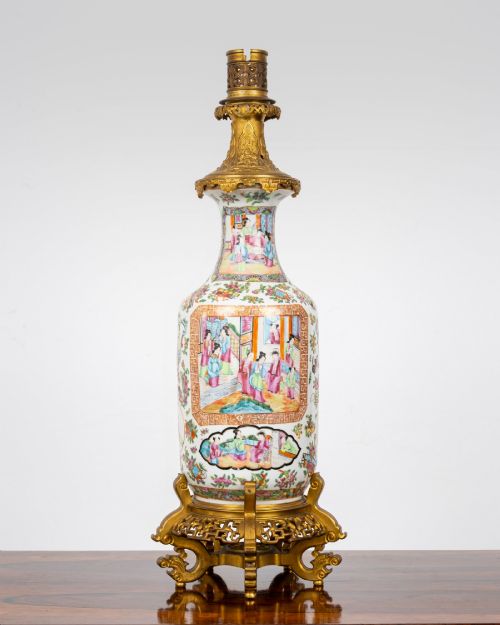
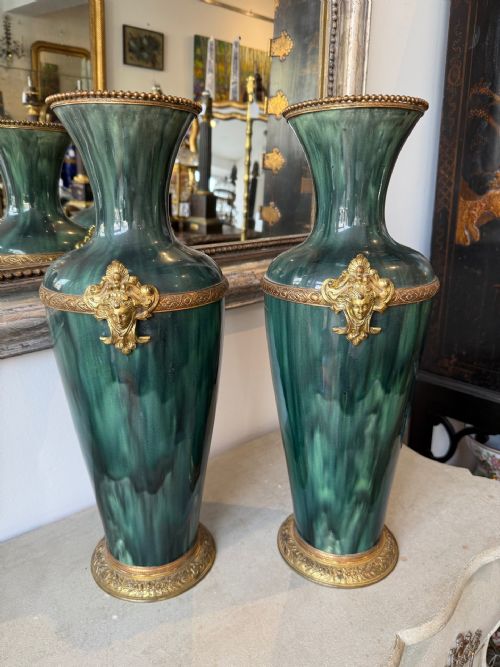
Most examples appear as pairs intended for mantelpieces, large tables or garden settings, often incorporating varied materials like marble, porcelain or ormolu mounts. The forms range from classical wine coolers and ritualistic food bowls to heavy garden temple urns and mounted table lamps.
Materials and construction
These items rely on cast bronze, patinated bronze, and copper-alloy, frequently enhanced with gilt bronze, ormolu, or cloisonne enamel. Makers combined metal casting with carved stone components such as Siena marble, white marble, and quartz.
Techniques range from high-relief chasing and mixed metal inlay on Japanese vessels to classical turning and fire-gilding on French neoclassical cassolettes and campana urns.
Some vessels feature swimming koi fish that appear ready to leap from the enamel.
Judging quality in metalwork
Quality reveals itself in the crispness of the chased detail, particularly on high-relief motifs like Daoist immortals or dragons, where sharper finishing separates master works from routine foundry output. Weight and stability also indicate superior construction, as heavier casts demonstrate denser metal usage.
The integration of mixed media dictates the tier of the piece, where properly fitted marble bases, substantial ormolu mounts, and precise enamel work elevate decorative value significantly.
The Large Bronze Urns Glossary
- Campana
- A bell-shaped vessel form derived from ancient Roman pottery and metalwork. This classic silhouette often appears in nineteenth-century French decorative pieces.
- Cassolette
- A dual-purpose decorative vase or urn featuring a reversible lid that transforms the vessel into a perfume burner or small basin. They frequently incorporate ormolu mounts and marble bodies.
- Ormolu
- Finely ground high-carat gold applied to a bronze base using a mercury amalgamation technique. It provides a rich, durable surface finish common in French decorative arts.
- Grand Tour
- A traditional trip undertaken by nineteenth-century Europeans to study classical antiquities, inspiring souvenir bronzes and marble tazzas made for travellers.
- Usubata
- A traditional Japanese bronze vase or urn designed specifically for arranging flowers, often featuring a wide flat rim and a columnar body.
Large Bronze Urns: Frequently Asked Questions
Where should I place a large bronze urn?
These pieces require sturdy support such as heavy oak sideboards, marble topped consoles, or dedicated floor space for garden urns. Their substantial weight demands solid foundations.
Position them where natural light catches the patinated surface or gilt bronze details, allowing the scale to anchor the surrounding room.
How do I clean patinated bronze safely?
Dust the surface regularly with a soft, dry lint-free cloth to prevent particulate accumulation. Avoid abrasive polishes or chemical cleaners that strip historical patination.
Consult a professional restorer if the metal requires deeper conservation or if the protective wax layer needs renewal.
What is the difference between French and Asian urns?
French pieces typically follow neoclassical or rococo revival styles with campana shapes, marble bases, and ormolu mounts. They reflect European classical revival movements.
Asian examples, particularly from the Meiji period or Qing dynasty, focus on high-relief casting, mixed metals, cloisonne enamel, and traditional fauna or immortal motifs.
Are these urns waterproof for plants?
Most antique metal and mixed-media vessels were intended for decorative display, lighting conversion, or dry potpourri rather than holding water. Moisture can damage internal seals, linings, and underlying marble bases.
Utilise internal plastic or glass liners if you intend to use them with fresh flowers to protect the historic interior.