



Japanese Metalwork Pair
When you search for a japanese metalwork pair, you are tracking down matched dual objects born from meticulous Meiji and Edo craftsmanship.
Japanese Metalwork Pair
A japanese metalwork pair brings together symmetrical or mirrored items designed for coordinated display in domestic or garden spaces. Buyers search for these dual compositions to secure balanced decorative impact on mantels, tables or pedestals.
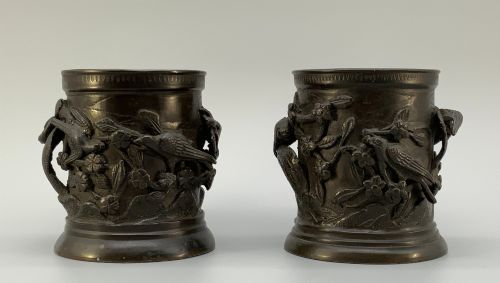
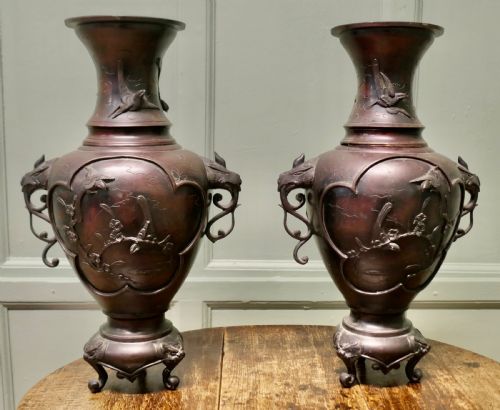
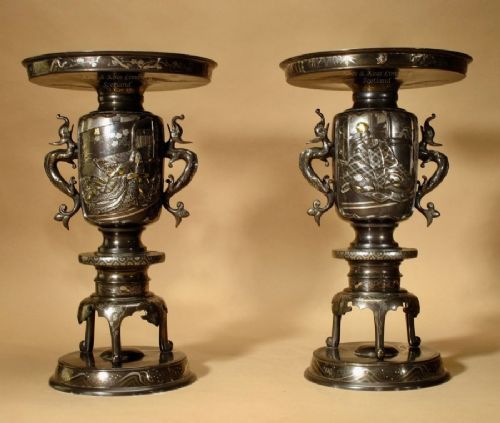
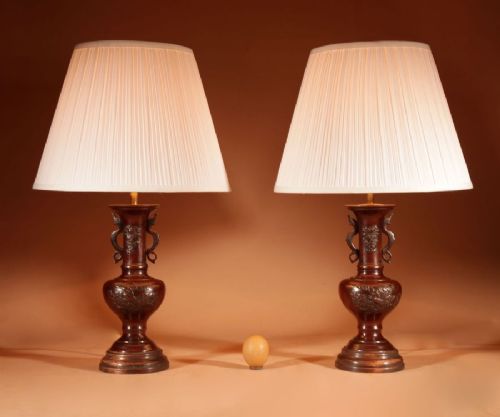
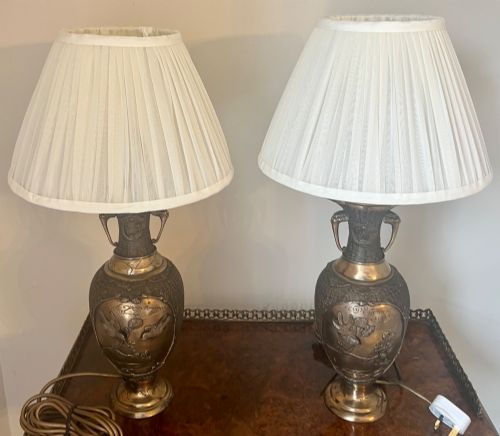
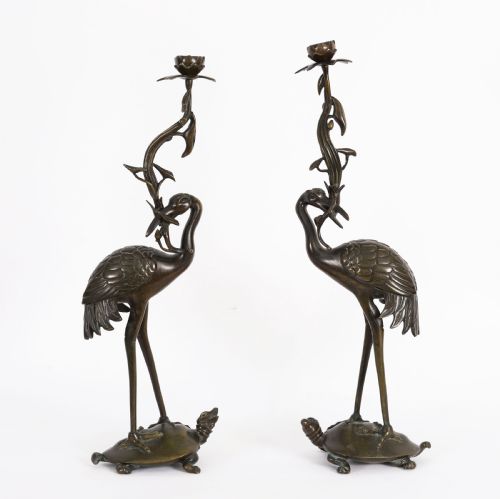
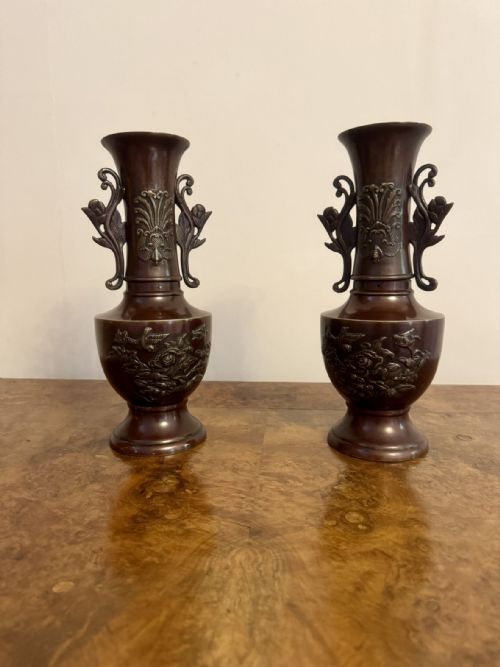
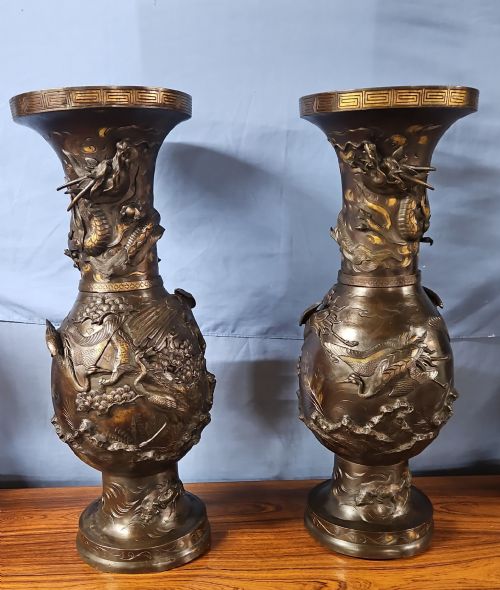
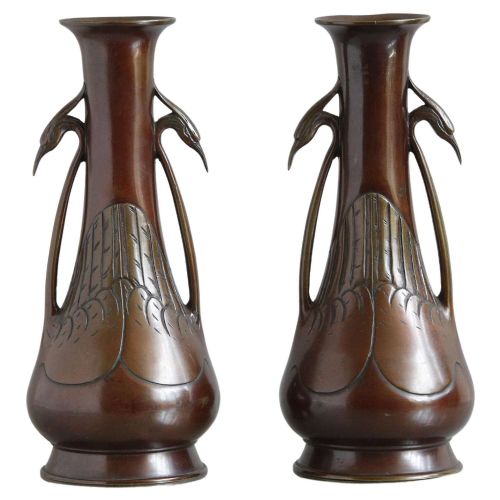
Vases and urns dominate the forms you will encounter most frequently on this page, accompanied by table lamps, candlesticks, lidded jars and wall chargers. These vessels often feature handled designs or sculptural motifs reflecting traditional East Asian fauna and flora.
The majority of surviving examples originate from the Meiji period, alongside select pieces attributed to the Edo period and later decades of the nineteenth and early twentieth centuries. Artisans produced these items in varying scales, ranging from small cabinet stem vases up to heavy palace-sized floor jars and lifesize garden figures.
Materials and Techniques
Casting forms relied heavily on bronze, copper and brass, providing sturdy foundations for intricate surface manipulation. Artisans applied patinated finishes to these metal bases to achieve dark, rich tonal depths across the body of each object.
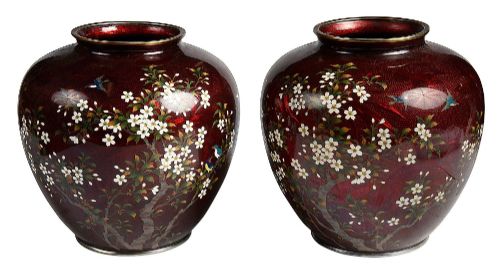
Metal inlay and mixed metal work added contrasting details in gold and other alloys, creating raised pictorial scenes of birds, dragons and floral sprays. Cloisonné enamel techniques further enhanced surfaces by fusing vitreous coloured pastes within delicate wire cells soldered to the metal ground.
Listings feature periods spanning from the mid-nineteenth century through the Meiji era and into the early twentieth century.
Differentiating Quality
Symmetry and weight distribution within the dual items dictate overall balance, ensuring the pair matches properly in proportion and stance. Superior finishing of the underlying metal patination and enamel cells maintains visual harmony across both pieces.
The Japanese Metalwork Pair Glossary
- Meiji Period
- The era in Japanese history spanning from 1868 to 1912, marked by intense artistic production and opening trade with the West. Much of the decorative metalwork found today dates from this dynamic period.
- Cloisonné
- A technique where enamel is applied to compartments created by soldering thin metal wires to a base. This method produces vibrant, patterned surfaces often seen on decorative vessels.
- Patinated Bronze
- Metal treated with chemicals and heat to produce a stable surface coloration, ranging from deep browns to rich blacks. This finish protects the alloy while enhancing visual depth.
- Okimono
- Japanese decorative objects designed for display on a shelf or tokonoma alcove. These sculptures frequently depict animals, figures or natural subjects in realistic detail.
- Baluster Urn
- A vase or container characterised by a curved, swelling body tapering down to a narrower base. This classic vessel shape provides a stable and balanced form for metal casting.
Japanese Metalwork Pair: Frequently Asked Questions
What rooms suit a japanese metalwork pair?
These balanced objects suit reception rooms, hallways and studies where symmetrical placement creates a strong focal point. Placing them on heavy furniture or dedicated stands allows the detailed metal surfaces to catch ambient light.
Larger garden okimono or palace urns find a natural home in conservatories or sheltered outdoor settings. Their robust metal construction makes them adaptable to both formal and casual interior schemes.
How were these pairs used originally?
Vases and jars served primarily as decorative receptacles for seasonal floral arrangements or stood empty as sculptural art pieces. Candlesticks and lamps provided functional illumination while showcasing the metalworker's skill.
In traditional settings, matched pairs often anchored the display within a reception room or ceremonial space. Their dual nature satisfied a strong aesthetic desire for harmony and balance.
How do I care for antique metalwork?
Dusting gently with a soft, dry cloth keeps the surface free from abrasive particles without disturbing the aged patination. Avoid commercial metal polishes or harsh chemical cleaners that strip away historic finishes.
Maintaining a stable indoor humidity prevents moisture damage to vulnerable enamel or inlaid sections. Gentle handling ensures that delicate handles and raised relief elements remain intact.
How are Edo and Meiji pieces distinguished?
Edo period items often display a restraint in design and heavier, more utilitarian casting proportions. These earlier works reflect a closed society with distinct domestic aesthetic priorities.
Meiji period metalwork frequently exhibits high technical bravura, intricate mixed metal inlay and an eye toward Western export markets. The opening of trade inspired bolder scales and more dramatic sculptural subjects.