




Large Brass Church Candlesticks
Large brass church candlesticks bring striking architectural height and ecclesiastical presence into a room, forged to hold tall ceremonial tapers.
Large Brass Church Candlesticks
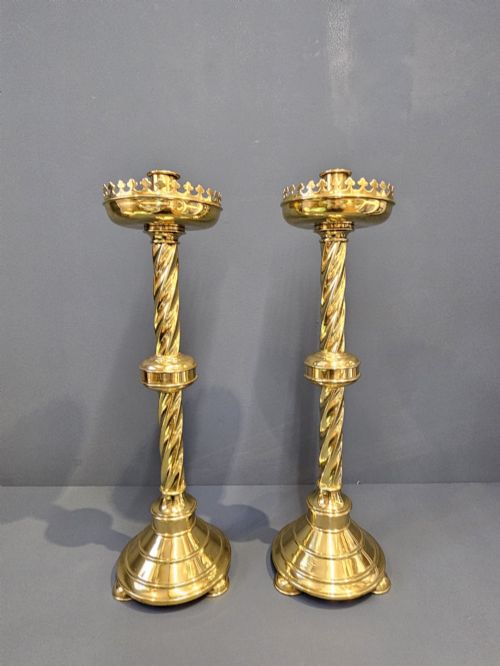
When you search for large brass church candlesticks, you are looking at substantial ceremonial altar pieces that stand far taller than domestic lights. Most examples you meet on this page hail from the nineteenth century, reflecting Victorian Gothic Revival tastes alongside Edwardian and later periods.
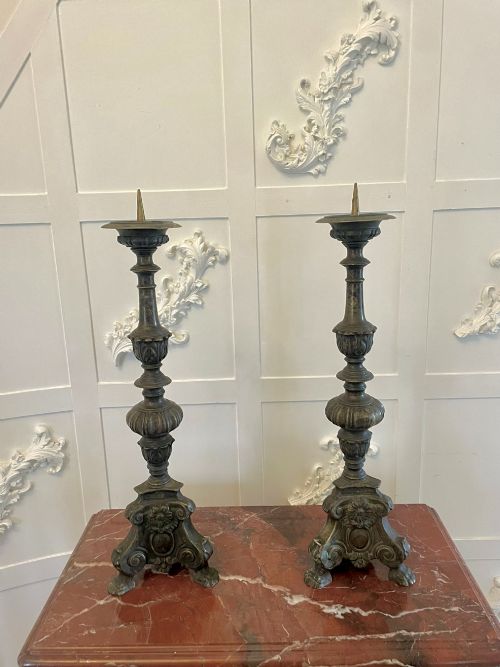
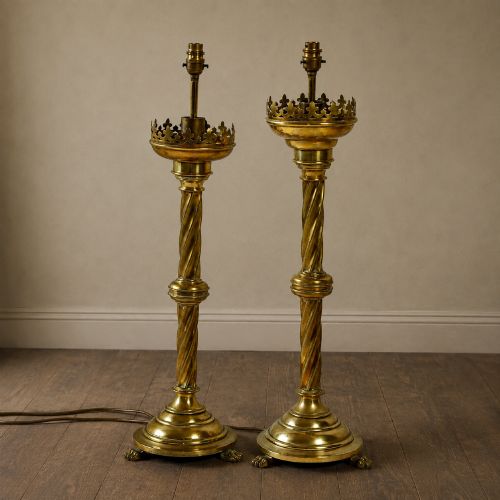
These pieces generally appear as matched pairs, though sets of three or four and single floor-standing holders also emerge. The form spans heavy columnar designs, pricket candlesticks with spikes to hold large candles, and occasional conversions into table lamps.
How they were made
The construction relies heavily on cast brass, often combined with wrought iron or bronze components for added weight and structural stability. Many pieces utilise gilt brass or painted metal highlights to accentuate intricate decorative mouldings.
Makers employed turning, casting, and joining techniques to build up tall shafts from multiple sections, often incorporating hardwood elements or weighted bases to support the considerable height of the candlesticks safely.
Masonic lodge candlesticks occasionally slip into the church collection, bringing unexpected architectural columns to the altar.
What varies in quality
Quality rests primarily on the crispness of the casting detail and the proportion of the design. Superior pairs display deeply chased ornamentation and heavy, solid gauge metal rather than thin pressed sheets.
The integrity of the original construction, including unaltered prickets and matching components across a pair or set, dictates the standing of a piece within the range.
The Large Brass Church Candlesticks Glossary
- Pricket
- A sharp metal spike on top of a candlestick designed to secure a large candle by impaling its base.
- Gilt Brass
- Brass that has been treated with a thin layer of gold or gold-coloured wash to impart a richer surface appearance.
- Gothic Revival
- An architectural and decorative style drawing on medieval ecclesiastical forms, prevalent during the Victorian era.
- Corinthian Column
- A classical column design featuring an ornate capital decorated with acanthus leaves, often adapted for tall candlestick shafts.
- Amsterdam School
- An early twentieth-century design movement known for expressive, rounded brickwork and metal forms with an organic feel.
Large Brass Church Candlesticks: Frequently Asked Questions
How do I clean large brass church candlesticks?
Dust gently with a soft dry cloth to preserve any historic surface patination accumulated over the decades. Avoid harsh chemical polishes that strip away the aged character intrinsic to ecclesiastical metalwork.
Test any cleaning method on a hidden underside area first if removing heavy tarnish is necessary. Keeping them away from direct moisture prevents active corrosion on iron and brass components.
Can I use real candles on pricket candlesticks?
Pricket sticks require candles with a pre-drilled base hole to sit securely upon the upward-facing metal spike. Ensure the candle diameter matches the drip pan proportions to catch melting wax safely.
Keep burning candles away from draughts and high traffic areas because of the considerable height of these pieces. Alternatively, high-quality wax LED tapers offer the visual impact without the flame hazard.
How do I date a nineteenth-century church candlestick?
Examine the casting seams, tool marks, and base construction methods to understand the period of manufacture. Nineteenth-century examples frequently show heavy sand-casting textures and hand-finished details beneath the components.
Stylistic cues such as heavy Victorian Gothic Revival tracery or later Amsterdam School shaping help narrow down the decade. Comparing the patination and wear patterns across the metal sections confirms original assembly.
Where should I place a floor standing candlestick?
Floor-standing church candle holders suit corners, hearth sides, or flanking large pieces of architectural furniture. Their imposing height fills vertical empty space effectively in rooms with high ceilings.
Position them where foot traffic will not knock against the tall shaft, as their top-heavy nature requires stability. Placing them on level flooring ensures the heavy base remains secure.