



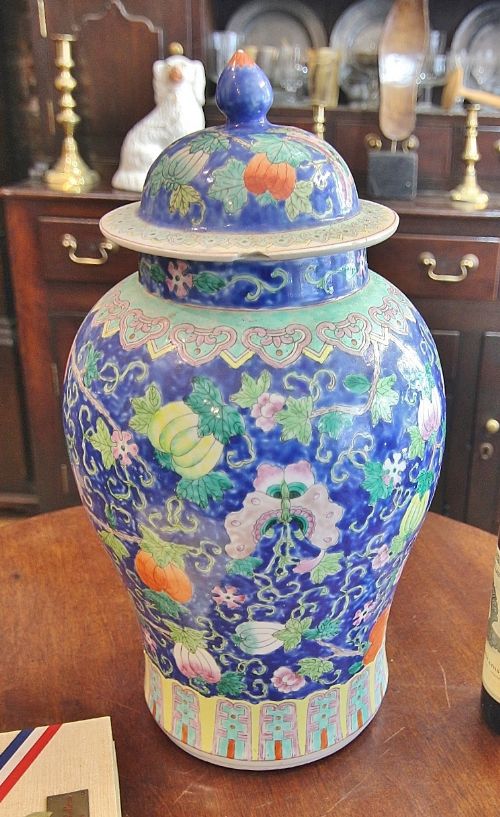

Large Blue Vases
Large blue vases draw the eye immediately, bringing centuries of ceramic artistry and bold colour into a room.
Large Blue Vases
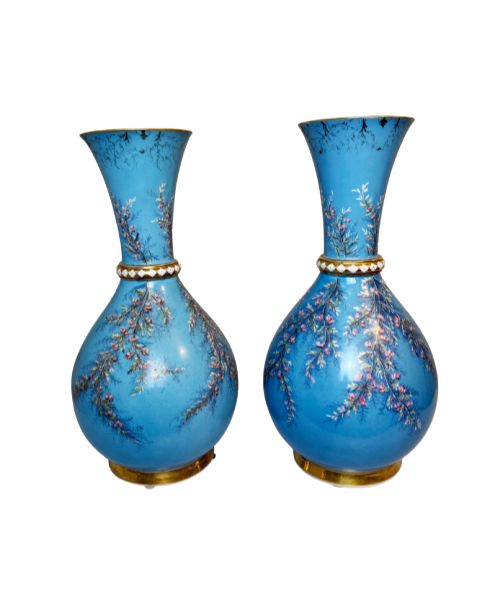
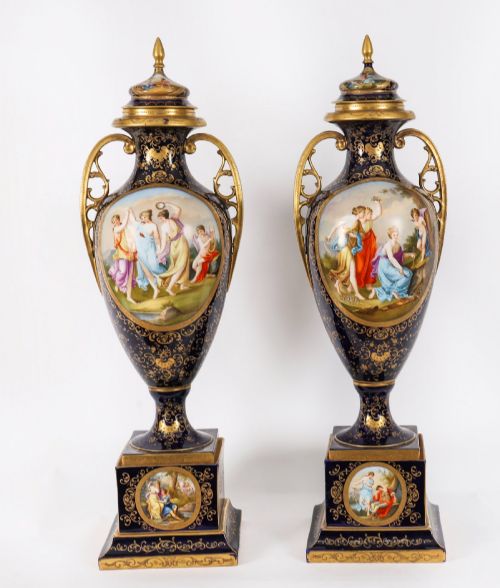
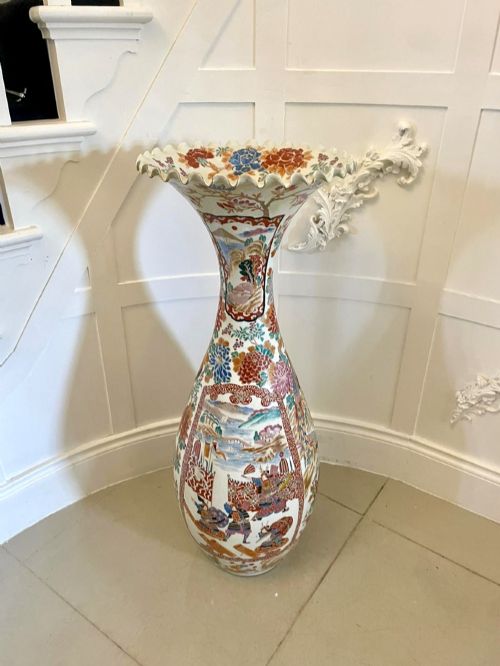
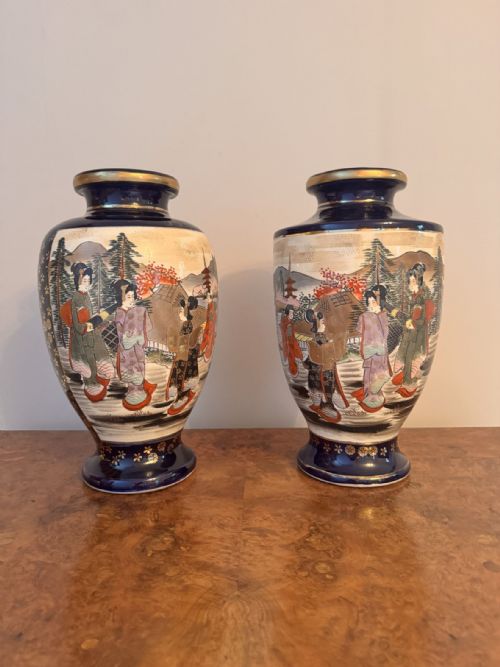
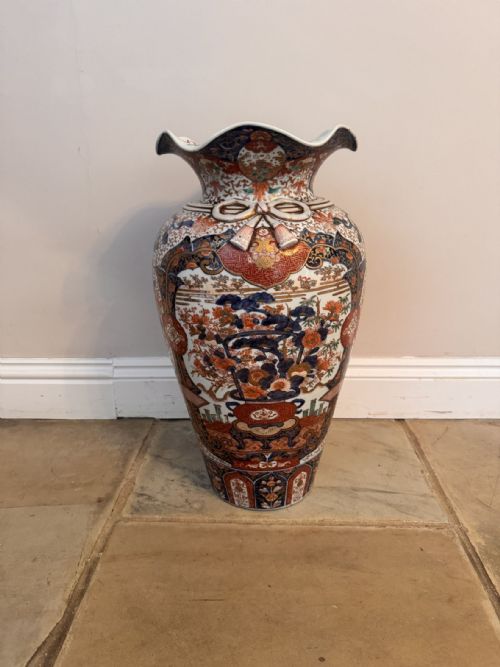
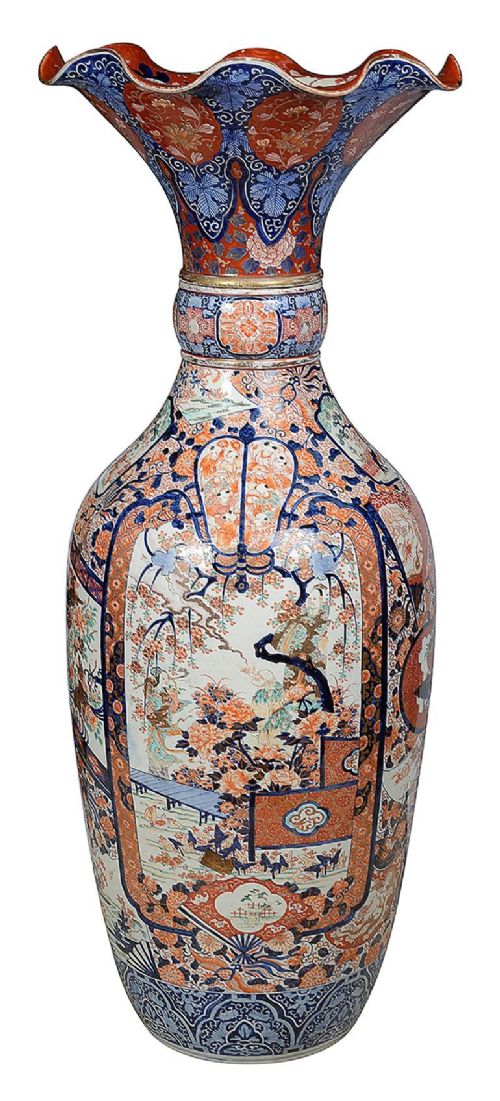
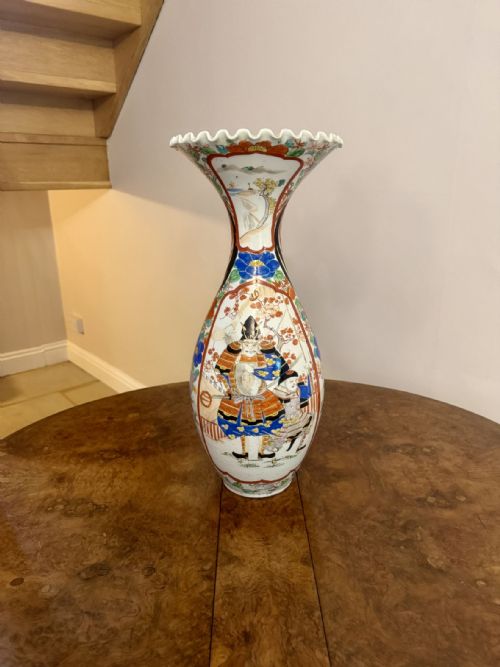
Large blue vases encompass monumental floor-standing vessels, lidded jars, and table lamps originating from diverse global traditions. When searching for large blue vases, collectors frequently encounter Japanese Imari wares and Chinese blue and white porcelain alongside European faience and Delft pieces.
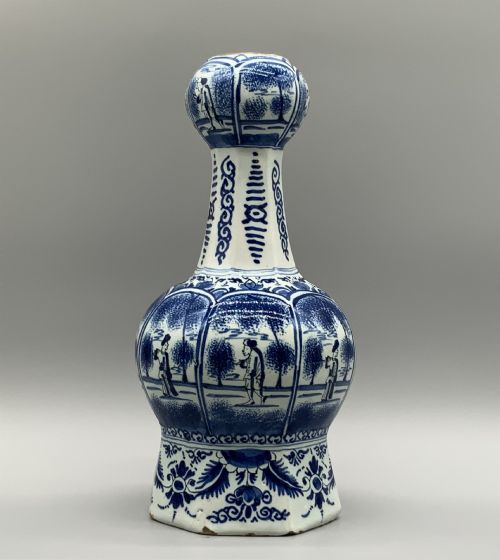
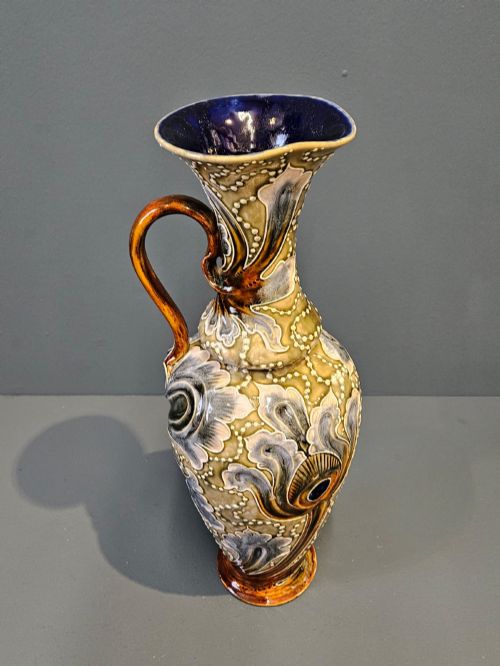
The forms range from traditional bottle vases and double-gourd shapes to imposing garden urns and decorative ewers. Many of these pieces date from the nineteenth century, though earlier examples from the seventeenth and eighteenth centuries appear alongside twentieth-century creations.
Originating from major ceramic centres across Asia and Europe, these large vessels served both decorative and functional roles in domestic interiors. Today, they remain centrepieces capable of anchoring a room through sheer scale and striking cobalt decoration.
How they were made
The manufacture of these large vessels relies primarily on porcelain, earthenware, and ceramic bodies shaped by hand or wheel before firing at high temperatures. Cobalt oxide serves as the foundational pigment for the deep blue decoration applied under the glaze.
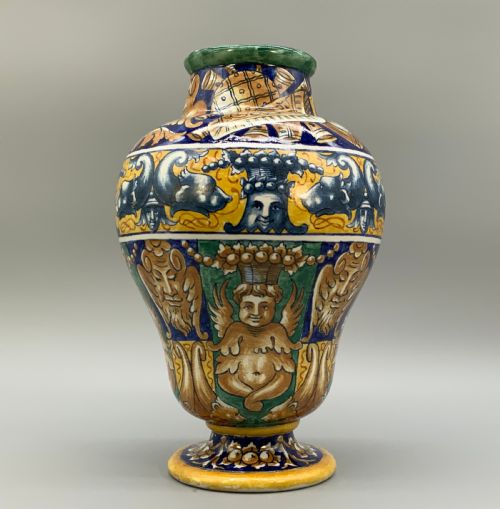
Many Japanese and Chinese pieces incorporate intricate hand-painted motifs, sometimes enhanced with gilt, enamel, or gold leaf applied over the glaze. European examples often utilise tin-glazing techniques seen in Delft faience to achieve an opaque white surface suitable for blue painting.
Large Blue Vases Retail Price Guide 2026
Typical asking prices for large blue vases among the pieces listed under this phrase on Sellingantiques today, from the lower quarter to the upper quarter. They describe what is for sale here now, not the wider market.
Materials range from delicate porcelain and earthenware to cloisonne enamel, brass, and gilt.
What varies in quality
Quality in these large vessels rests upon the crispness of the cobalt painting, the purity of the ceramic body, and the balance of the overall form. Superior examples display confident, highly detailed brushwork that avoids stiffness.
The application of secondary embellishments such as gold leaf, enamels, or intricate lacquer panels distinguishes exceptional pieces from standard production. Monumental scale combined with stability and successful firing without major distortion also separates the finest works.
Makuzu Kozan·Kinkozan·Doulton Lambeth·Hicks and Meigh·Royal Vienna
The Large Blue Vases Glossary
- Imari
- A style of Japanese porcelain featuring underglaze blue and overglaze iron red, gold, and other colours. This distinctive aesthetic gained immense popularity in Europe during the seventeenth and eighteenth centuries.
- Faience
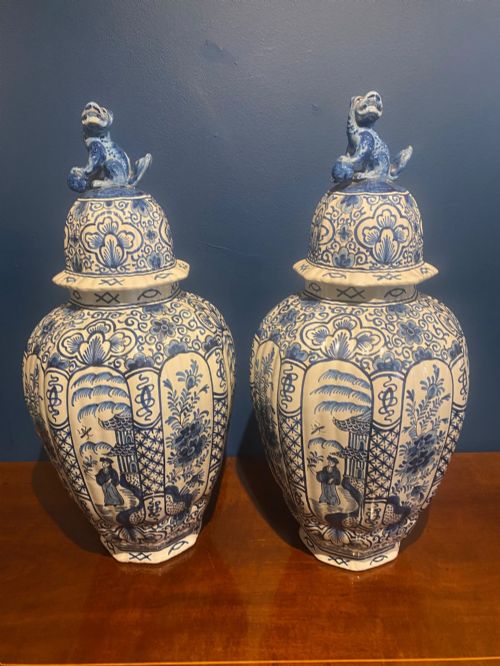
- European tin-glazed earthenware developed to imitate Chinese porcelain. The opaque white glaze provides a smooth background for painted blue decoration.
- Cloisonne
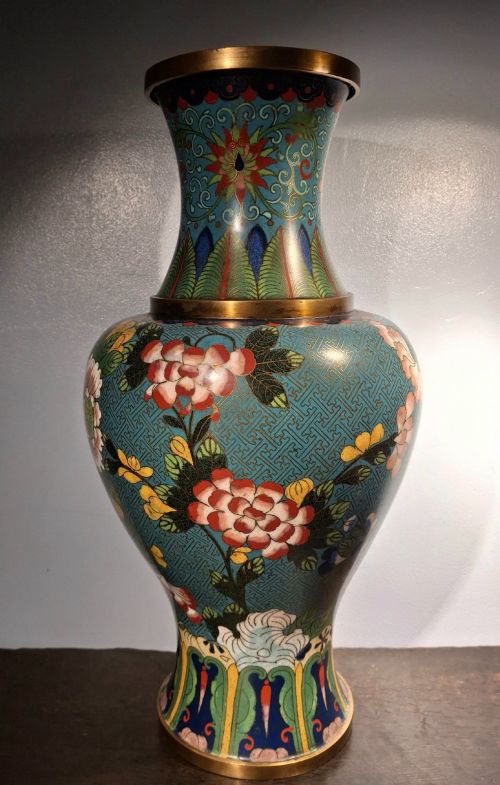
- A decorative metalwork technique where enamel paste is applied within compartments created by soldered wire. This method produces vibrant surface patterns on metallic vase bodies.
- Moon Flask
- A flattened globular flask featuring a circular body and two small handles linking the neck to the shoulders. This traditional Chinese form presents a wide canvas for painted decoration.
- Celadon
- A ceramic glaze denoting a pale green hue, often used in Chinese wares alongside blue decoration. The subtle tint derives from iron oxide in the glaze mixture during reduction firing.
Large Blue Vases: Frequently Asked Questions
How were large blue vases used historically?
These imposing vessels functioned primarily as grand decorative elements within wealthy homes, often displayed in halls or reception rooms to demonstrate taste and status.
Some large jars and urns also served practical purposes such as holding dried botanicals or water in garden settings.
Can I use these antique vases for fresh flowers?
Many antique ceramic and porcelain vessels hold water safely, but the age and construction of large pieces require careful consideration. Hairline fractures or historical repairs inside the body mean dry display is often the safer choice for fragile wares.
When in doubt, placing a modern glass container inside the vase protects the historic interior from moisture and mineral deposits.
How do I style a large floor vase at home?
Floor-standing vessels command attention and work best in open spaces, corners, or flanking a fireplace where they will not be easily knocked. Allowing adequate clearance around the piece highlights its scale and form.
Keeping surrounding decor minimal lets the complex blue patterns and monumental size remain the focal point of the room.