

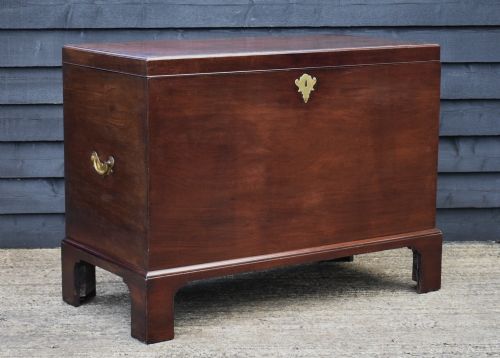
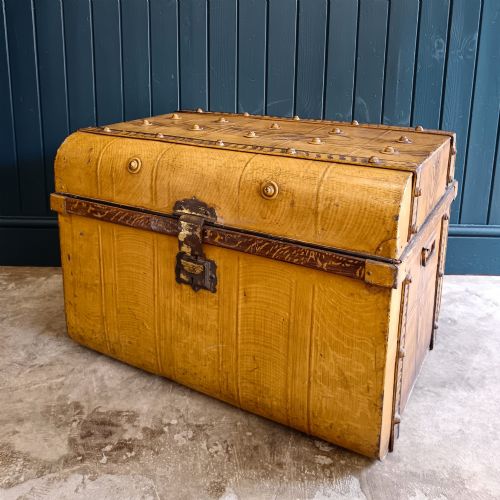
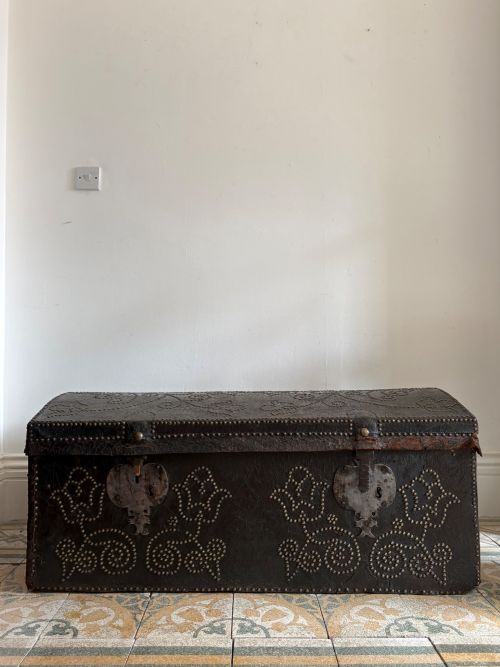
Large Blanket Box
A large blanket box serves as a capacious storage vessel, offering deep utility and historic character for modern interiors.
Large Blanket Box
A large blanket box functions primarily as a robust storage container for household textiles, linens, and personal possessions. These pieces range from heavy domestic coffers to travel trunks, reflecting centuries of practical use in domestic and maritime settings.
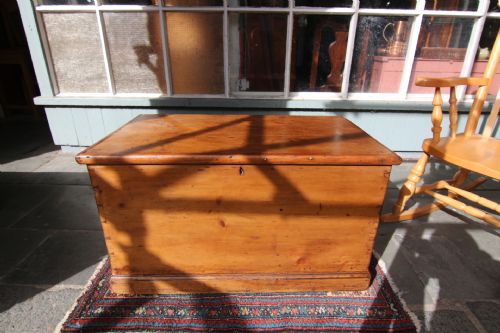
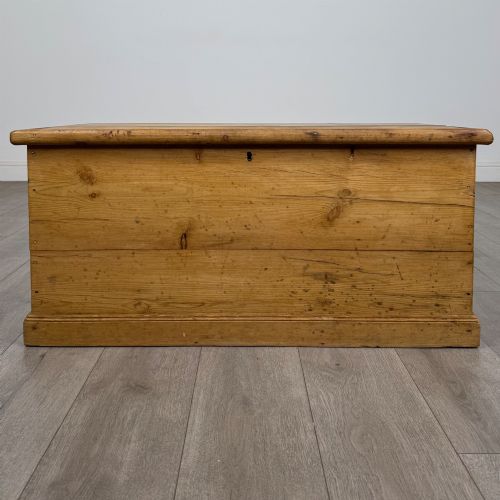
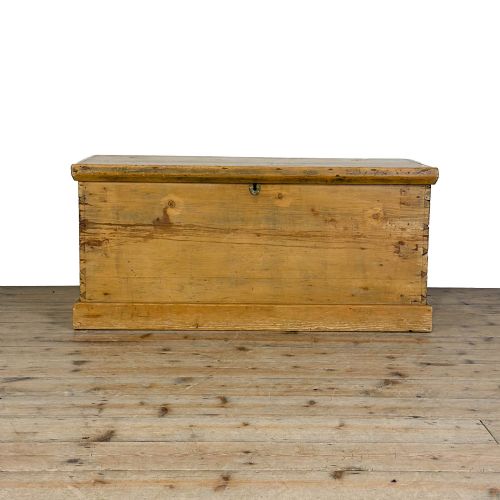
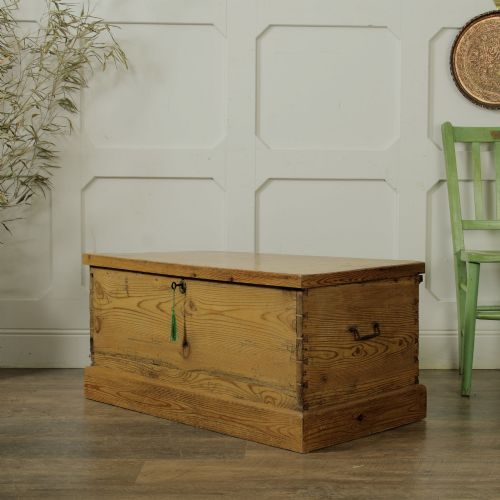
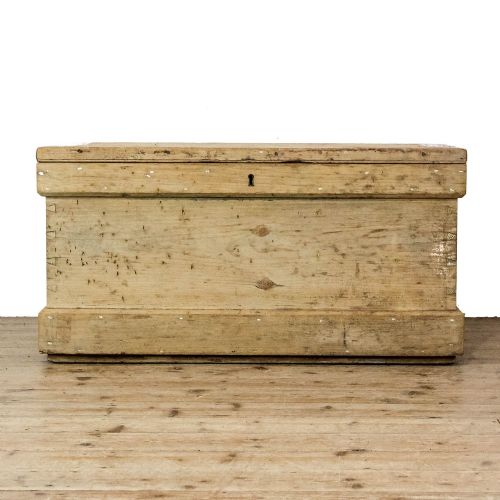
Buyers meeting this form on the market most frequently encounter Victorian pine examples, often stripped or retaining traces of original paint. Alongside these utilitarian pine versions, hardwood pieces in oak, mahogany, and camphor wood appear regularly from the eighteenth and nineteenth centuries.
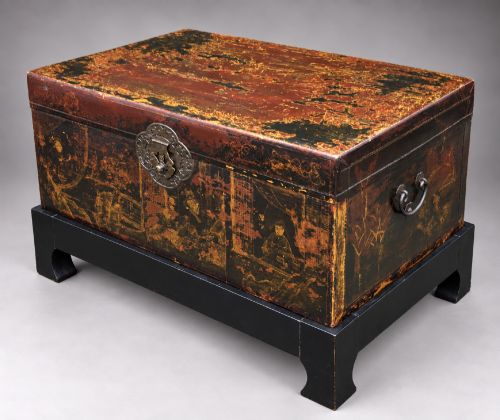
Regional variations span British country pieces, continental European coffers, and colonial imports in teak or camphor wood. The physical scale of these items makes them suitable for placement at the foot of a bed or as a functional coffee table in a living space.
Materials and construction methods
Carpenters constructed these large blanket box items primarily using native softwoods like pine alongside durable hardwoods such as oak, mahogany, and elm. Exotic woods including camphor and teak appear in pieces destined for maritime travel or colonial trade, selected for durability and resistance to insects.
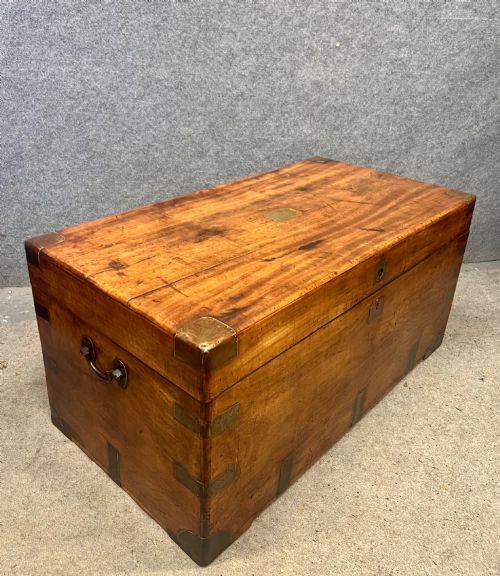
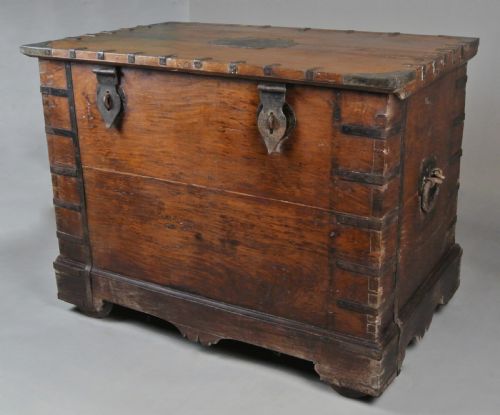
Joinery methods relied on sturdy techniques appropriate to the period, utilising dovetailed corners, pegged mortise and tenon joints, or hand-forged iron bindings to reinforce heavy walls. Hardware elements like brass corner brackets, strap hinges, and carrying handles were integrated to withstand frequent transit.
Many a hardworking carpenter's chest still carries the faint, chalked measurements of a nineteenth-century tradesman beneath its lid.
Distinctions in craftsmanship and condition
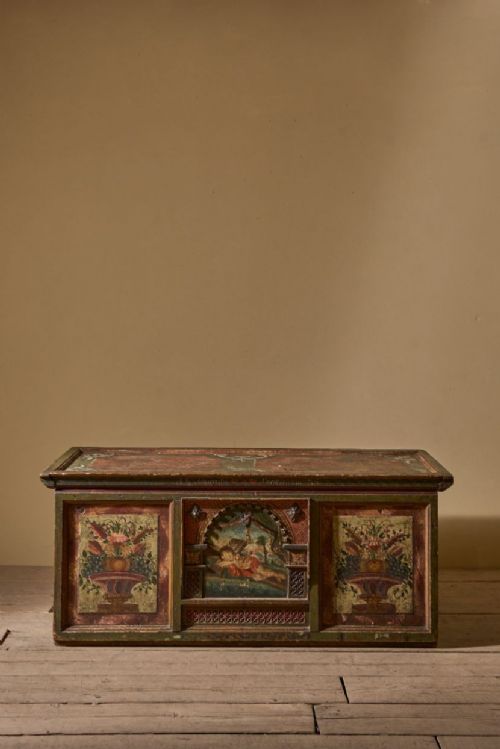
Quality in a large blanket box rests upon the integrity of its original construction and the survival of primary surfaces. Pieces retaining undisturbed original paint, patinated wax finishes, or internal fitments like candle boxes command greater appreciation among collectors.
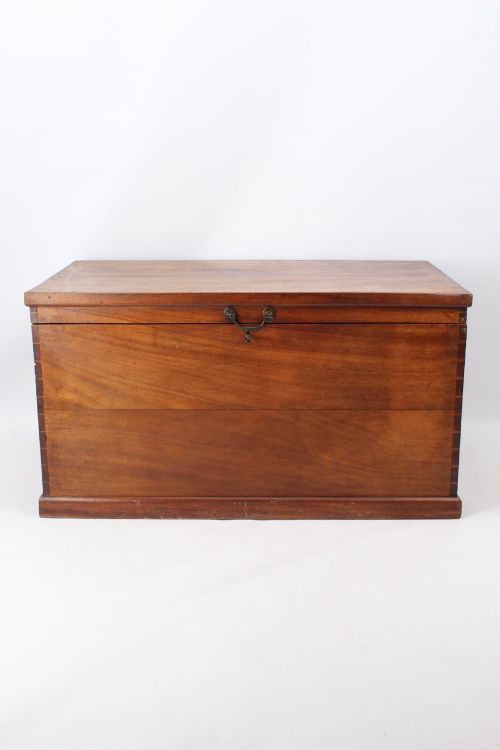
Structural refinement differentiates utilitarian storage from finer cabinet work, evident in the precision of dovetailing, the selection of figured timber veneers such as mahogany crossbanding, and the retention of heavy brass or iron hardware.
Hallett and Sons
The Large Blanket Box Glossary
- Mule chest
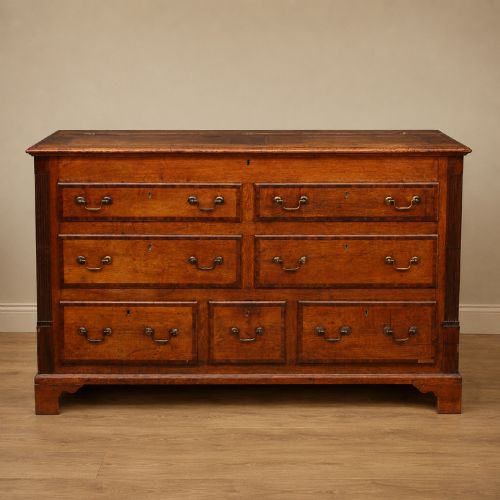
- A storage chest featuring one or more drawers built into the base beneath the main compartment. This form evolved from simple coffers during the eighteenth century to provide more accessible storage.
- Coffer
- A heavy wooden chest traditionally used for storing valuables, documents, or garments. These early pieces typically feature sturdy plank construction and board lids.
- Campaign chest
- Furniture designed to dismantle or travel easily for military officers on active service. These pieces frequently feature brass bound corners and recessed carrying handles.
- Crossbanding
- A decorative border technique where thin strips of veneer are laid with the grain running perpendicular to the main panel. This detail appears on finer Georgian and Regency furniture.
- Dowry chest
- A traditional container commissioned to hold household linens and possessions for a bride. These pieces often display significant decorative carving, paint, or inlay work specific to their region of origin.
Large Blanket Box: Frequently Asked Questions
What were large blanket boxes originally used for?
These large vessels served to store heavy woollen blankets, winter textiles, and household linens away from dust and moths. In many households, they also doubled as secure storage for personal valuables and documents.
Travellers and military personnel utilised robustly constructed trunk variants to transport clothing and equipment across long journeys by land or sea.
How do I use a large blanket box at home?
Positioning one at the foot of a bed provides convenient storage for spare duvets and pillows while anchoring the room's proportions. Alternatively, flat-topped examples function effectively as coffee tables in living areas while concealing clutter.
Their substantial internal capacity also suits the storage of board games, winter clothing, or children's toys in everyday spaces.
How can I tell an eighteenth-century box from a Victorian one?
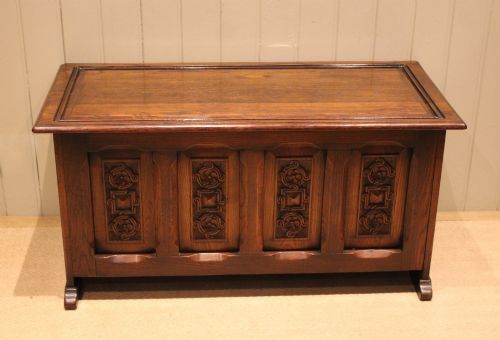
Eighteenth-century examples frequently employ dense native hardwoods like oak with hand-carved panels, pegged joinery, and wrought iron hardware. They often exhibit the deep patina accumulated through centuries of domestic use.
Victorian pieces more commonly feature pine construction, machine-sawn elements, and occasionally factory-produced brass handles or original painted finishes. Tool marks and construction methods visible on the interior help clarify the date of manufacture.