
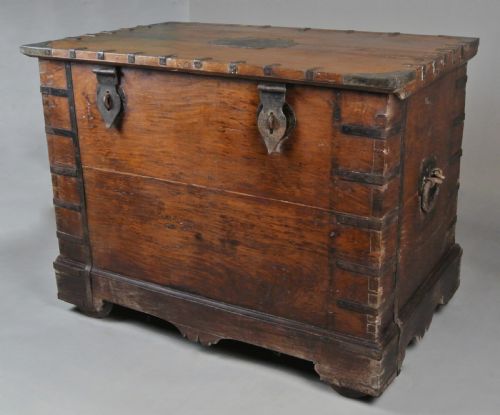
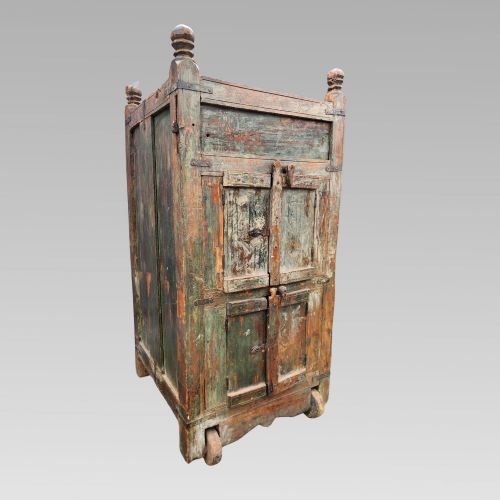
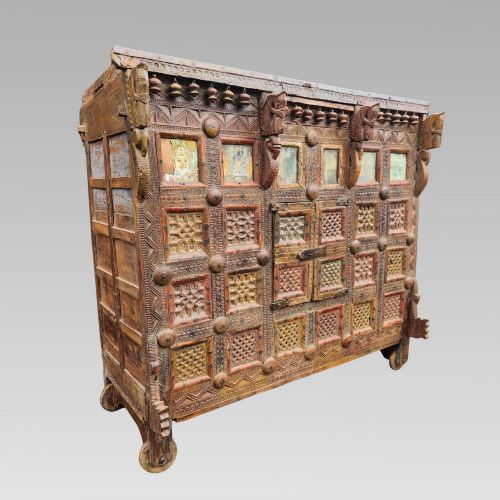
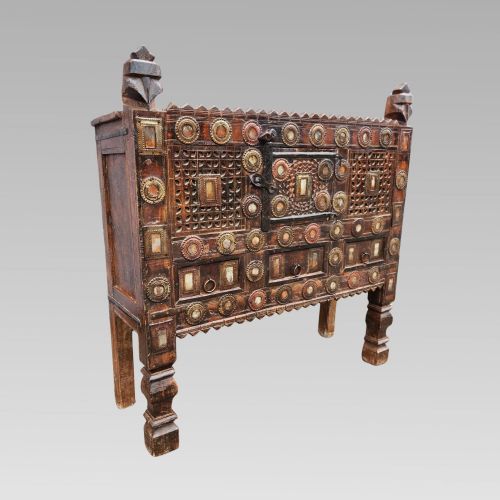


Teak Dowry Chest
A teak dowry chest brings heavy timber, forged metal and regional tradition directly into a modern room as practical storage.
Teak Dowry Chest
When you search for a teak dowry chest, you encounter sturdy storage trunks and cabinets originating from Indian, Anglo-Indian, Colonial and traditional contexts. These pieces served domestic and ceremonial functions, holding linens and household valuables for new households.
The versions most frequently met on this page date from the nineteenth century into the early twentieth century, spanning Victorian and traditional Indian folk art styles. They range from simple hardwood trunks to carved storage cabinets and damchiya cupboards.
Forms vary from monumental iron-bound coffers to brass-inlaid celebration chests and campaign trunks. Each object reflects regional craftsmanship and utilitarian design tailored for durability.
How they were made
Constructed primarily from solid teak and regional hardwood, these chests rely on heavy timber framing to withstand subtropical climates and frequent transit. Artisans shaped the dense wood using traditional joinery and hand-carved decorative elements.
Metal reinforcement defines much of this furniture, utilising heavy iron straps and brass inlays to secure corners and lids. Glass elements also appear occasionally in cabinet variants, while brass hardware provides functional closures.
Many a nineteenth-century bride received a chest heavy enough to survive three monsoons and a family relocation.
What varies in quality
The distinction between standard storage trunks and superior examples rests in the depth and intricacy of the carving. Richly carved panels and elaborate surface ornamentation separate finer damchiya cupboards from plain utilitarian boxes.
The quality of hardware and metalwork similarly marks the hierarchy of these pieces. Hand-beaten iron bindings and detailed brass inlay work indicate a higher degree of initial craftsmanship than simple iron brackets.
The Teak Dowry Chest Glossary
- Damchiya
- A traditional Indian storage cabinet or chest often featuring carved panels and cupboard doors. These pieces functioned as dowry furniture in domestic interiors.
- Campaign trunk
- A portable chest built for travel, typically fitted with metal mounts and carrying handles. Anglo-Indian examples often utilise teak and brass.
- Anglo-Indian
- A style describing furniture made in India during the British colonial period, combining local timber and craftsmanship with European forms. It frequently employs teak and brass.
- Hardwood
- Dense timber derived from broad-leaved trees, encompassing teak in these pieces. It provides structural resilience for large storage trunks.
Teak Dowry Chest: Frequently Asked Questions
What is a teak dowry chest used for today?
These chests function effectively as living room coffee tables, blanket boxes or heavy storage furniture. Their deep interiors accommodate household items while the flat lids provide surface space.
The sturdy construction of teak and hardwood allows these trunks to withstand daily domestic use. They bring distinct regional character and texture into contemporary interiors.
How do I date a teak dowry chest?
Dating relies on examining the timber, construction methods, metal fittings and stylistic markers recorded across nineteenth and early twentieth-century examples. Victorian and colonial pieces often display specific joinery and hardware patterns.
Evidence from nineteenth-century pieces shows heavier iron binding, whilst later items from around nineteen hundred incorporate carved cabinet doors and brass detailing.
Where were these chests made?
These pieces originate primarily from Indian workshops, encompassing traditional Indian folk art and Anglo-Indian colonial production. Some examples reflect regional trade routes extending towards Burma.
Local artisans utilised indigenous teak and hardwood to build these trunks for domestic marriages and household use. The resulting styles mirror the specific cultural traditions of their makers.
Are all these chests made of teak?
While teak is the predominant timber seen across these listings, makers also utilised general hardwood alongside iron and brass components. Some pieces combine teak primary structures with regional timber framing.
Metal elements such as iron bands and brass inlays appear frequently alongside the wood to reinforce corners and secure lids.