





Large Black Chest
A large black chest makes a commanding statement in a room, offering robust storage disguised in dark lacquer, painted pine, or bound iron.
Large Black Chest
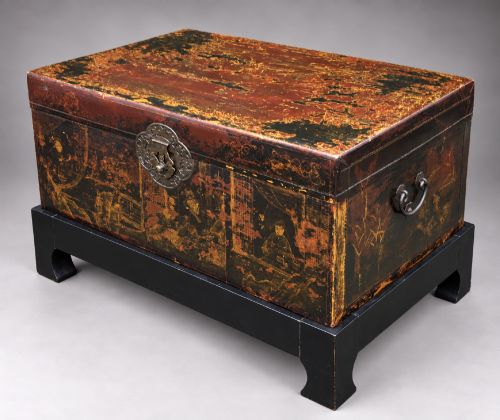
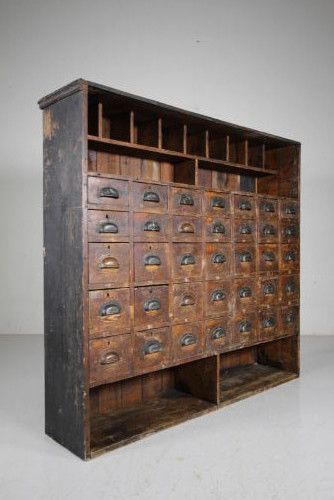
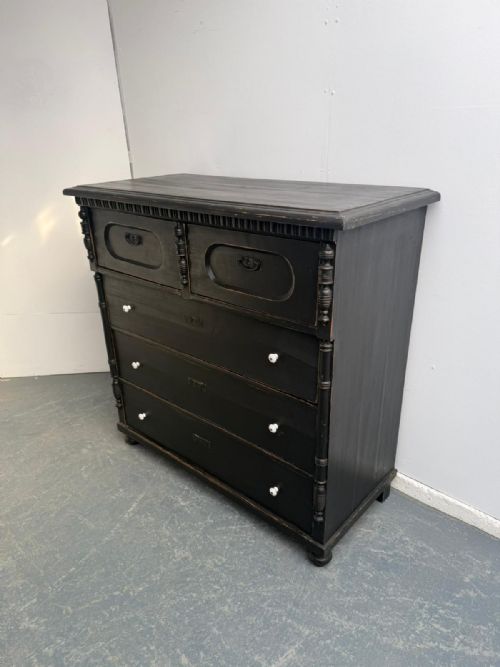
A large black chest encompasses storage trunks, blanket boxes, coffers, banks of drawers, and cabinets originating across the nineteenth and early twentieth centuries. These pieces emerge in styles ranging from Chinese export and Japanese lacquer to Victorian industrial, rustic country, and French provincial.
The most common versions met on this page include nineteenth-century pine trunks, Japanese lacquer boxes, and painted country pieces. Buyers find robust utilitarian items alongside decorative oriental lacquerwork.
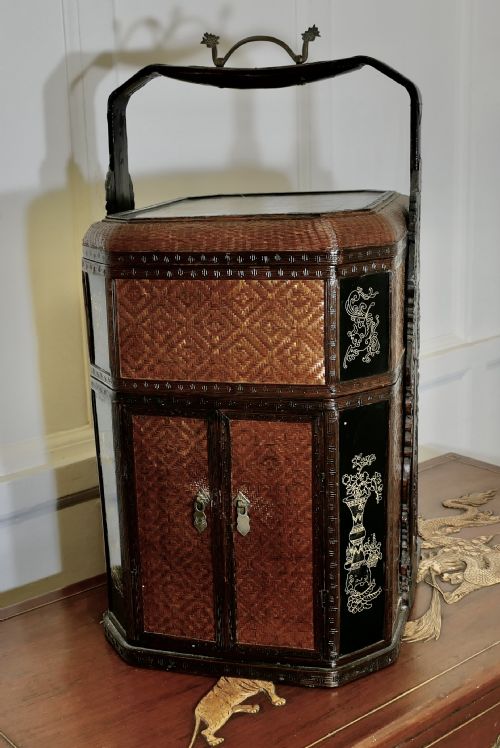
Forms stretch from heavy iron-bound strongboxes and French filing cabinets to wedding baskets and cocktail cabinets. Each piece serves as a substantial focal point while providing deep internal storage.
Materials and construction
Construction relies heavily on timber carcasses built from pine or various woods, frequently reinforced with brass, cast iron, or metal banding and corner plates. Pig skin and bamboo also appear in specific oriental and export trunks.
Surface finishes define the aesthetic, utilising dark paint, black lacquer, and gilt decoration. Chinoiserie motifs and pokerwork surface detailing appear across Asian export pieces and English decorative boxes.
Large Black Chest Retail Price Guide 2026
Typical asking prices for large black chest among the pieces listed under this phrase on Sellingantiques today, from the lower quarter to the upper quarter. They describe what is for sale here now, not the wider market.
Periods represented span the Victorian era, the nineteenth century, and the early decades of the twentieth century.
Assessing quality and character
Quality reveals itself through the integrity of the structural timber and the execution of the surface finish. Lacquered and painted surfaces show distinction in the depth of the black ground and the precision of any gilt or Chinoiserie detailing.
Hardware execution separates utilitarian examples from decorative ones. The weight and hand-working of brass handles, iron straps, and internal compartments indicate the original purpose and standard of manufacture.
The Large Black Chest Glossary
- Lacquer
- A durable resin finish applied in multiple layers to wood. It produces a smooth, polished black protective coating.
- Strongbox
- A heavily reinforced security chest. These are built from thick wood and bound with iron or metal straps.
- Pokerwork
- A technique of decorating wood by burning designs with a heated tool. It creates dark, textured linear patterns on the surface.
- Canton
- A major Chinese port for export trade. Goods from this region often combine traditional local craftsmanship with Western forms.
Large Black Chest: Frequently Asked Questions
Where should I place a large black chest?
These substantial pieces work well as focal points in living rooms, hallways, or large bedrooms. Their dark finishes anchor lighter interior schemes and provide substantial surface space.
Position them away from direct sunlight and heat sources to protect painted or lacquered surfaces from fading and timber from splitting over time.
How do I care for lacquered wood?
Dust surfaces gently with a soft, dry microfibre cloth to prevent scratching the finish. Avoid using modern chemical polishes, silicone sprays, or damp cloths.
Maintain a stable room temperature and moderate humidity to prevent the underlying wood from expanding and causing the lacquer layer to crack.
What is the difference between a coffer and a trunk?
A coffer traditionally refers to a rigid storage chest with a hinged lid, often constructed with heavy panel work for domestic storage. Trunks frequently incorporate metal bindings and handles for travel.
Both categories provide deep internal volumes, though trunks often display utilitarian hardware intended for transport rather than purely static domestic use.
How can I date a painted chest?
Dating relies on examining the timber preparation, tool marks on the interior, and the composition of the paint or lacquer layers. Nineteenth-century pine often shows hand-planed surfaces.
Hardware styles, hinge construction, and lock mechanisms also provide reliable clues to the manufacturing period of the piece.