

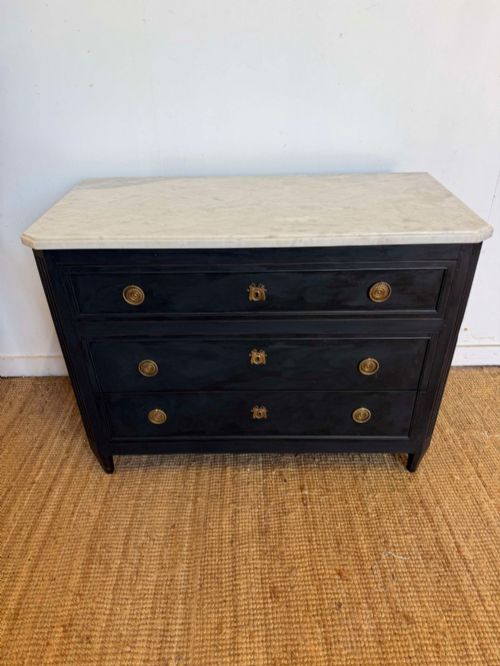
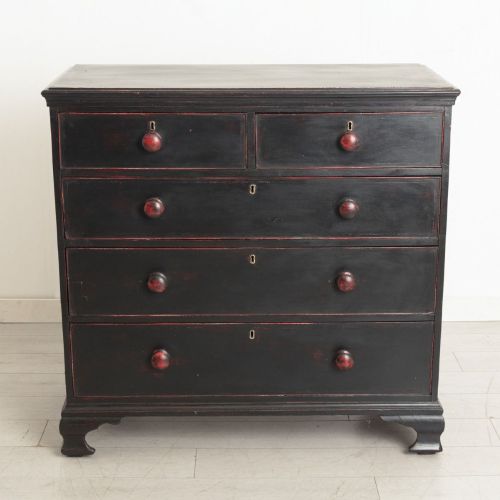
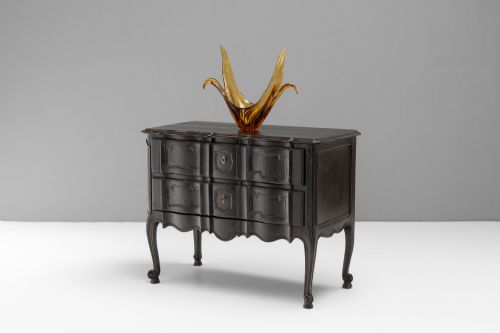
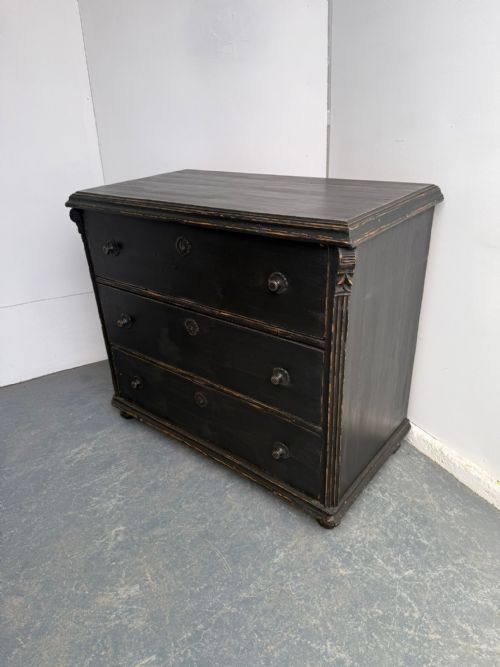



Black Painted Commode
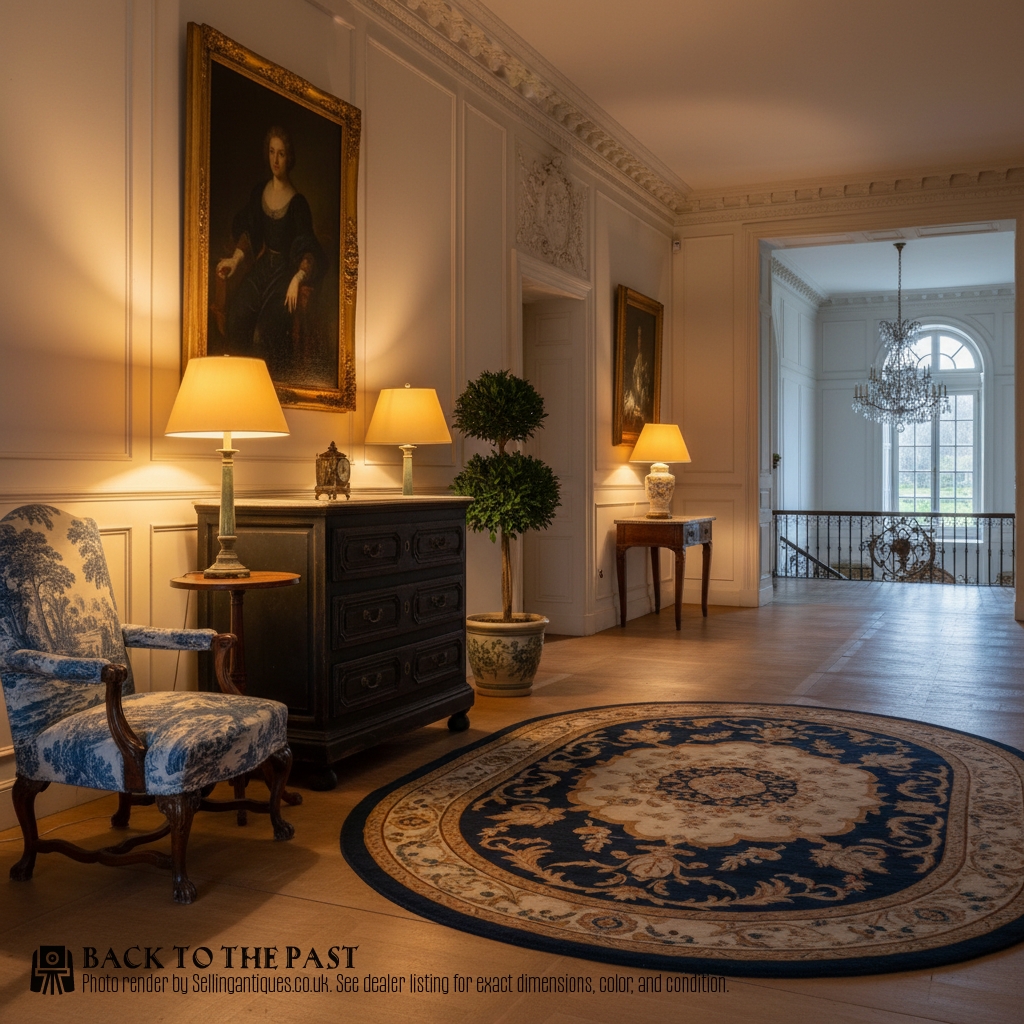
A black painted commode brings sombre elegance to a room, offering practical storage through dark painted surfaces.
Black Painted Commode
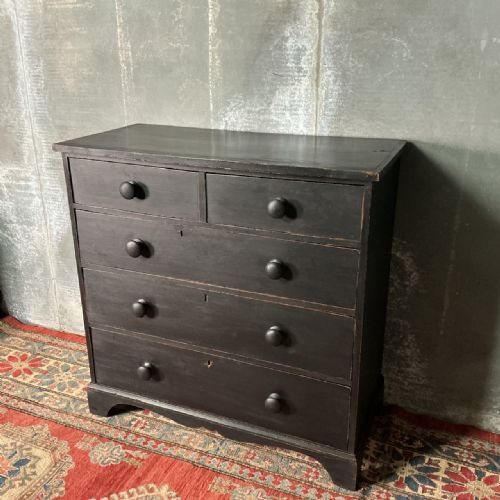
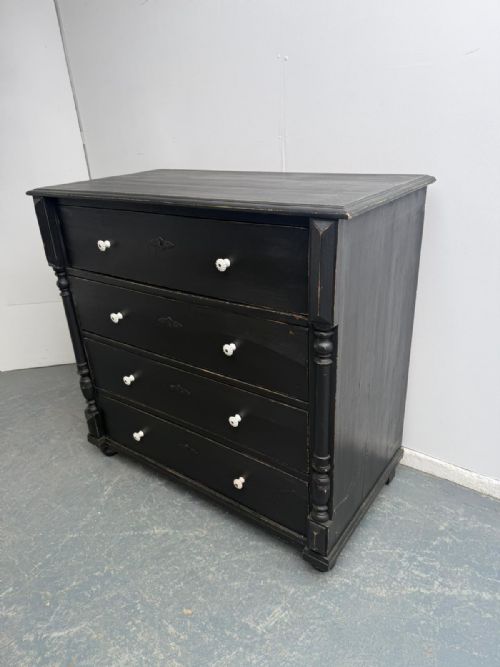
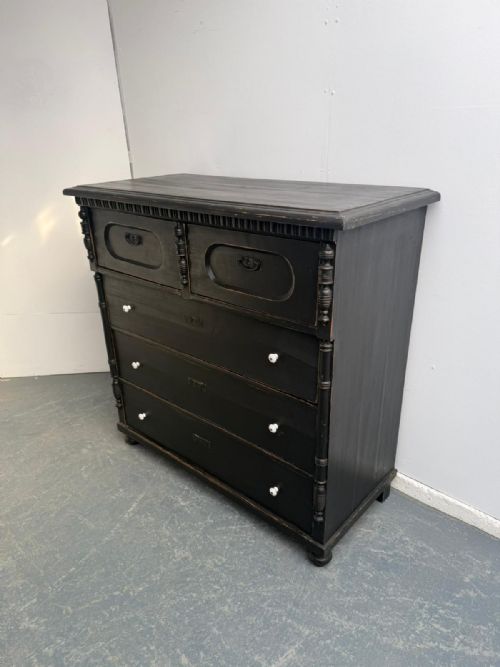
A black painted commode is a storage chest featuring drawers and a dark painted finish, designed for domestic utility. You meet these pieces in various regional interpretations, including Hungarian, Swedish, Italian, and French examples.
The selection on this page spans several distinct eras, notably the eighteenth century, the Georgian period, and the Victorian age. Forms range from compact provincial chests to massive five-drawer pine units and matching pairs.
Makers utilised woods like pine for these items, sometimes pairing the timber bodies with marble tops, brass handles, ceramic pulls, or paper linings. Styles stretch from Gustavian and French provincial to Victorian country and Georgian country designs.
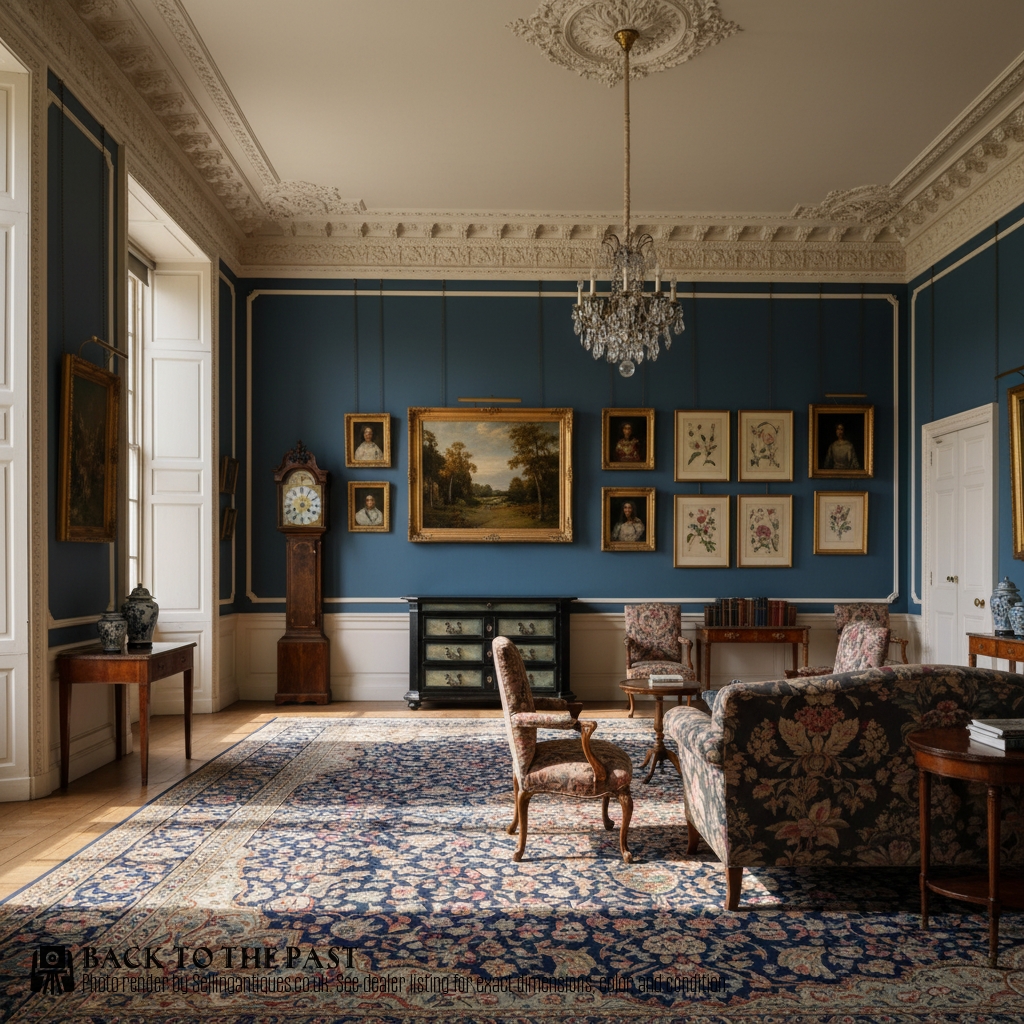
How they were made
These commodes rely primarily on timber construction, predominantly utilising pine for the main cabinet bodies and drawer structures. Woodworkers shaped the chests to include multiple drawers, sometimes incorporating metal or ceramic fittings.
Surface treatment defines the group, with artisans applying dark paint directly over the wood substrate to achieve the characteristic black finish. Additional elements such as brass hardware, marble slabs, and paper elements complete the construction.
Black Painted Commode Retail Price Guide 2026
Typical asking prices for black painted commode among the pieces listed under this phrase on Sellingantiques today, from the lower quarter to the upper quarter. They describe what is for sale here now, not the wider market.
One Swedish entry arrives as an inseparable pair, ensuring your bedroom storage can successfully argue with itself across the room.
What varies in quality
Quality in these chests rests on the integrity of the timber construction and the preservation of the painted surface over time. Pieces executed in regional workshops display varying degrees of joinery refinement, from rugged country builds to more polished continental formats.
The integration of secondary materials, such as heavy marble tops or intact brass and ceramic hardware, elevates certain examples above plain utility chests. The character of the aged black paint layer itself distinguishes standard regional work from finer decorative items.
The Black Painted Commode Glossary
- Commode
- A low chest of drawers or cabinet designed for domestic storage. This term often encompasses continental European pieces alongside British regional forms.
- Gustavian
- The Swedish interpretation of French neoclassical style, characterised by lighter proportions and often featuring pale or monochrome paintwork. It reflects an austere Scandinavian aesthetic.
- Pine
- A softwood commonly utilised in country furniture construction across Europe. It provides a stable yet accessible base for painted finishes.
- Victorian Country
- A nineteenth-century vernacular style focused on utilitarian domestic furniture. These items prioritise robust construction over elaborate ornamentation.
Black Painted Commode: Frequently Asked Questions
Where did these commodes originate?
The pieces originate from various European regions, including Hungary, Sweden, Italy, France, and Britain. Each area imparts distinct regional characteristics to the proportions and hardware.
Craftsmen utilised local timbers like pine and applied finishes appropriate to their domestic traditions.
How do I date a black painted commode?
Dating relies on examining the construction methods, timber preparation, and the style of the hardware. Pieces span from eighteenth-century continental workshops to nineteenth-century Victorian country examples.
Secondary materials such as ceramic pulls or marble tops also offer clues to the period of manufacture.
Are these commodes suitable for everyday use?
These chests provide substantial drawer storage, making them practical for modern living spaces. Their sturdy pine construction handles regular daily use.
Care should be taken to protect the painted surfaces and any applied marble tops from excessive moisture.
What maintenance do painted surfaces require?
Painted furniture requires gentle dusting with a soft, dry cloth to prevent dirt accumulation. Avoid harsh chemical cleaners that might degrade the historic paint layers.
Keeping the pieces away from direct sunlight and extreme humidity helps preserve the wood and finish.