




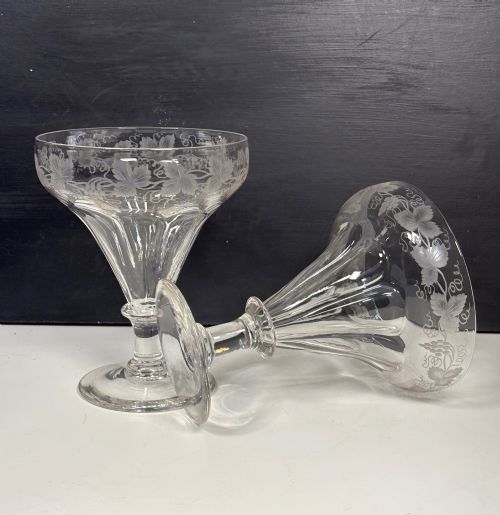

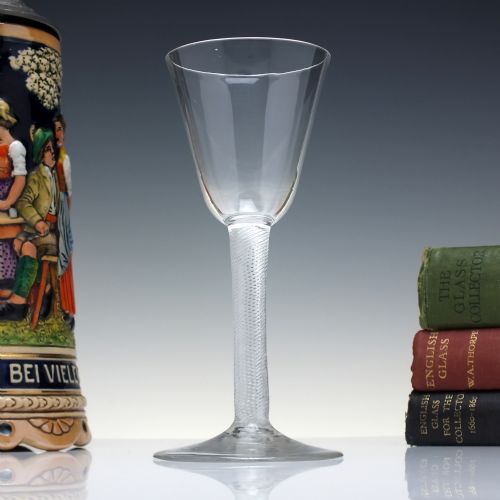


Large Wine Glass
A large antique wine glass brings serious weight to the table, offering substance and historical character that modern glassware simply cannot match.
Large Wine Glass
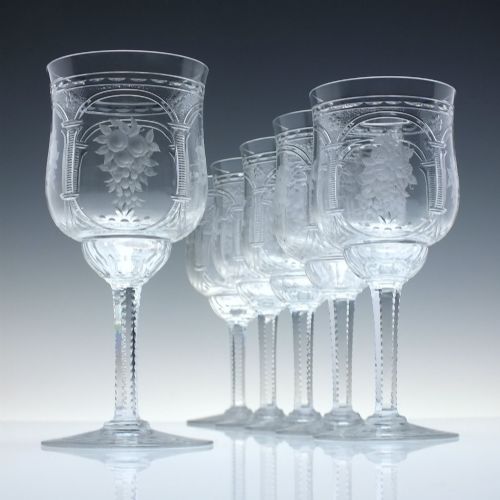
A large antique wine glass spans several centuries of drinking vessels, ranging from eighteenth-century baluster stems to robust nineteenth-century rummers and heavy Victorian goblets. When searching for a large antique wine glass, buyers most frequently encounter sturdy rummers, heavy cut glass drinking vessels, and tall lead crystal forms originating from Georgian and Victorian workshops.
The material spans clear glass, lead crystal, and coloured variants in cranberry, green, and amber, often shaped into ovoid, bell, or pan top bowls. These vessels served practical dining functions or formal toasts, resulting in substantial proportions designed to hold generous measures of wine, ale, or rum.
Materials and Techniques
Makers utilised lead glass and heavy lead crystal to achieve clarity, brilliance, and the substantial weight expected in a large antique wine glass. Hand-blown and blow-moulded techniques created the fundamental vessel forms, while skilled artisans subsequently applied wheel-cutting, engraving, and enamel decoration.
Large Wine Glass Retail Price Guide 2026
Typical asking prices for large wine glass among the pieces listed under this phrase on Sellingantiques today, from the lower quarter to the upper quarter. They describe what is for sale here now, not the wider market.
Periods represented span from the early eighteenth century through Victorian and Edwardian eras into the Art Deco years.
Judging Quality and Execution
Quality in a large antique wine glass rests upon the purity of the metal, the balance of the bowl to the stem, and the crispness of any cut or engraved decoration. Superior examples display smooth glass distribution without heavy distortion in the hand-blown metal, alongside precise, confident wheel-engraving.
The weight and resonance of the lead glass further distinguish finer specimens, where the walls maintain an even thickness and the pontil mark is neatly finished or polished flat.
William Comyns·Lobmeyer·Frits Hechert
The Large Wine Glass Glossary
- Rummer
- A large, heavy drinking glass popular in the eighteenth and nineteenth centuries, typically used for wine, ale, or spirits. These vessels feature thick bowls and sturdy stems.
- Baluster stem
- A heavy, turned stem found on early glasses, often featuring swelling nodes reminiscent of architectural balusters. This form dominated English glassware during the late seventeenth and early eighteenth centuries.
- Pontil mark
- The rough scar left on the base of a blown glass vessel where the punty rod was attached during manufacture. A ground or polished pontil generally indicates finer finishing.
- Lead crystal
- Glass containing lead oxide, which increases the weight, refractive index, and clarity of the material. This composition allowed makers to produce deeper cuts and sharper facets.
Large Wine Glass: Frequently Asked Questions
Can I use antique wine glasses daily?
Using these glasses for special occasions is entirely possible provided you handle them with care. Hand washing in warm water without harsh detergents protects the fragile historic glass from thermal shock and chemical damage.
Avoid stacking them in cupboards and keep them away from modern dishwashers entirely. Treating the pieces with gentle respect ensures they survive for future generations.
What is a rummer glass?
A rummer is a particularly robust drinking vessel designed for heavy toasts, punch, ale, or wine during the Georgian and Victorian periods. They typically feature wide bowls sitting upon short, thick stems and heavy footed bases.
Their capacity exceeds that of standard wine glasses, reflecting the heavier drinking habits of the eighteenth and nineteenth centuries.
Why are some old glasses so heavy?
The weight in these vessels comes from the high lead content used in British and European lead crystal formulation. Lead oxide increased the density and durability of the glass while enhancing its ability to refract light.
Heavier metal also provided better stability for large drinking vessels that were passed around communal tables during long dinners.