





Large Walnut Press
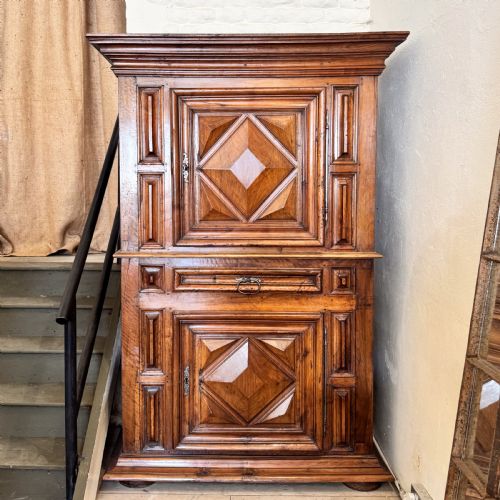
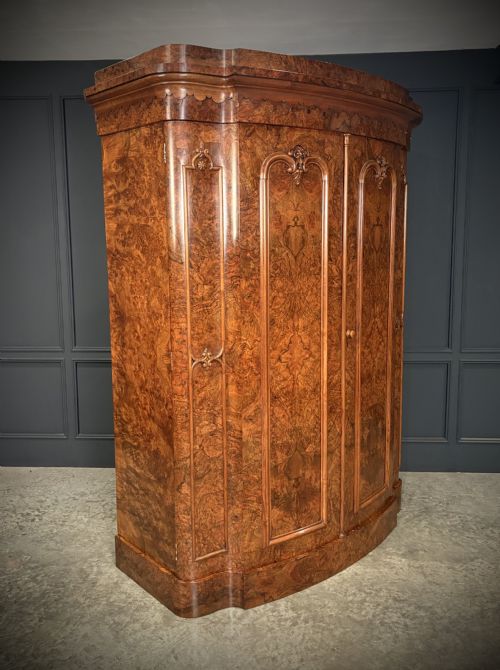
A large antique walnut press is a substantial piece of period storage designed to hold linens or garments, bringing deep timber grain and grand scale to a room.
Large Walnut Press
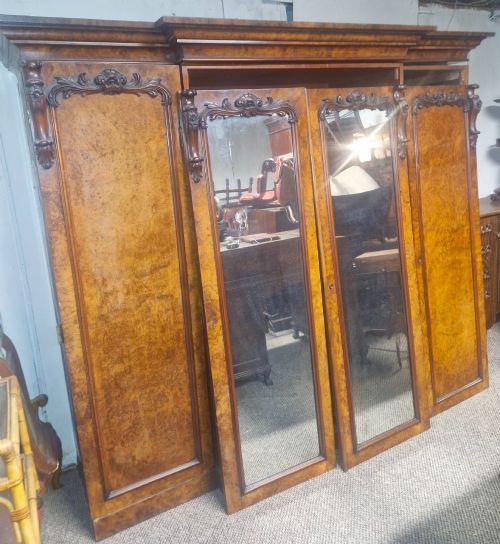
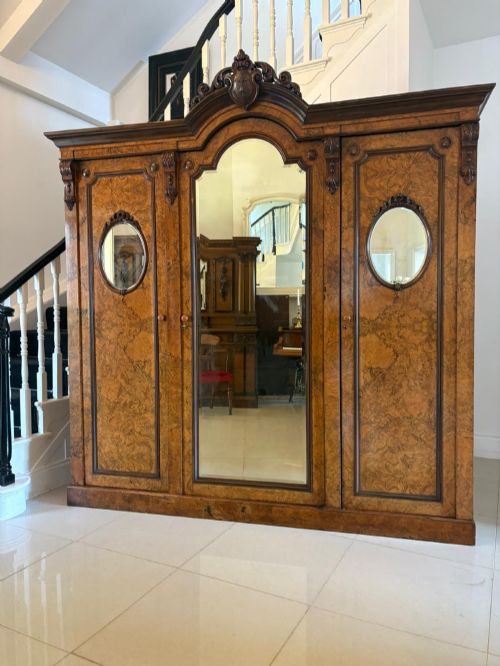
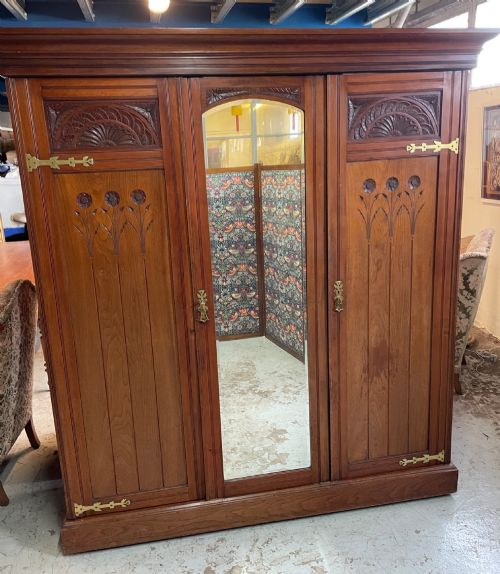
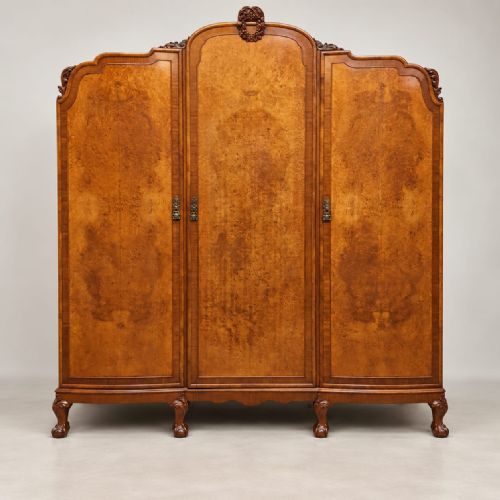
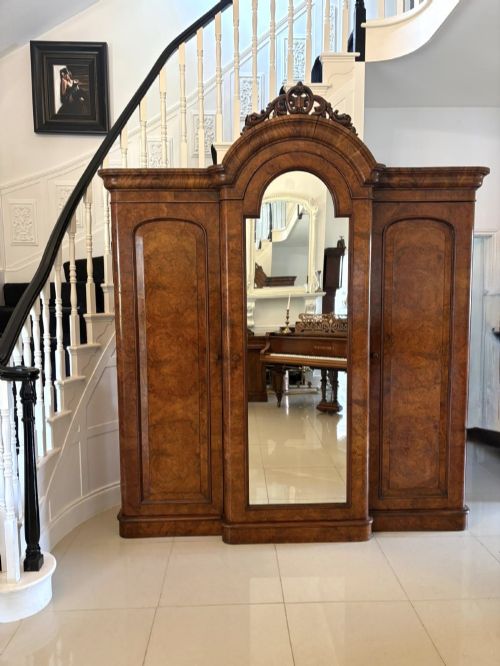
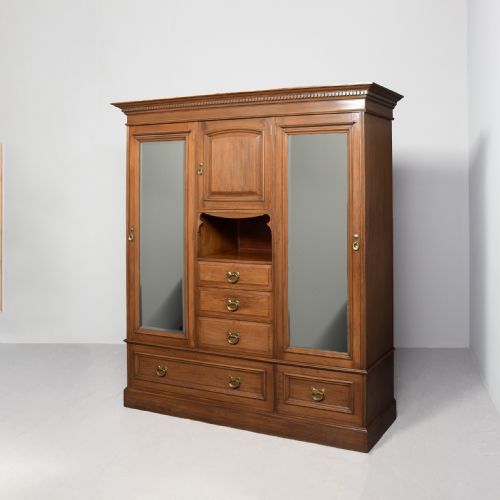
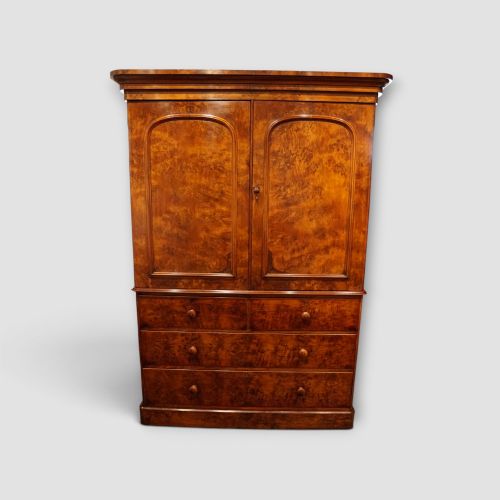
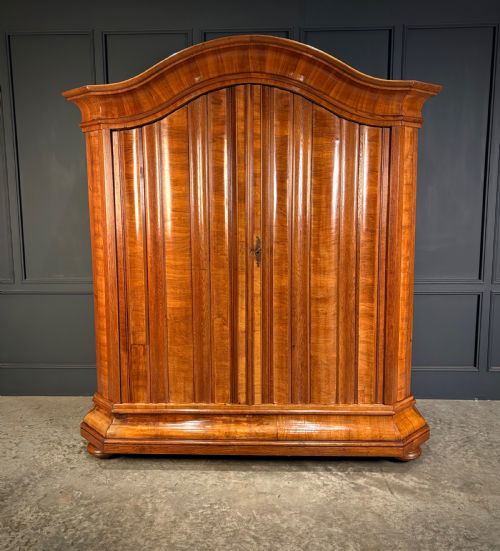
When you search for a large antique walnut press, you encounter grand storage furniture spanning the Victorian, Edwardian and earlier periods. The pieces appearing here encompass multiple forms, from traditional linen presses with internal sliding trays to triple wardrobes and armoires.
Origins stretch across Britain and the Continent, including Dutch, French and Italian variations alongside domestic British manufacture. The designs shift from straight-grained utility to elaborate baroque influences and continental carved details.
How they were made
Cabinet makers utilised solid walnut and decorative burr walnut veneers applied over secondary timbers like oak. The characteristic figured grain of burr walnut is sliced to create symmetrical patterns across large door panels and drawer fronts.
Construction incorporates brass hardware, iron fittings and occasionally mirror glass set into the doors. Structural stability is achieved through heavy framing, whilst interior sections utilise softer woods for sliding linen trays and drawer linings.
Large Walnut Press Retail Price Guide 2026
Typical asking prices for large walnut press among the pieces listed under this phrase on Sellingantiques today, from the lower quarter to the upper quarter. They describe what is for sale here now, not the wider market.
Current listings demonstrate a strong presence of Victorian burr walnut triple wardrobes alongside continental carved armoires and 18th-century Dutch press cupboards.
What varies in quality
The division between standard production and exceptional manufacture rests on the selection and matching of burr veneers. Superior examples display continuous, book-matched grain across entire facades, whereas simpler pieces rely on plain walnut or standard figuring.
Carving depth and hardware choice distinguish the maker's hand, with intricate relief work and heavy brasses marking out the better commissions. Internal execution matters equally, separating basic hanging cupboards from fully fitted compactums with specialised drawers and sliding trays.
The Large Walnut Press Glossary
- Burr walnut
- A prized timber harvested from the irregular growth knot of the walnut tree. It produces highly figured, swirling grain patterns used for decorative veneer.
- Compactum
- A fitted multi-section wardrobe designed to maximise internal storage. It typically combines hanging space, linen drawers and shoe compartments within a single unified case.
- Armoire
- A large freestanding cupboard or wardrobe of continental European origin. These pieces often feature deep cornices and heavy carved detailing.
- Marquetry
- The art of applying pieces of veneer to a structure to form decorative patterns. Dutch examples frequently employ floral and pictorial motifs.
Large Walnut Press: Frequently Asked Questions
How do I date a walnut press?
Dating relies on examining construction methods, timber choices and stylistic cues. Victorian and Edwardian pieces show machine-sawn elements alongside hand dovetails, whereas earlier 18th-century examples display entirely hand-worked internal framing.
Hardware styles and secondary woods also provide chronological markers. Changing aesthetic preferences, from baroque carvings to plain Victorian surfaces, help narrow the decade of manufacture.
Where should I place a large press?
These imposing cabinets require substantial wall space and high ceilings to sit comfortably in a room. Bedrooms and dressing rooms suit them best, matching their original domestic purpose as garment storage.
Keep them away from direct sunlight and modern heat sources to protect the walnut veneer. Stable room humidity prevents the timber and decorative burr surfaces from drying out or cracking.
How do I care for burr walnut?
Dust the timber regularly with a soft, dry cloth to prevent particle buildup on the polished surface. Avoid silicone-based sprays and harsh chemical polishes that can degrade historic finishes.
Feed the wood occasionally with a traditional beeswax formulation to maintain the moisture in the veneer. Gentle application preserves the chatoyancy and depth of the grain.
What is the difference between a press and a wardrobe?
A traditional press incorporates sliding internal trays or shelves primarily intended for storing folded linens and garments. Wardrobes focus on vertical hanging space for coats and dresses.
Many surviving large antiques blur these distinctions by combining hanging sections with banks of internal drawers within a single compactum frame.