


Large Compactum
When you search for a large antique compactum, you are looking at substantial fitted bedroom furniture designed to combine hanging space, drawers, and shelving in a single unit.
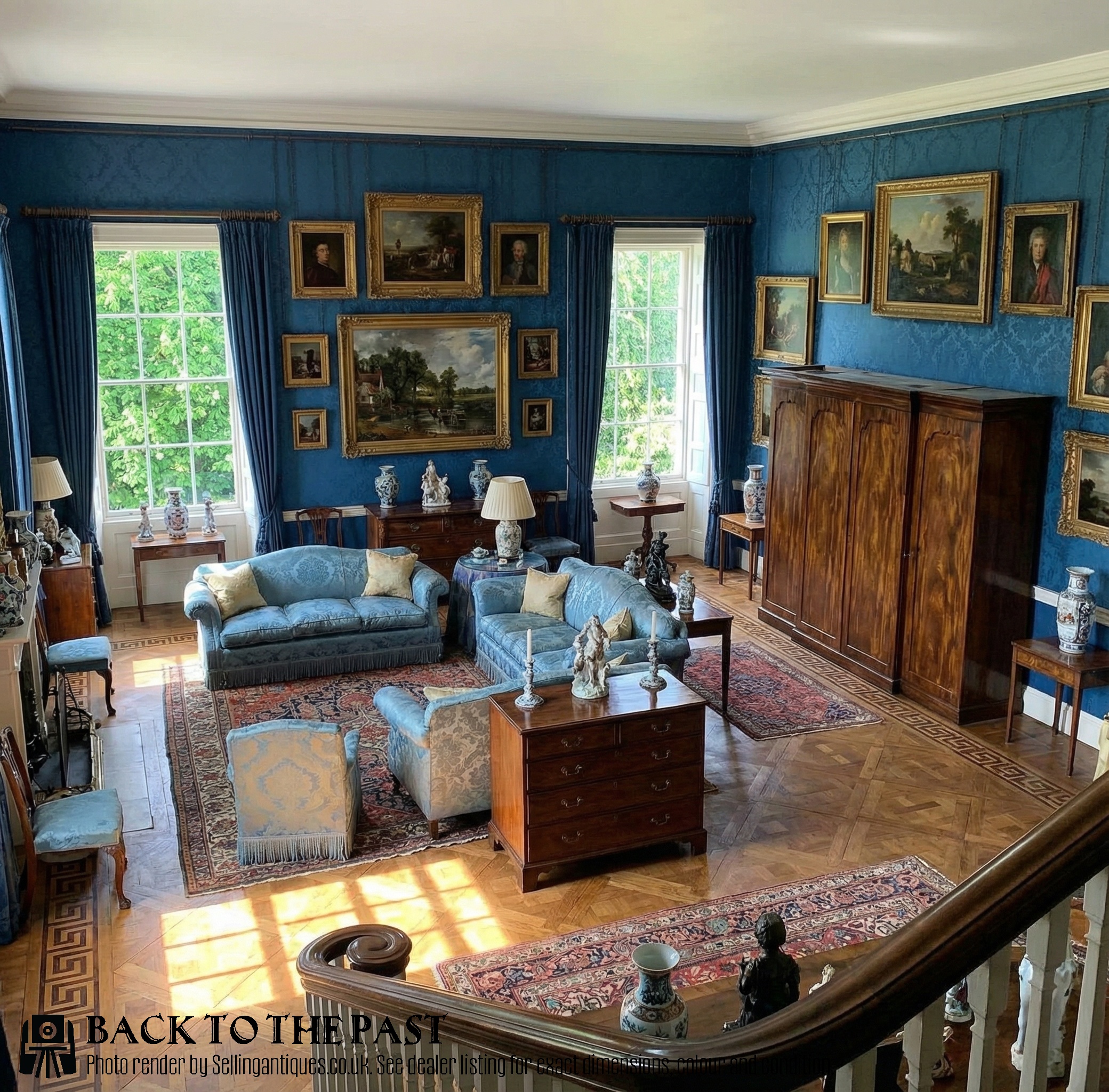
Large Compactum
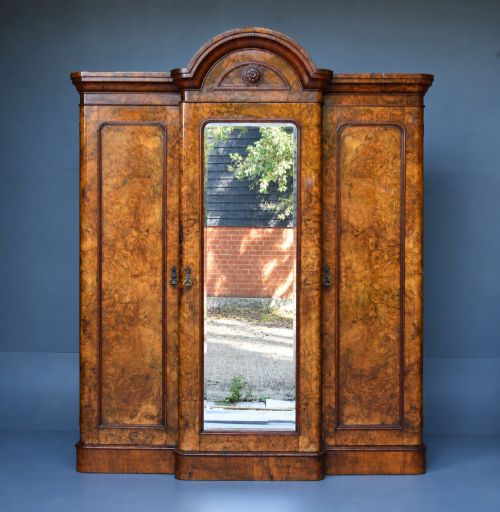
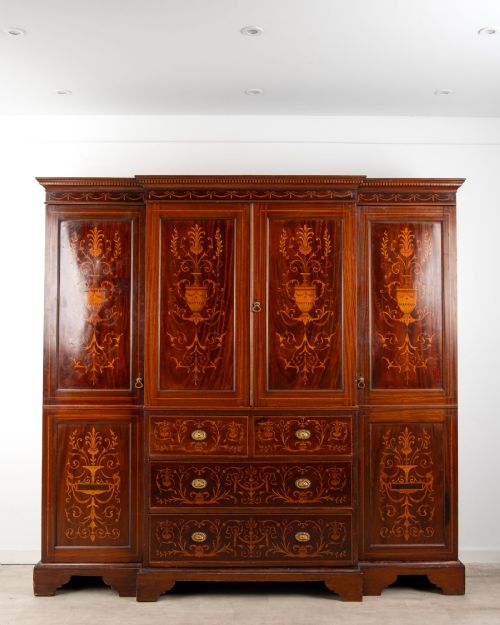
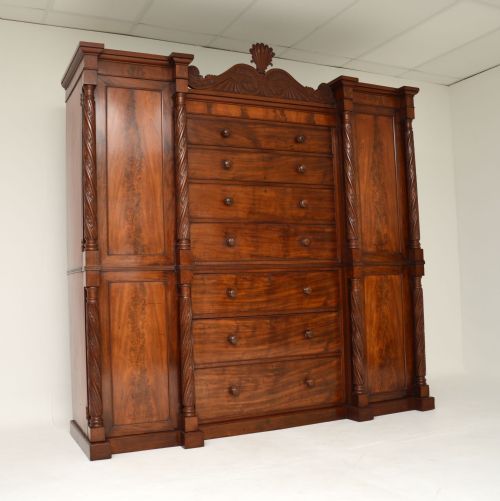
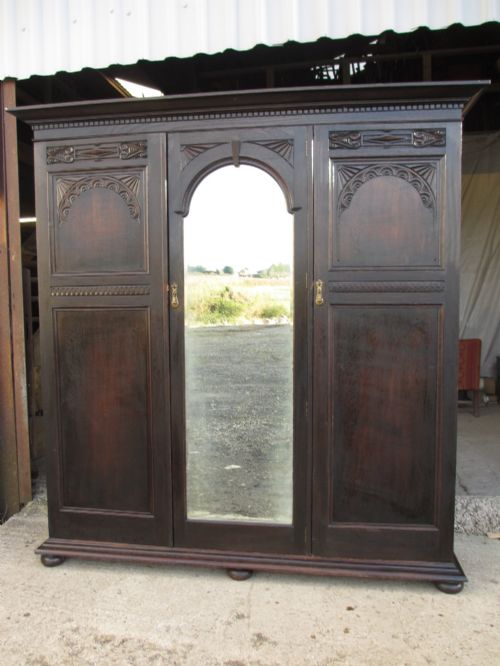
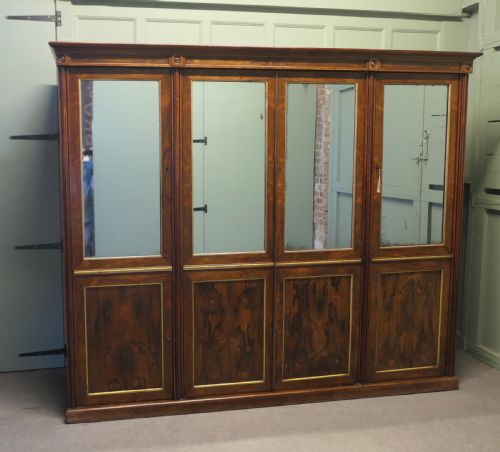
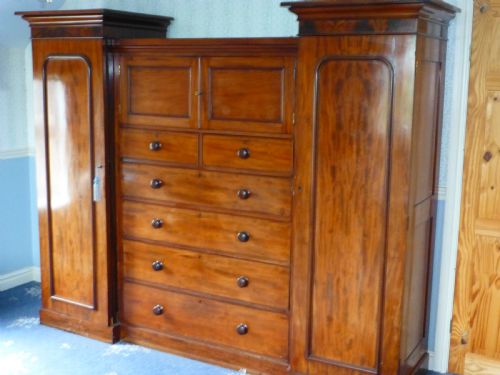
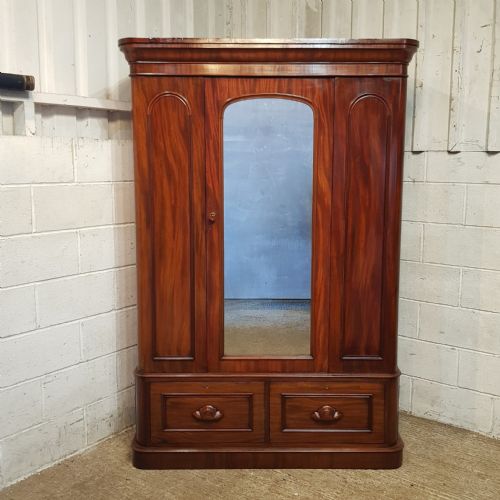
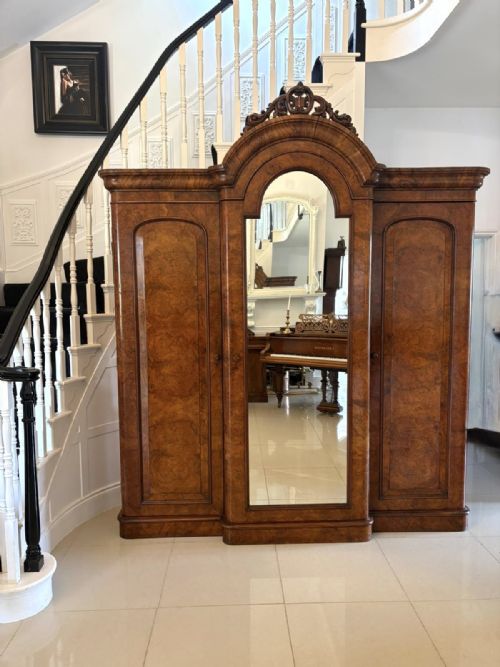
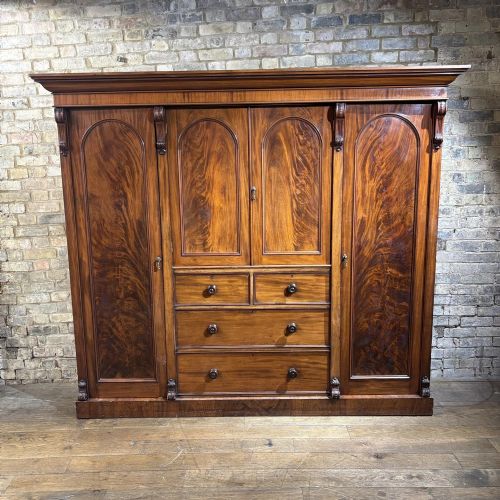
A large antique compactum is a multi-compartment wardrobe that typically brings together hanging sections, linen presses, and internal drawers into one substantial piece of bedroom furniture. These pieces span the Georgian, Victorian, and Edwardian periods, appearing in forms such as breakfront triple wardrobes, combination cupboards, and inverted breakfront layouts.
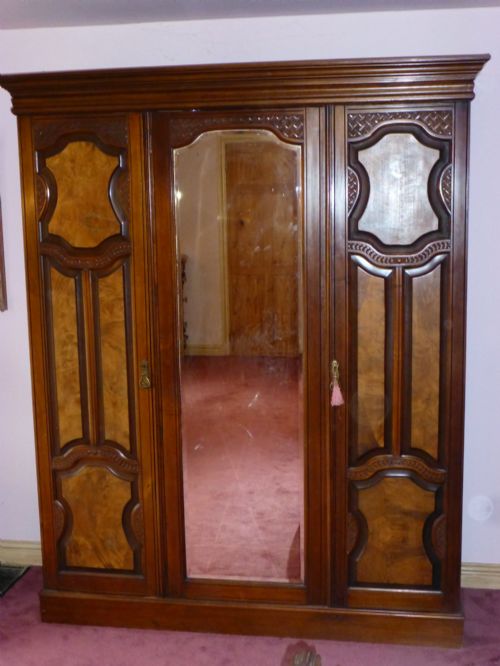
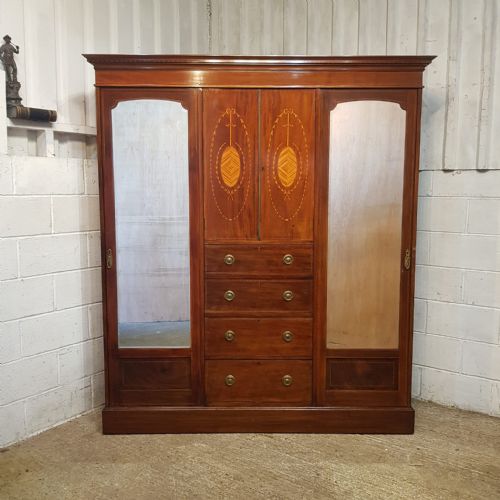
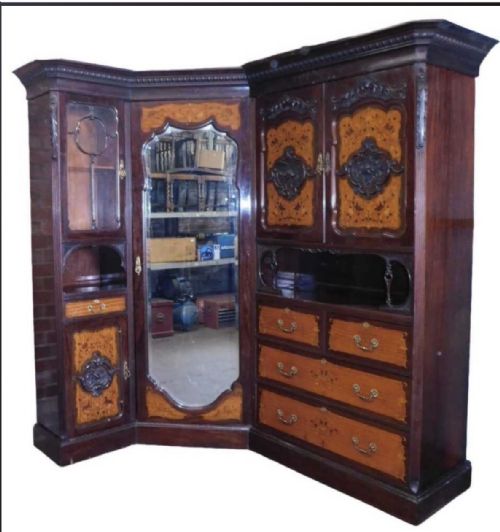
The version you are most likely to meet on this page is the Victorian walnut or mahogany triple wardrobe, often featuring mirrored doors alongside central bank drawers. Earlier Georgian and William IV examples lean towards architectural breakfront proportions in flame mahogany, while Edwardian pieces frequently showcase inlaid satinwood or carved oak.
These multi-functional units were originally commissioned for substantial country houses and town residences to organise a complete wardrobe within a single architectural frame. Their internal configurations often include sliding trays, sliding shelves, and dedicated compartments for boots, hats, and linen.
How they were made
Cabinet makers utilised solid timbers such as mahogany, oak, and walnut for the foundational frames, often applying figured veneers like burr walnut, flame mahogany, or pollard oak to the primary display surfaces. These veneers were painstakingly matched and laid by hand to create symmetrical grain patterns across large door panels and drawer fronts.
Joinery techniques relied on robust dovetailed drawer construction, mortise and tenon frames, and panelled backs to ensure stability across substantial proportions. Decorative embellishments included boxwood stringing, marquetry inlays, brass hardware, and hand-carved mouldings.
Many of these large pieces were constructed with dismantling capabilities, using internal bolts and knock-down joints so they could be transported up staircases and assembled within grand bedrooms.
Listings span the Georgian, Victorian, and Edwardian periods, utilising mahogany, walnut, burr walnut, oak, satinwood, and pine.
What varies in quality
The distinction between tiers of production often lies in the selection of timber and the ambition of the internal layout. Pieces originating from prominent cabinet makers display superior timber selection, such as uninterrupted burr walnut or heavily figured flame mahogany, combined with secondary woods like oak rather than pine for drawer linings.
Internal complexity and secondary detailing set finer examples apart from standard workshop output. Superior compactums feature fully fitted cedar-lined interiors, concealed jewellery drawers, sliding linen trays, and panelled backs rather than simpler utilitarian shelving.
Holland and Sons·Gillows·Maple and Co·Edwards and Roberts·Gillow and Co
The Large Compactum Glossary
- Compactum
- A multi-functional wardrobe combining hanging space, drawers, and shelving within a single unified cabinet. This form maximises bedroom storage by integrating the functions of a linen press and a wardrobe.
- Breakfront
- A cabinet front where the central section projects forward from the flanking wings. This architectural arrangement creates depth and shadow across large wardrobe facades.
- Inverted breakfront
- A cabinet design where the central section recedes rather than projects, creating an alternative rhythmic facade. This configuration appears frequently in William IV and Victorian case pieces.
- Burr walnut
- Timber taken from the gnarled growths of a walnut tree, prized for its swirling, highly figured grain patterns. Cabinet makers sliced this wood into thin veneers to cover large door surfaces.
- Linen press
- A piece of furniture featuring upper cupboard doors enclosing sliding trays for folded textiles, placed above a base of drawers. In compactum combinations, this mechanism sits alongside vertical hanging space.
Large Compactum: Frequently Asked Questions
What is a compactum wardrobe?
A compactum wardrobe is a comprehensive bedroom storage unit that integrates hanging space, shelving, and internal drawers into a single architectural piece.
Unlike standard wardrobes, these combination pieces incorporate linen press sections and banks of internal drawers to house an entire wardrobe in one designated cabinet.
How do I assemble a large wardrobe?
Many period compactums were constructed to dismantle into modular sections, consisting of a heavy cornice, a base plinth, flanking wardrobe carcasses, and a central section.
Assembly typically involves aligning the components and securing them using internal bolts or interlocking brackets before hanging the mirrored or panelled doors.
How do I tell Victorian from Edwardian pieces?
Victorian compactums generally display heavier proportions, deeper mouldings, and rich timbers such as burr walnut, flame mahogany, and pollard oak with minimal inlay.
Edwardian pieces often feature lighter framing, neoclassical satinwood inlays, boxwood stringing, and brightly polished brass fittings that reflect a shift towards airier bedroom aesthetics.
Where were these pieces used?
These large storage units were designed for the principal bedrooms of substantial Victorian and Edwardian townhouses and country estates.
Their substantial capacities allowed household members to store formal attire, linens, and accessories within private dressing rooms and spacious bedchambers.