



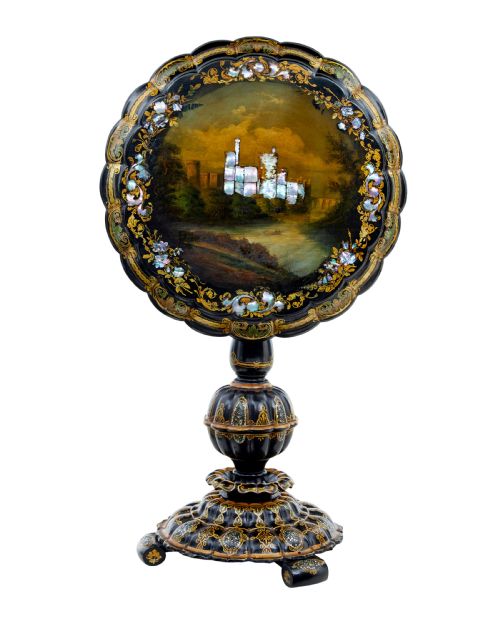


Lacquered Tripod Table
A lacquered tripod table brings a deep, glossy surface and slender pedestal support into a room, offering both decorative presence and practical utility.
Lacquered Tripod Table
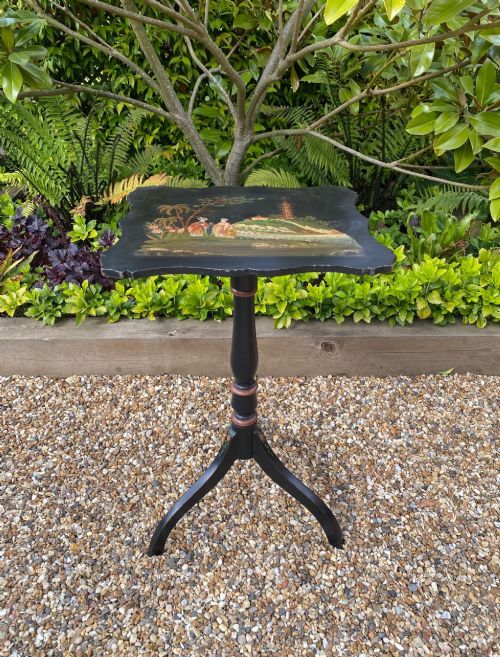
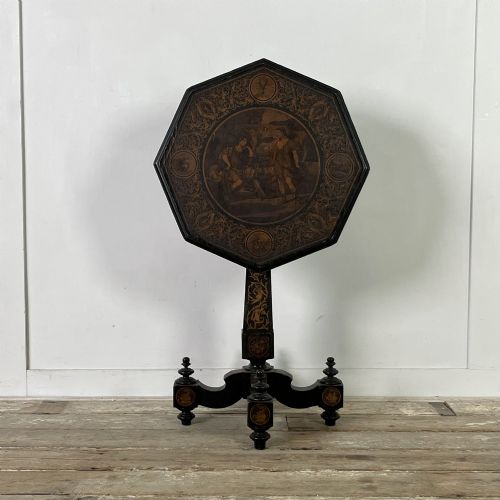
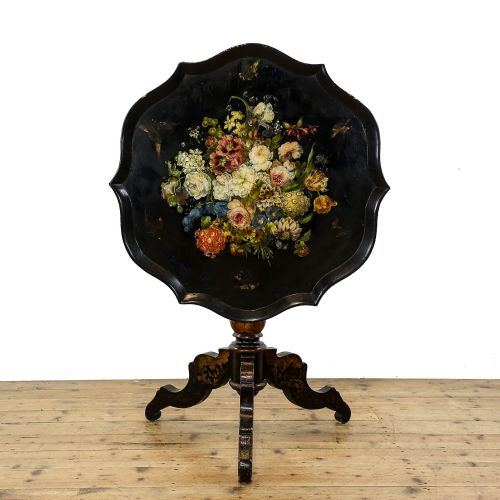
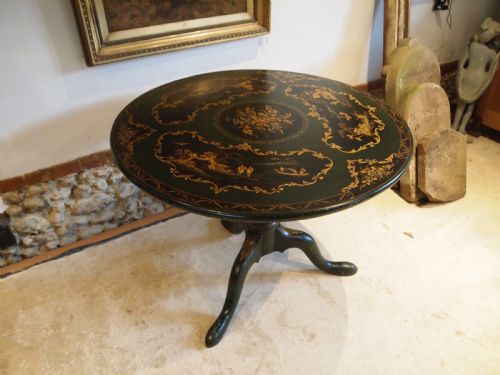
A lacquered tripod table combines a circular or tray top with a three-legged pedestal base, taking forms such as wine tables, occasional tables, side tables, tilt-top tables, and plant stands or torchères. These pieces appear across Georgian, Regency, Victorian, and Edwardian periods, as well as around nineteen hundred, alongside revivals and export styles.
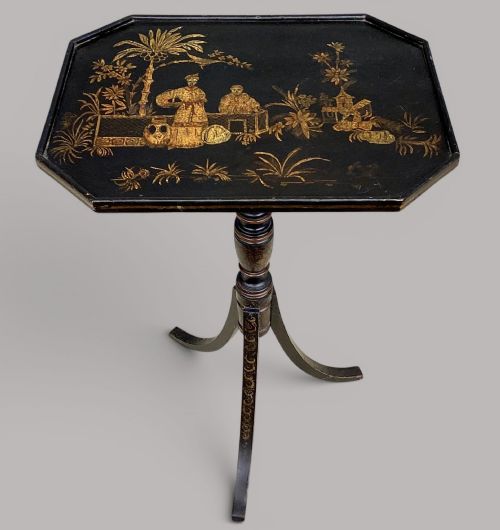
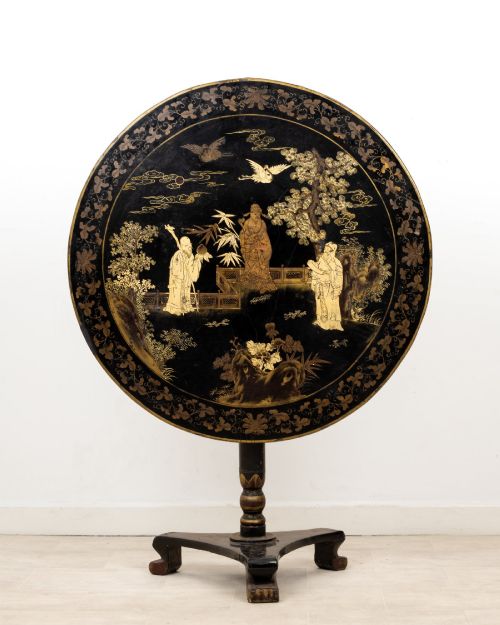
The aesthetic leans heavily into Chinoiserie, Chinese export, Anglo-Indian, and japanned designs, frequently showing painted details, gold leaf, or parcel gilt on black or dark grounds. The tilt-top mechanism remains common, allowing the surface to fold away vertically when not in use beside a chair or in a corner.
How they were made
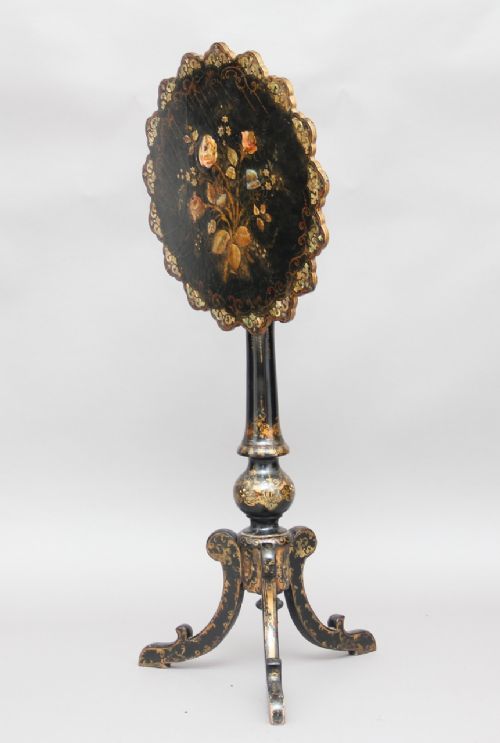
Construction relies on timber foundations, including standard wood, ebonised wood, and papier-mâché, shaped into turned pedestals and tripartite or tripod bases. Surfaces receive coats of lacquer, paint, or varnish, built up to create a smooth ground for decorative work.
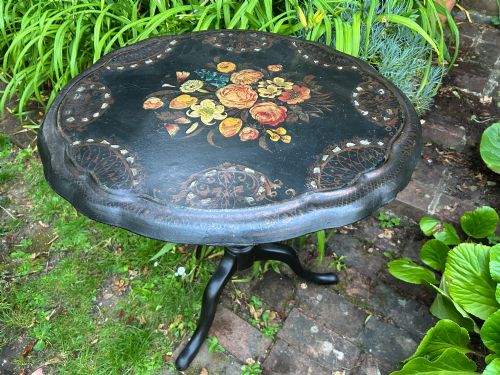
Decoration involves hand-painted motifs, gold leaf, parcel gilt, ink work, and mother-of-pearl inlay, particularly within Chinoiserie and Kashmiri traditions. These decorative layers are applied directly to the prepared wooden or papier-mâché panels.
Some nineteenth-century makers saved workspace by hiding entire Chinese river landscapes inside the bounce of a papier-mâché tray top.
What varies in quality
The refinement of the painted decoration and the depth of the lacquer finish distinguish standard examples from finer works, especially where detailed Chinoiserie scenes or intricate mother-of-pearl inlay are involved. Superior pieces display crisp brushwork and well-preserved gilding that integrates smoothly with the dark ground.
The stability of the tripod base and the precision of the tilt-top mechanism dictate structural integrity. Well-balanced pedestal legs and a tight pivot joint ensure the table functions reliably as both a display surface and a movable stand.
The Lacquered Tripod Table Glossary
- Chinoiserie
- European interpretation and imitation of Chinese and East Asian artistic traditions, commonly featuring figures, landscapes, and pavilions in gold or colour on black lacquer.
- Japanned
- European lacquering technique imitating East Asian lacquerware, produced by applying successive coats of varnish and heat-drying them.
- Tilt-top table
- A table with a hinged top that pivots vertically, enabling the piece to stand flat against a wall when not in use.
- Parcel gilt
- Portions of an object highlighted with gold leaf or gold paint, contrasting against a painted or ebonised wood ground.
- Torchère
- A tall, slender stand designed to hold a light source, candle, or decorative plant.
Lacquered Tripod Table: Frequently Asked Questions
How do I use a tripod table in a modern room?
These tables fit easily beside armchairs or sofas as a surface for a small lamp or a cup, taking up minimal floor space due to the three-legged base.
Because many feature tilt-top mechanisms, you can fold the surface down and place the table flat against a wall when floor space is needed.
What is the difference between Chinoiserie and Chinese Export?
Chinoiserie describes European-made items decorated in an imaginative East Asian style, popular during the Georgian and Victorian periods.
Chinese Export pieces were manufactured in China specifically for the Western market, incorporating authentic regional craftsmanship and materials.
How should I care for a lacquered surface?
Keep these tables out of direct sunlight to prevent the lacquer and painted details from fading or drying out over time.
Dust gently with a soft, dry cloth and avoid using chemical polishes or water on the sensitive decorated finish.
How can I tell a Victorian table from a Georgian one?
Georgian and George III pieces often display finer proportions and restrained Chinoiserie detailing, while Victorian examples frequently utilise papier-mâché, mother-of-pearl inlay, and bolder japanned finishes.
Comparing the turned details of the pedestal and the construction of the underside helps place the object within its correct period.