





Black Lacquer Tilt Top Table
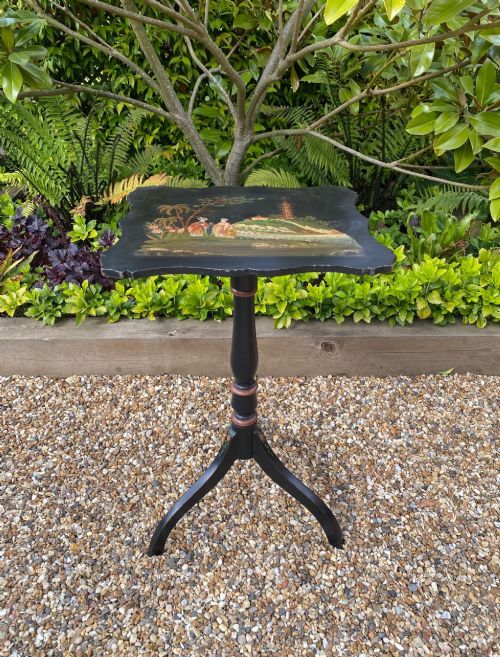
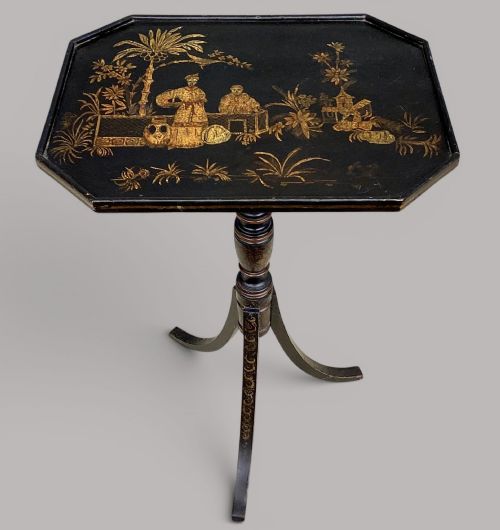
A black lacquer tilt top table brings hand-painted Chinoiserie and rich gilt decoration into a room while folding away when floor space matters.
Black Lacquer Tilt Top Table
A black lacquer tilt top table combines a practical pivoting surface with decorative painted finishes across Georgian, Regency, and Victorian periods. These pieces serve as occasional tables, wine tables, or side tables in varied rooms.
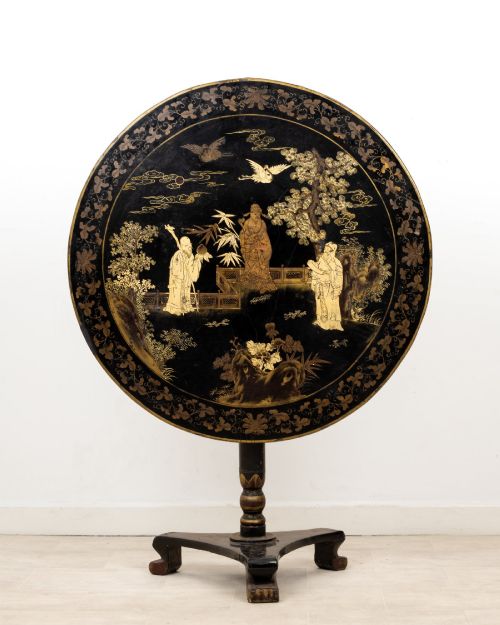
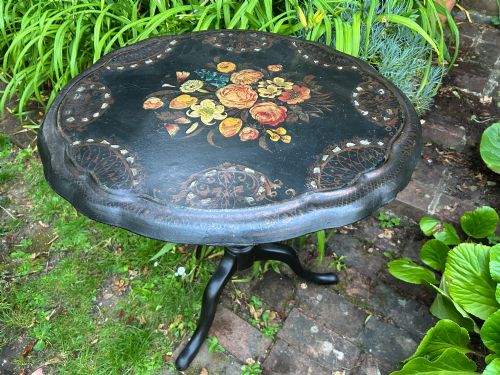
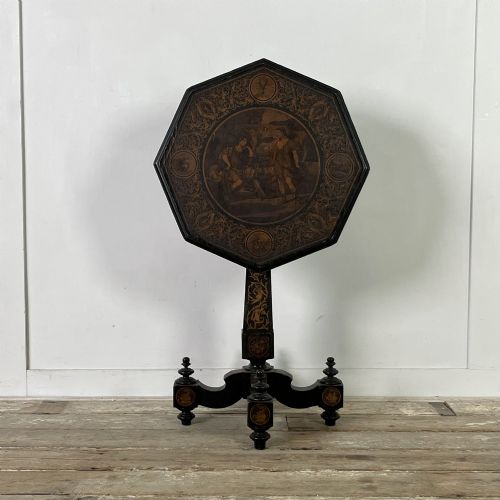
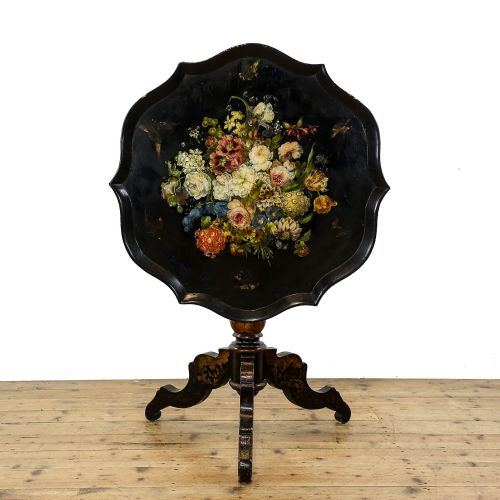
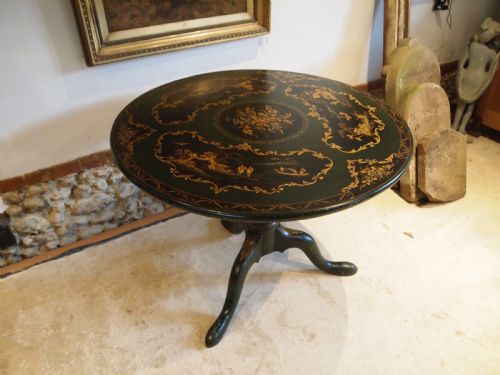
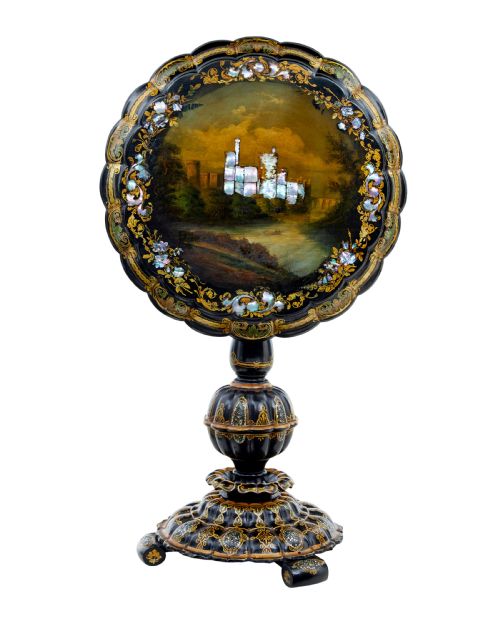
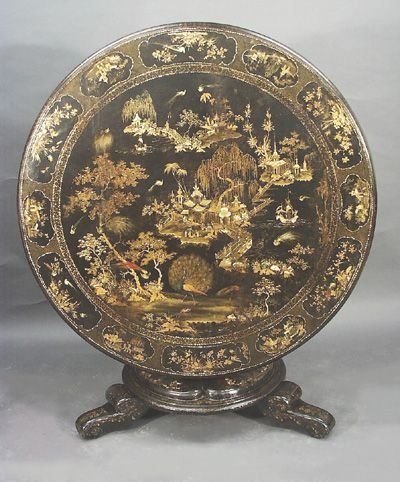
The designs draw heavily on Chinoiserie aesthetics, featuring black painted grounds enriched with gold leaf, paint, and sometimes mother of pearl inlay. Examples span from George III through to Edwardian interpretations, including papier-mâché constructions and lacquered wood forms.
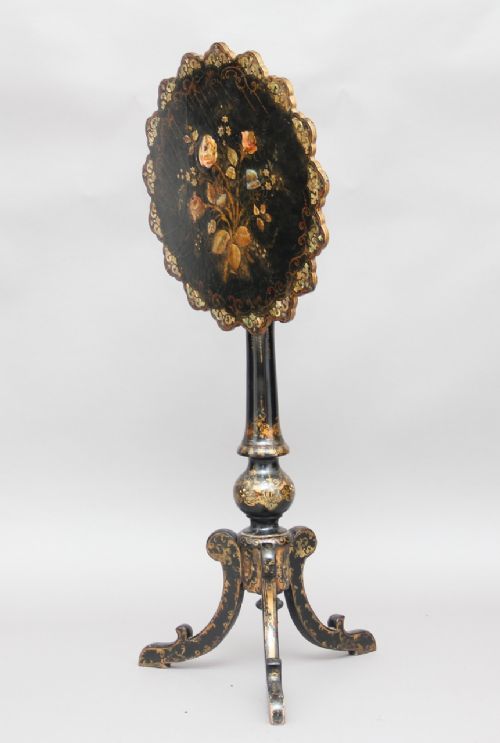
Buyers encounter tripod bases alongside traditional column supports, all designed to let the tabletop tilt flat against the base when not in use. The diverse origins range from English workshops to Chinese export pieces.
Materials and construction methods
The foundation relies on timber, papier-mâché, or lacquered wood, shaped into tripod bases and circular or tray-style tops. Artisans applied layers of lacquer to create a smooth dark surface ready for decoration.
Surface ornamentation involved hand painting, gilt work, ink work, and gold leaf applications to build detailed Chinoiserie scenes. Selected Victorian examples incorporate mother of pearl inlay to catch the light against the black ground.
Several tables feature hidden tilt mechanisms that let them fold completely flat, ready to hide behind a sofa like an obedient servant.
Assessing quality and craftsmanship
Quality rests in the crispness of the hand-painted detail and the depth of the gilt or gold leaf work across the lacquer ground. Finer pieces display intricate brushwork and secure inlay rather than simple surface stencilling.
The mechanism of the tilt top pivot dictates mechanical success, requiring a snug fit between the tabletop catch and the tripod base without excess wobble. The stability of the wooden or papier-mâché structure underpins long-term survival.
The Black Lacquer Tilt Top Table Glossary
- Tilt top table
- A table with a hinged mechanism allowing the top to pivot from horizontal to vertical for storage.
- Chinoiserie
- European decorative art influenced by Chinese artistic styles, prominent in painted lacquer designs.
- Papier-mâché
- A composite material made from paper pulp or layers of paper bound with glue, pressed and lacquered.
- Japanned
- European imitation of East Asian lacquerwork, created using layers of varnish and heat-cured finishes.
- Parcel gilt
- The practice of applying gold leaf or gilt to specific highlighted areas of a painted surface.
Black Lacquer Tilt Top Table: Frequently Asked Questions
How do I tilt the tabletop safely?
Release the brass catch or wooden toggle beneath the surface while supporting the top with one hand to guide its movement. Ensure any items are removed from the surface before pivoting the top into its vertical storage position.
Check that the locking mechanism engages securely when returning the top to the horizontal plane to prevent accidental tipping during daily use.
Where should I place this table?
Position the piece as an occasional table beside a seating area where its decorative surface can be appreciated without heavy daily wear. Keeping it away from direct sunlight preserves the black lacquer and gold leaf work.
Allow enough clearance around the tripod base so the tilting action functions smoothly without hitting surrounding furniture or walls.
How do I clean lacquered surfaces?
Dust the table regularly with a soft, dry lint-free cloth to prevent grit from scratching the delicate painted finish. Avoid using modern chemical polishes, abrasive sprays, or water on antique lacquer and gilt.
Consult a specialist conservator if the surface requires deeper cleaning or if the lacquer shows signs of crazing or lifting.
How can I tell Victorian from Georgian pieces?
Georgian and Regency examples often feature solid wood or lacquered wood construction with hand-painted Chinoiserie scenes and fine gilt detailing. The introduction of papier-mâché bases and mother of pearl inlay typically points towards Victorian production.
Examine the construction of the tripod legs and the tilt mechanism underneath for clues regarding period manufacturing techniques and material choices.