




Lacquered Dining Chairs
Lacquered dining chairs bring deep lustre and hand-painted detail to a room, offering both decorative presence and practical seating.
Lacquered Dining Chairs
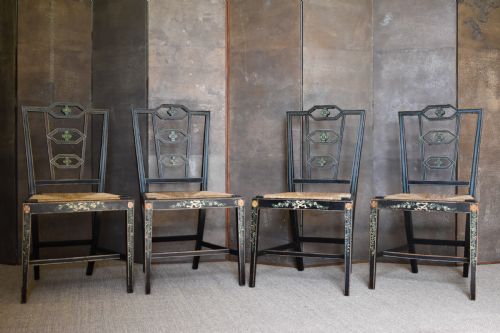
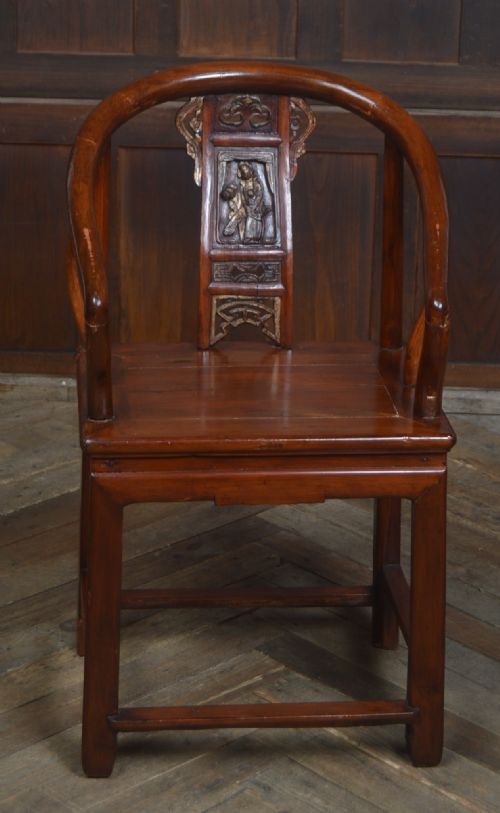
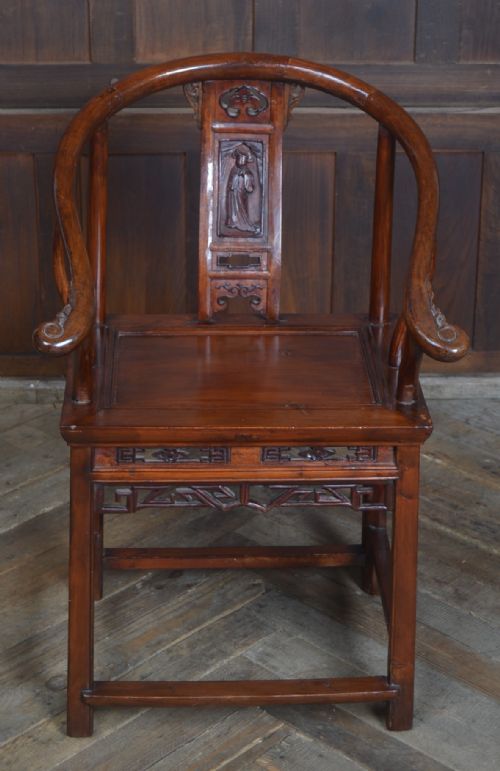
When you search for lacquered dining chairs, you encounter a remarkably varied group of seating ranging from early eighteenth-century European chinoiserie to nineteenth-century Chinese examples and twentieth-century interpretations. These pieces often serve as striking focal points in a dining room rather than purely utilitarian furniture, drawing the eye with their polished surfaces and intricate ornamentation.
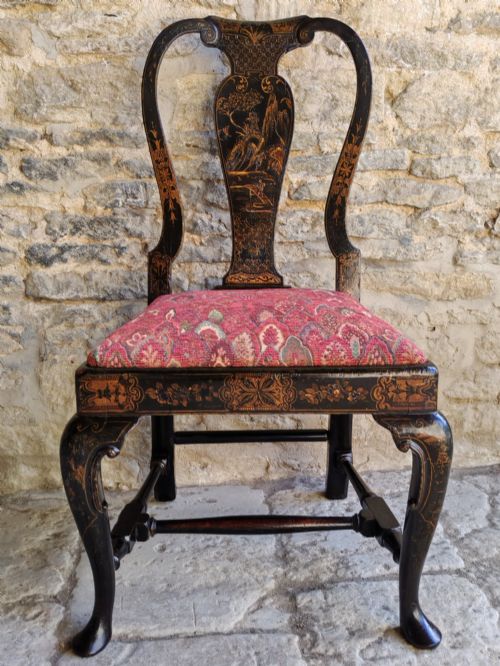
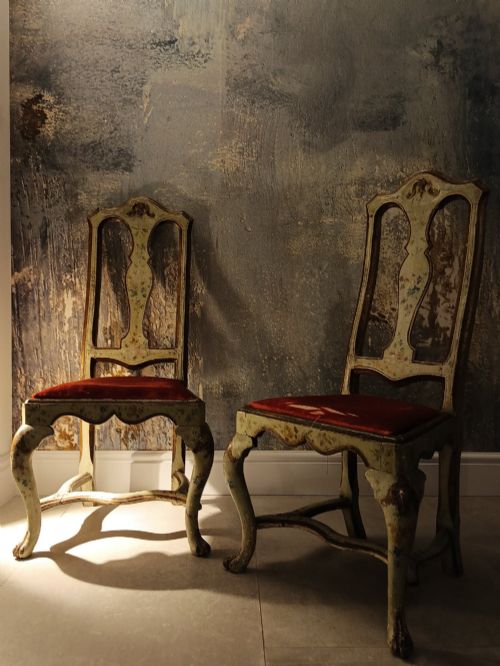
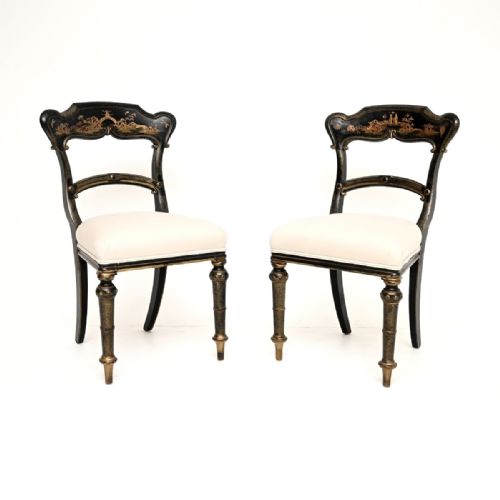
The physical forms include high backs, solid splats, and open frames, often decorated with motifs that reveal considerable artistic ambition. Whether originating from English japanning studios or Qing Dynasty workshops, each piece carries the distinct hallmarks of its period of manufacture.
Materials and construction
The construction relies heavily on traditional timber frames fashioned from woods such as elm, alongside general hardwoods that provide the necessary structural stability for seating. Artisans applied layers of lacquer to these wooden surfaces, building up a hard, glossy finish that could be polished to a high sheen.
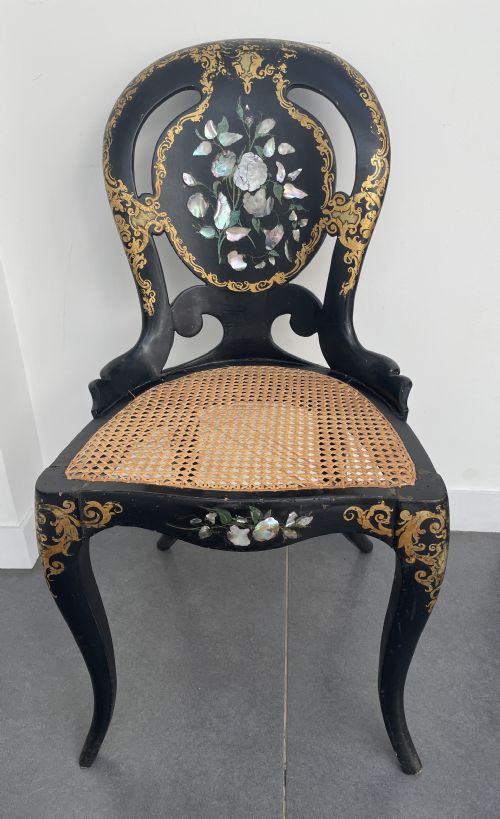
Decoration frequently involved painted details, gilt ornamentation, and occasionally inlaid mother of pearl to create pictorial scenes or geometric patterns. These finishes required meticulous application and drying times between coats, resulting in a durable skin that protects the underlying timber while delivering visual depth.
Periods represented span from around 1700 through the Georgian, Victorian, and Edwardian eras up to the 1920s.
Evaluating quality and condition
The distinction between ordinary and exceptional examples rests in the preservation of the original surface finish and the crispness of the painted or gilt decoration. Pieces retaining their early layers without excessive overpainting command greater attention from those who value historical integrity.
Structural firmness and the survival of original joinery also dictate the standing of a chair, as stability remains essential for daily use. Furthermore, the finesse of the carving on the wooden frame and the sophistication of the chinoiserie motifs separate standard production from finer artisan output.
The Lacquered Dining Chairs Glossary
- Chinoiserie
- European decorative style reflecting Chinese artistic influences, commonly seen in painted landscapes and figures on lacquered furniture.
- Japanning
- European imitation of East Asian lacquerwork, popular in the seventeenth and eighteenth centuries, utilising specific varnishes and heat treatments.
- Gilt
- Application of gold leaf or powder to surfaces for decorative enhancement, often highlighting carved details on lacquer.
- Splat
- The vertical central strip of wood in the back of a chair, frequently decorated in these pieces with lacquer or painting.
- Side chair
- An upright chair without arms, designed primarily for dining tables and general room placement.
Lacquered Dining Chairs: Frequently Asked Questions
Are these chairs suitable for daily use?
These chairs are sturdy enough for regular dining when their joints are secure and well maintained. Careful placement away from direct heat sources protects the lacquer finish over time.
Heavier everyday wear can affect older surfaces, so many owners reserve them for formal dining rooms or lighter seating duties.
How do I clean lacquered wood?
Maintenance requires only a soft, dry cloth to remove dust without abrasive polishes or harsh chemical cleaners. Moisture should be kept away from any cracks or losses in the surface.
Professional restoration is recommended if structural repairs or surface stabilization become necessary.
What is the difference between japanned and lacquered pieces?
Japanning specifically denotes European interpretations of Asian lacquer techniques developed during the seventeenth and eighteenth centuries. Both terms describe glossy, built-up resin finishes on wood.
Asian imports generally utilised natural tree saps, whereas European workshops relied on spirit-based varnishes and paints.
How can I tell the period of a chair?
Dating relies on examining the construction methods of the wooden frame, the style of the legs and splats, and the pigments used in the decoration. Georgian and eighteenth-century examples display different joinery and proportions compared to Victorian or Edwardian revivals.
Comparing the decorative motifs with documented period pieces helps confirm the likely decade of manufacture.