




Painted Carver Dining Chairs
These painted carver dining chairs combine practical seating with decorative painted finishes across several historic periods.
Painted Carver Dining Chairs
When you search for painted carver dining chairs, you encounter seating designed for the ends of a dining table, featuring arms and applied painted finishes. These pieces range from authentic late eighteenth century examples to later revival pieces from the nineteenth and early twentieth centuries.
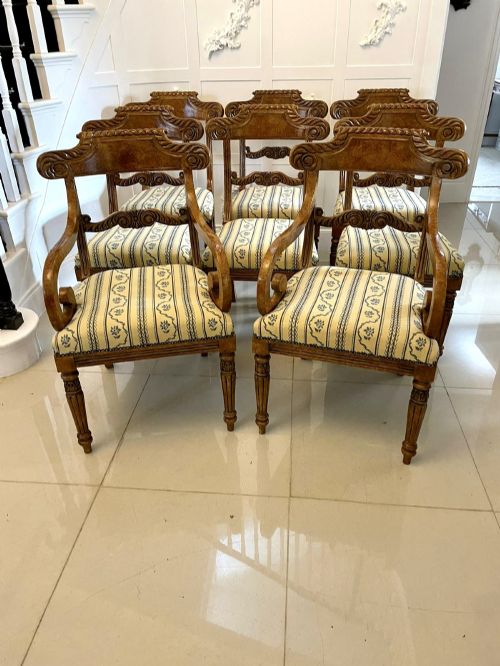
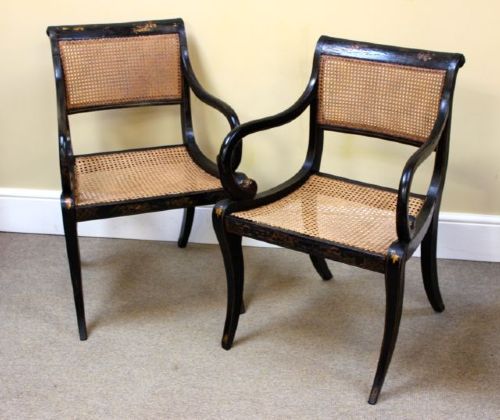
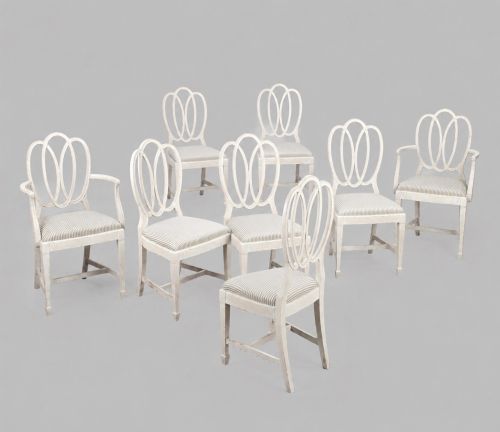
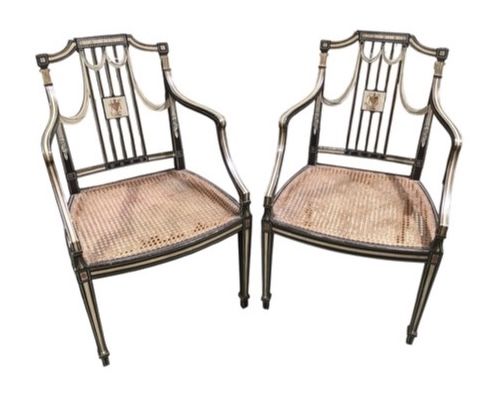
The selection on this page includes styles such as Regency, George III, Edwardian, and Arts and Crafts. You will find single armchairs, pairs, and larger sets displaying decorative painted surfaces, faux finishes, and lacquering.
Forms vary from classic elbow chairs to larger sets of dining chairs incorporating armchairs. Origins span traditional English designs alongside continental influences like Gustavian styles.
How They Were Made
Makers utilised woods such as oak, maple, and general timber as a base for intricate painted decoration, lacquer, and ebonised finishes. Surfaces often received hand-painted floral motifs or faux bird's eye maple effects.
Cane panels and fabric upholstery were incorporated into seats and backs to provide comfort alongside the wooden structures. Traditional joinery techniques secured the arms and legs, supporting the decorative painted frame.
Listings feature periods spanning the 18th Century, Regency, Victorian, and early 20th Century, alongside materials like cane, lacquer, and painted wood.
What Varies in Quality
The sophistication of the painted decoration separates standard examples from finer pieces, with detailed floral work and specialised finishes like japanning or faux wood graining indicating superior craftsmanship. The integrity of the underlying woodwork and the preservation of the original paint layer also influence the overall standard.
Cohesion within larger sets of chairs affects desirability, as matched groups maintain a more uniform appearance around a dining table. The subtlety of period styles, whether a genuine eighteenth century piece or a later revival, dictates the character of the chair.
The Painted Carver Dining Chairs Glossary
- Carver
- An armchair designed specifically to sit at the head of a dining table. These pieces feature supportive arms that distinguish them from standard side chairs.
- Japanning
- A type of European finish that emulates East Asian lacquerware. This technique involves layering varnishes and paints to create a glossy, decorative surface.
- Ebonised
- Wood treated to resemble ebony through staining or painting. This process creates a dark, uniform appearance popular in various nineteenth and twentieth century furniture styles.
- Gustavian
- A Swedish adaptation of French neoclassical style characterised by lighter painted finishes and restrained ornamentation. These pieces often feature pale grey or white paint.
- Regency Revival
- A nineteenth or twentieth century reinterpretation of furniture designs from the English Regency period. These items emulate the classical lines and decorative motifs of the early nineteenth century.
Painted Carver Dining Chairs: Frequently Asked Questions
How do I clean painted furniture?
Cleaning painted antique chairs requires a gentle approach to protect the historic surface. Use a soft, dry cloth to remove dust regularly without applying harsh chemical cleaners.
Avoid excessive moisture, which can damage old paint layers or lift delicate lacquering. Professional conservation advice should be sought if the painted finish shows signs of flaking.
Can I mix these with modern tables?
Painted carver chairs work well around contemporary dining tables to create a curated, eclectic interior. The contrasting textures of old painted wood and modern materials often complement one another.
Consider the height of the table apron to ensure the armrests of the carver slide underneath comfortably. Colour coordination helps tie different periods together in a single room.
How do I identify a revival piece?
Revival pieces are identified by the construction methods, secondary woods, and the specific characteristics of the paint finish typical of later centuries. An item labelled as a Regency style or Queen Anne revival points to manufacture in the Victorian or Edwardian eras.
Examining the wear patterns and tool marks underneath the seat helps reveal the true age of the timber and construction. Comparing details against documented period originals clarifies the distinction.