




Oriental Lacquer Chairs
Oriental lacquer chairs bring depth and hand-finished pattern to a room, ranging from early 18th century chinoiserie to late Victorian interpretations.
Oriental Lacquer Chairs
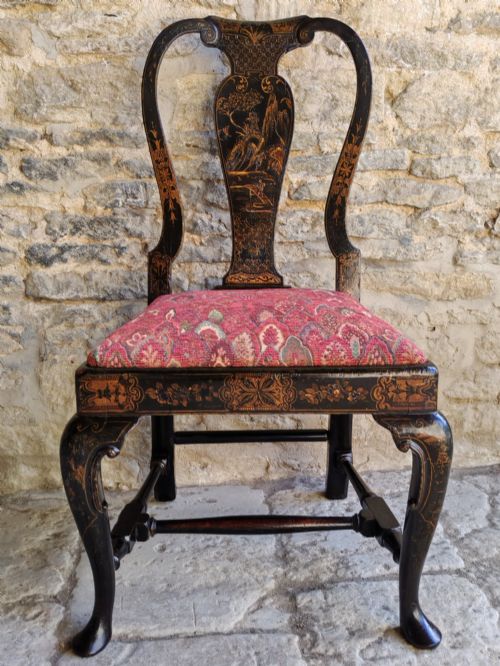
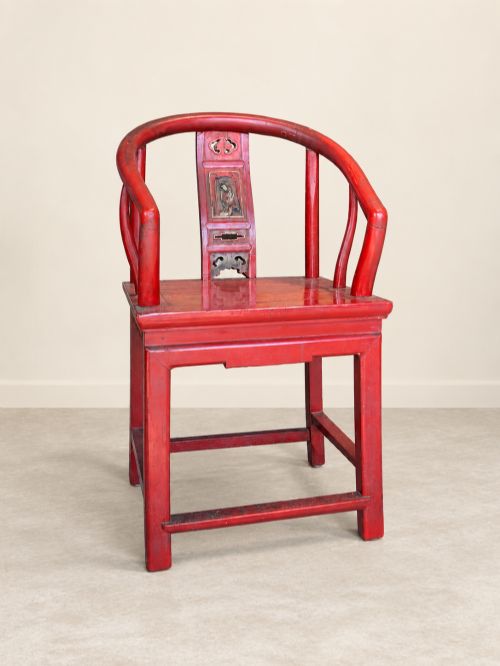
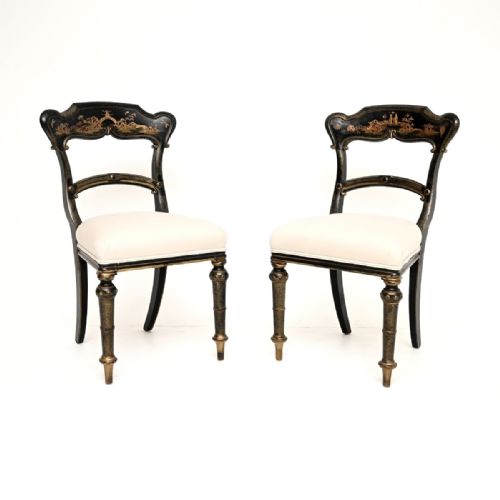
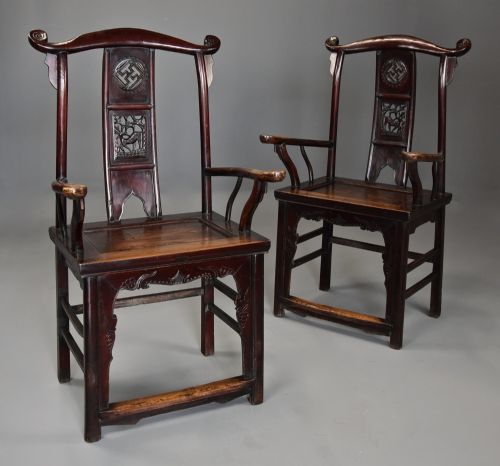
Oriental lacquer chairs span several distinct centuries, crossing from Qing Dynasty workshops to Victorian and Edwardian British adaptations of Chinoiserie. When you search for oriental lacquer chairs, you encounter seating designed for formal halls, bedrooms, and parlours, including armchairs, side chairs, and occasional benches.
The pieces on this page lean heavily into specific regional traditions alongside European interpretations of eastern design. You find Chinese elm frameworks paired with red or black lacquer, alongside English japanned wood and elaborate painted surfaces.
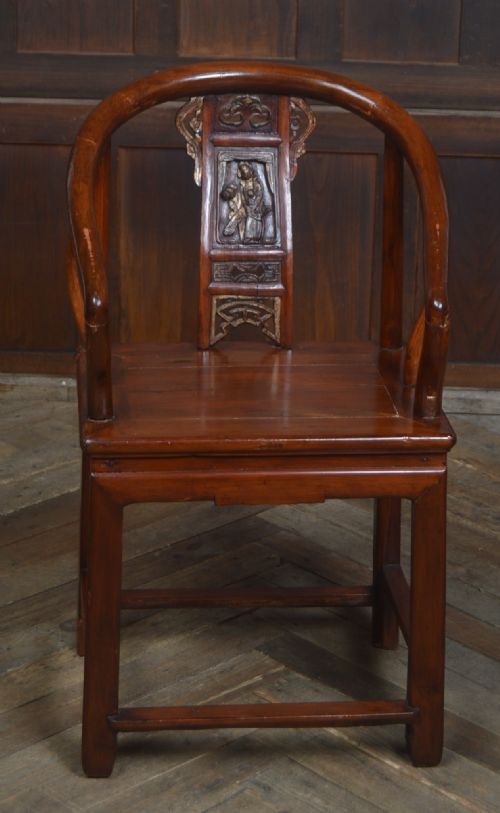
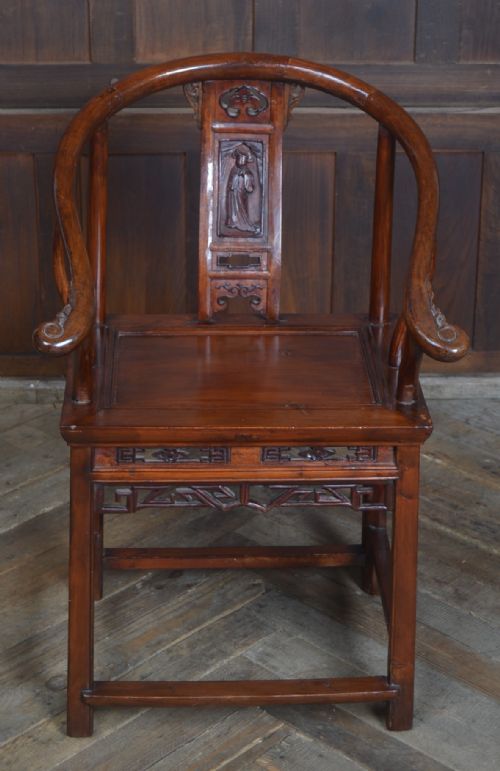
Forms vary from yokeback armchairs and concubine chairs to bergere models and solid hall seating. Each piece reflects either direct import from Chinese makers or domestic British cabinet-making influenced by oriental taste.
How they were made
Makers built the structural frames of these chairs using hardwoods, predominantly Chinese elm alongside walnut and general lacquered wood. Joinery often supported heavy layers of applied lacquer, cinnabar, or paint without relying on metal fasteners.
Surfaces received successive coats of lacquer to build a deep, protective finish that could then be gilded, carved, or painted with figurative scenes. Canework and fabric inserts frequently formed the seat bases, providing contrast to the rigid wooden frames.
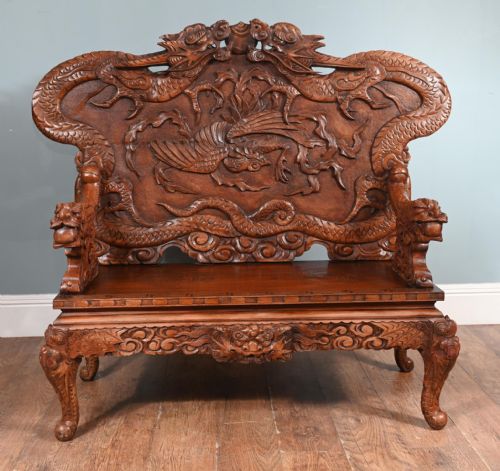
Concubine chairs invite you to ponder Victorian notions of exotic lounging while inspecting intricate cinnabar carvings.
What varies in quality
The distinction between tiers rests upon the depth of the lacquer finish and the crispness of the hand-carved detail or painted decoration. Pieces retaining their original red or black pigment show superior preservation compared to those with later surface overhauls.
Structural integrity of the underlying elm or hardwood frame dictates long-term stability, particularly where joinery meets layered lacquer. Subtle differences in the patination of the wood and the complexity of motifs separate standard production from masterwork output.
The Oriental Lacquer Chairs Glossary
- Chinoiserie
- The European imitation and interpretation of Chinese and other East Asian artistic traditions, popular in furniture and decorative arts during the 18th and early 20th centuries.
- Japanned wood
- European furniture finished with a hard, black or coloured varnish designed to imitate Japanese or Chinese lacquer work.
- Yokeback armchair
- A traditional Chinese chair style featuring a top rail that curves outwards like a yoke, seen frequently in elm.
- Cinnabar lacquer
- A technique involving numerous layers of red lacquer carved into intricate low-relief patterns before drying completely.
- Bergere
- An enclosed upholstered armchair with wooden framing, often incorporating cane panels into the sides or back.
Oriental Lacquer Chairs: Frequently Asked Questions
Are oriental lacquer chairs comfortable?
Most antique examples function primarily as occasional seating, hall chairs, or decorative statement pieces rather than deep lounging chairs. Their upright wooden backs and firm seats reflect the formal etiquette of the periods in which they were made.
Adding a custom loose cushion or selecting a bergere model with a cane insert alters the daily sitting experience while preserving the visual impact of the frame.
How do I care for lacquer furniture?
Keep these chairs away from direct sunlight and sudden temperature shifts to prevent the underlying wood from expanding and cracking the lacquer surface. Dust gently with a dry microfibre cloth and avoid chemical polishes or abrasive cleaners.
Stable indoor humidity preserves both the pigment and the structural integrity of the applied finish over decades of domestic use.
How can I tell age on lacquer?
Age reveals itself through the natural crazing, fine micro-cracks, and wear patterns that develop across the surface layers over generations. The texture of the wood beneath and the hand-mixed pigments offer clues to the period of manufacture.
Examining the underside and joinery helps confirm whether the lacquer finish is original to the piece or a later restoration.
Where did Chinoiserie chairs originate?
Chinoiserie chairs were made in British workshops by craftsmen interpreting imported Asian goods through a Western aesthetic lens during the 18th and Victorian eras. These sat alongside actual imported pieces from Chinese dynastic workshops.
The crossover created a distinct hybrid style that combined traditional European chair frames with painted oriental motifs.