
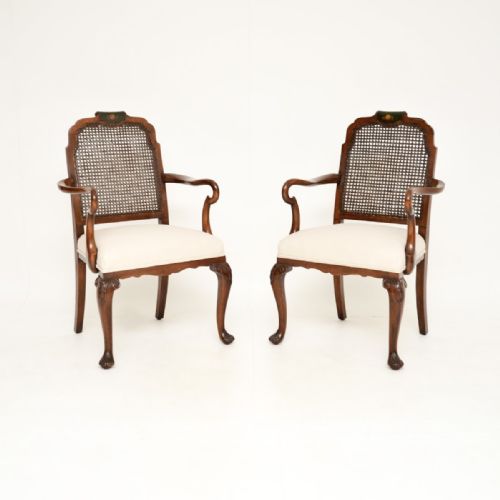
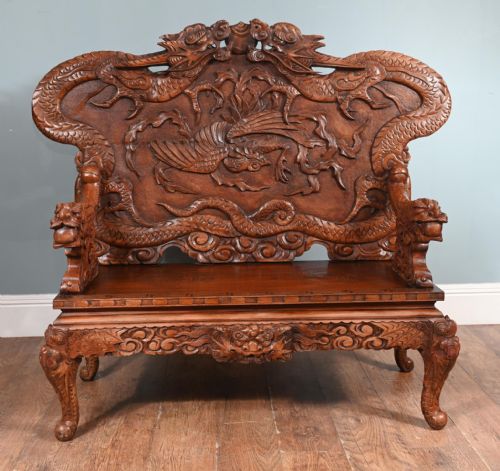
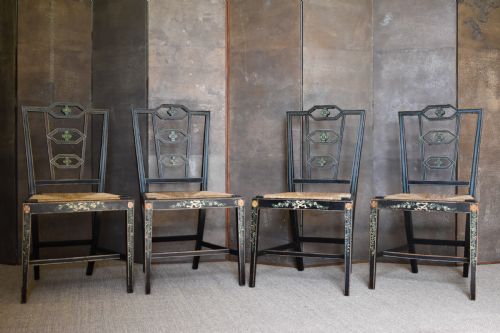


Antique Lacquer Chairs
These antique lacquer chairs bring distinctive Orientalism and European japanning into a room through deep finishes and historic forms.
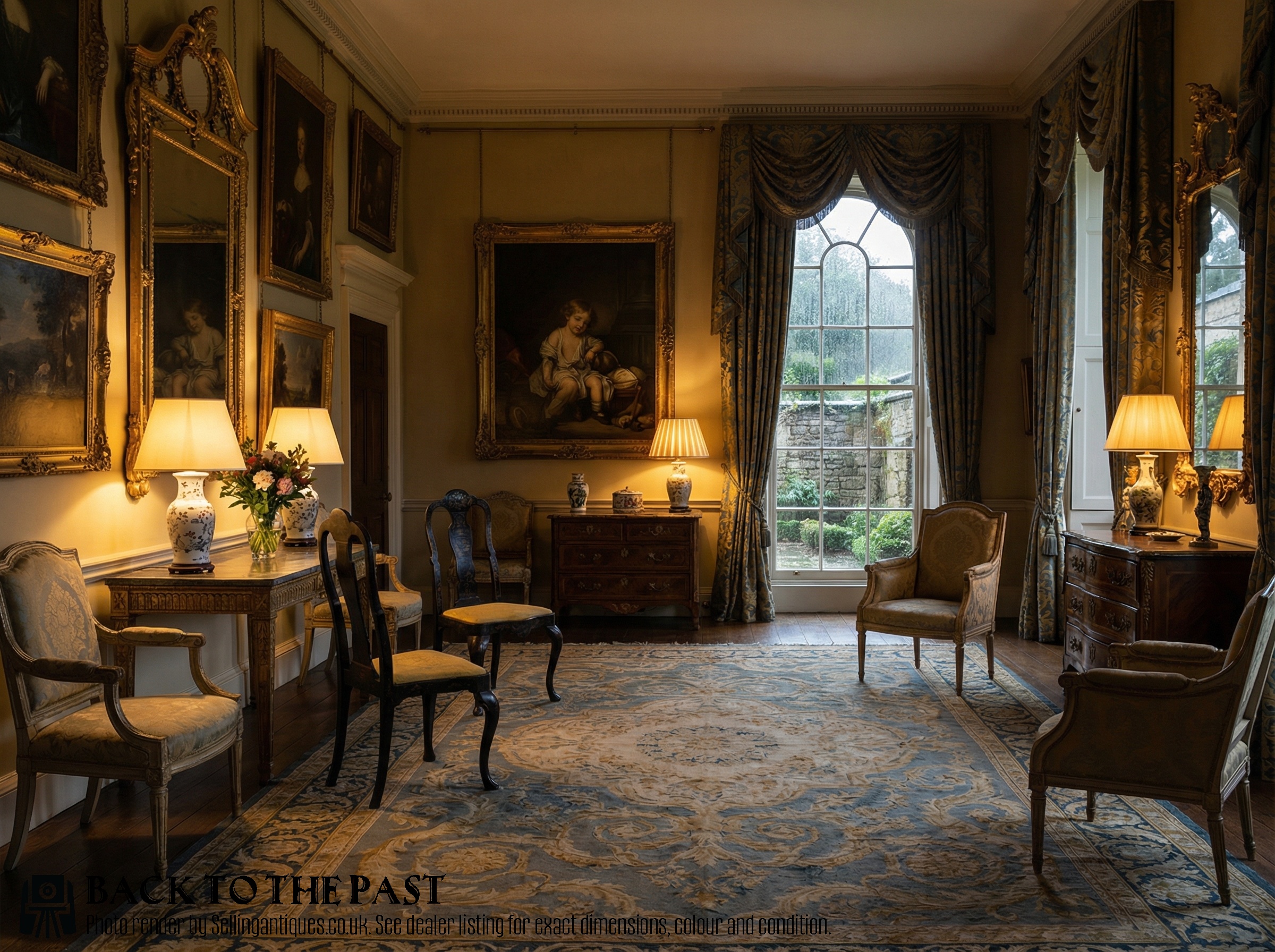
Antique Lacquer Chairs
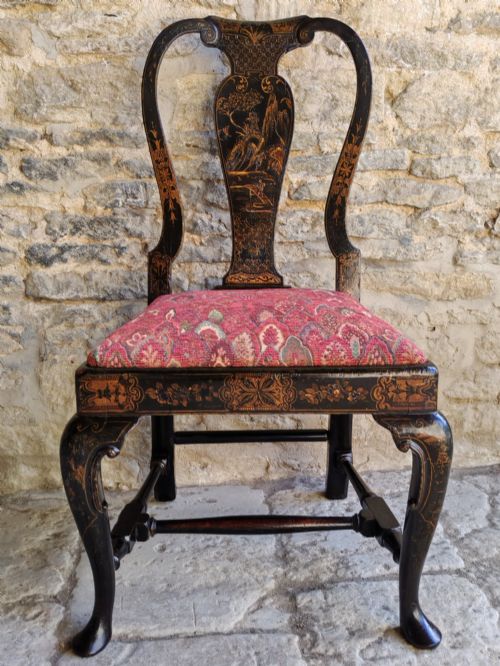
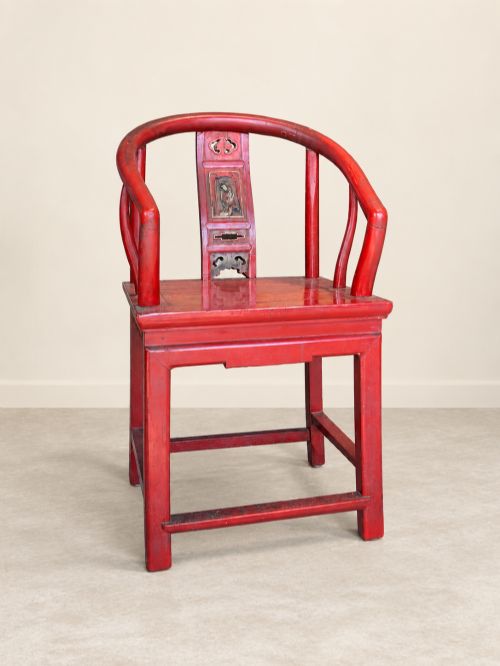
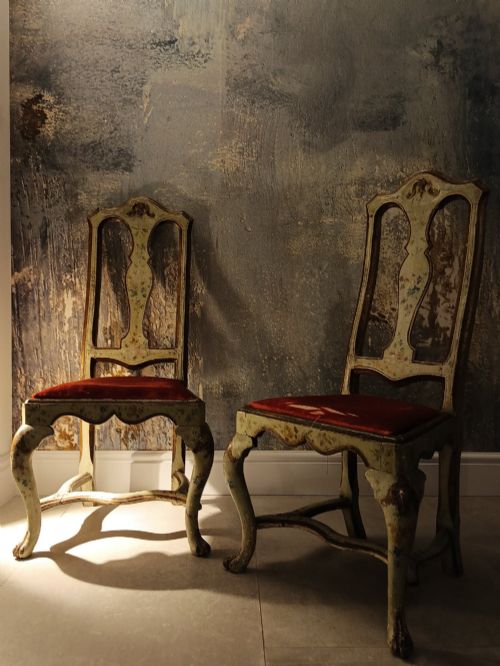
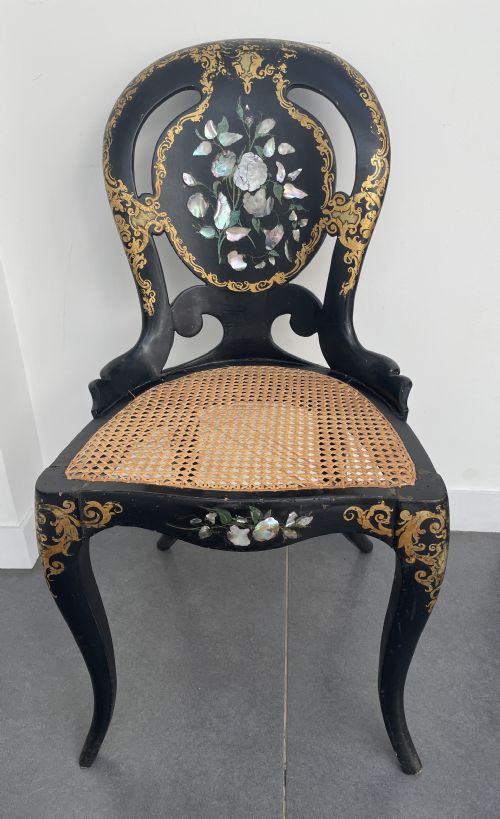
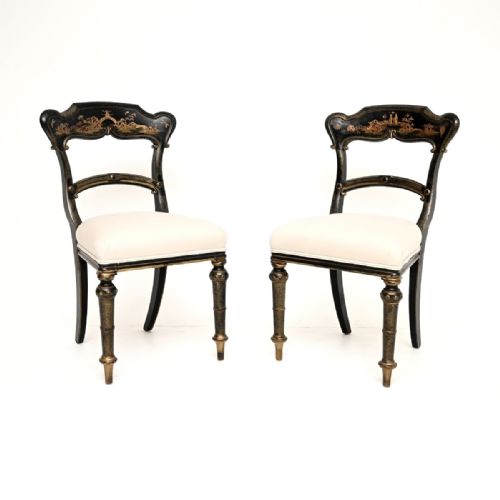
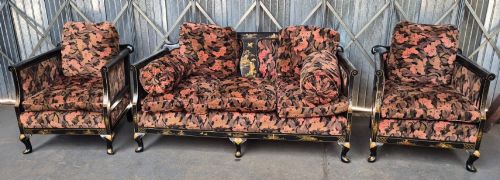
Antique lacquer chairs span diverse global traditions, uniting European japanned seat furniture with historic Chinese elm and cinnabar pieces. Buyers encounter everything from formal eighteenth-century side chairs to Victorian papier-mâché bedroom seats and Edwardian chinoiserie suites.
The selection ranges across distinct periods, featuring seventeenth-century japanning alongside nineteenth-century Victorian black lacquer library chairs and twentieth-century interpretations. Common forms include armchairs, side chairs, dining chairs, and benches created for both formal reception rooms and domestic chambers.
European workshops adapted Asian decorative methods to walnut, satinwood, and beech, while Asian makers utilised native timbers like elm. Buyers find pairs and matched sets alongside singular library chairs and larger dining arrangements.
Materials and technique
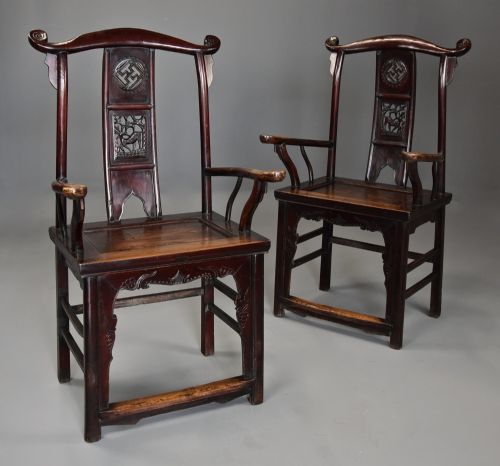
Maker construction relies on traditional timber framing combined with applied surface treatments, incorporating cane, gilt, fabric, and mother-of-pearl inlay. European pieces utilise japanning and paint on walnut or satinwood, whereas Asian examples employ red or black lacquer over Chinese elm.
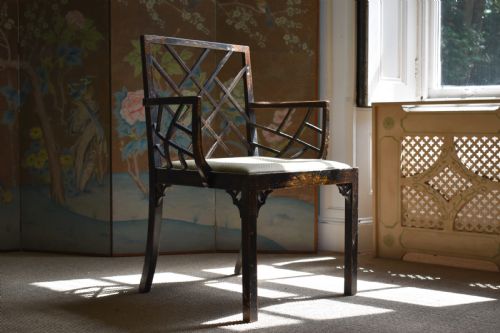
Techniques involve building up multiple layers of resin or varnish to achieve a durable surface, frequently enhanced with gold leaf decoration or hand-painted Chinoiserie motifs. Frameworks incorporate carved details, joined elements, and woven cane seats that support the decorative finish.
Listings feature pieces spanning from the seventeenth century through the Victorian and Edwardian eras, utilising elm, walnut, satinwood, and cane.
Variations in quality
Quality rests upon the preservation of the original surface finish and the clarity of the hand-painted or gilt decoration. Pieces retaining undisturbed historic patination and crisp carved details stand apart from examples with heavy modern overpainting or obscured motifs.
Structural integrity of the underlying timber frame and joinery dictates longevity, particularly in pieces featuring delicate cane work or inlaid mother-of-pearl. Superior examples demonstrate harmonious proportions and authentic material ageing across both the frame and the lacquer coating.
The Antique Lacquer Chairs Glossary
- Japanning
- European imitation of East Asian lacquerwork, created by applying layers of varnish and metallic dust to timber furniture. This technique gained popularity during the seventeenth and eighteenth centuries.
- Cane
- Material woven from rattan peel, frequently utilised for chair seats and backs in both European and Asian seating. It offers flexible support while lightening the visual weight of the frame.
- Yokeback
- Traditional Chinese chair design featuring a curved top rail resembling a yoke. This structural form appears on elm armchairs from nineteenth-century production.
- Papier-mâché
- Composite material made from paper pulp or layers of paper bound with adhesive, moulded and finished with lacquer. Victorian makers utilised this medium for lightweight decorative chairs.
Antique Lacquer Chairs: Frequently Asked Questions
How do I clean an antique lacquer chair?
Dust surfaces gently with a soft, dry cloth to prevent accumulation without disturbing the historic finish.
Avoid commercial liquid cleaners, polishes, and water, as moisture damages traditional lacquer and japanned surfaces.
Are these chairs suitable for daily dining use?
Many dining chairs and side chairs remain structurally sound for regular sitting if timber joints are stable.
Delicate antique pieces, particularly those with fragile cane or aged papier-mâché, require gentle use rather than heavy daily service.
How do I date a chinoiserie chair?
Examine the underlying timber construction, joinery methods, and the style of the painted decoration to establish the period.
Secondary woods and wear patterns often reveal whether a piece originates from the eighteenth century or later Edwardian revivals.
Can I mix lacquer chairs with modern furniture?
These decorative seats introduce historic texture, dark finishes, and contrasting motifs that anchor contemporary interior spaces.
Pairing a single armchair or a matched pair with clean modern designs highlights the craftsmanship and unique painted details.