


Lacquer Chest on Stand
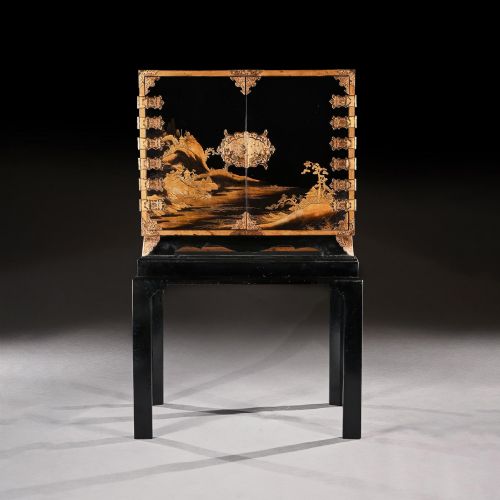
A lacquer chest on stand combines deep Oriental or European lacquerwork with a raised support, offering high-impact storage that anchors a room.
Lacquer Chest on Stand
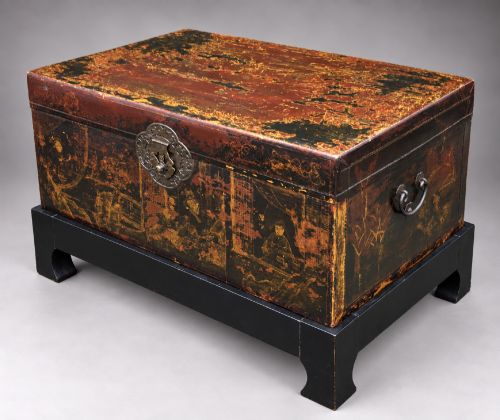
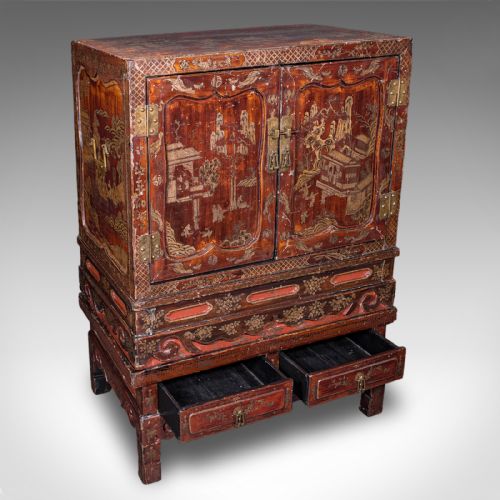
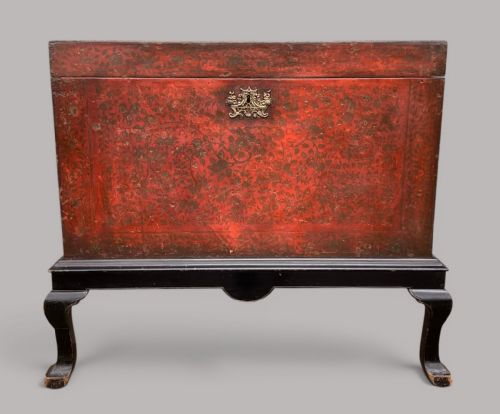
A lacquer chest on stand appears across several centuries, spanning the 17th Century, 18th Century, Georgian, Victorian, and 19th Century periods, alongside later 1920 and 1930 examples. These pieces function primarily as cabinets, blanket boxes, coffers, and trunks mounted upon dedicated stands.
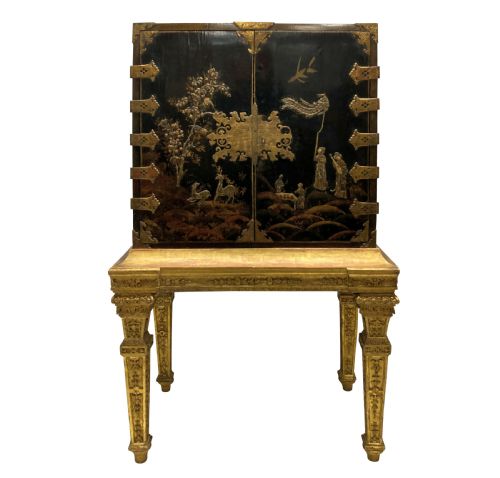
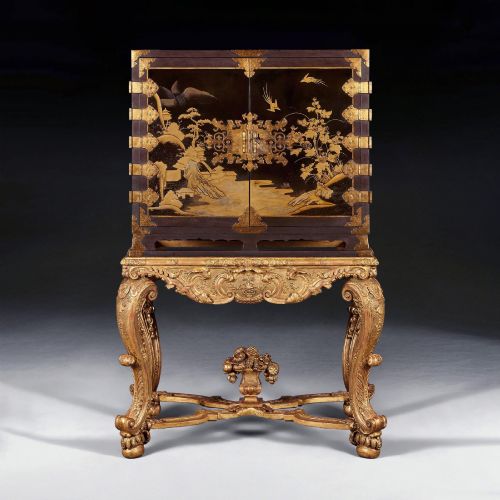
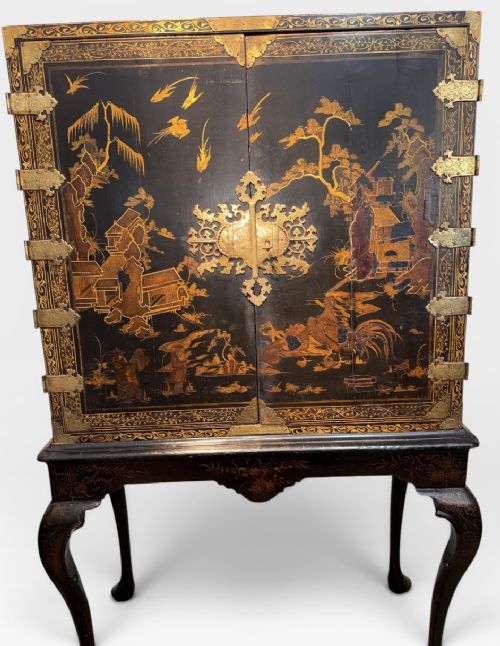
The aesthetic vocabulary heavily draws on Chinoiserie, Japanese Export, Edo Period, Chinese Export, William and Mary, Queen Anne, and Regency Chinoiserie styles. Anglo-Indian variants also emerge, alongside French Giltwood Regence stands paired with earlier Japanese lacquer bodies.
Buyers encounter both tall cabinet formats fitted with internal drawers and lower trunk or coffer forms resting on carved or straight-legged supports. The physical scale ranges from large storage trunks to compact collectors and cocktail cabinets.
Materials and structural construction
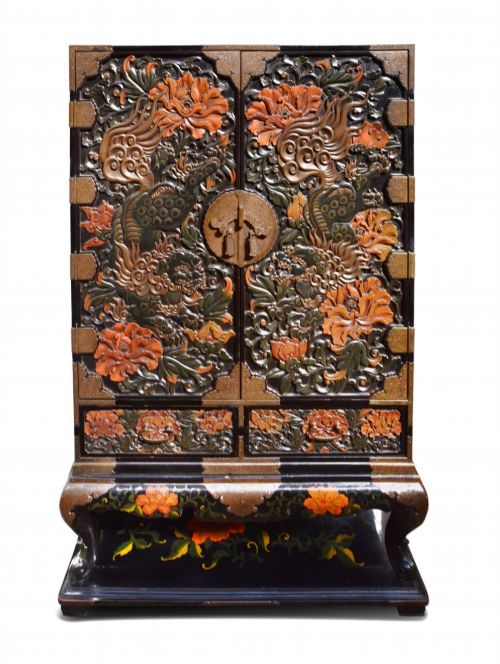
Wood serves as the foundational core for these pieces, overlaid with layers of lacquer to build a smooth, durable surface. Artisans then applied gold leaf, gilt, and giltwood to render intricate raised pictorial scenes.
Engraved brass hardware such as hinges, escutcheons, and carrying handles frequently reinforces the corners and doors. Japanned lacquer techniques are also employed to emulate Asian decorative arts within European workshops.
Some cocktail cabinets hide their spirited purpose behind solemn 17th-century export exteriors.
Distinctions in execution and heritage
The degree of refinement in the lacquerwork separates standard utility pieces from exceptional commissions, particularly where hand-drawn gold leaf figures and deep relief carving appear. The harmony between the upper chest and its supporting stand dictates the overall visual success, noting that some historical pieces combine Japanese lacquer bodies with European stands.
The integrity of the underlying wood and the crispness of engraved brass mounts further define the standard of a piece. Earlier 17th Century and 18th Century examples display meticulous joinery and depth of finish distinct from later 19th Century or 1920 adaptations.
Harrods
The Lacquer Chest on Stand Glossary
- Japanned Lacquer
- European imitation of East Asian lacquerwork using layered resin varnishes. Craftsmen built up the surface before decorating it with metallic dust and painted motifs.
- Coffer
- A large box or chest used for storage, often fitted with a hinged lid. When elevated on a separate stand, it forms a coffer on stand.
- Regence
- A French decorative style bridging the Louis XIV and Rococo periods. It emphasises curved lines, naturalistic carving, and giltwood finishes.
- Penwork
- Decorative surface technique using ink to create fine linear drawings. It appears on specialised collectors cabinets of the Regency era.
Lacquer Chest on Stand: Frequently Asked Questions
What is a lacquer chest on stand?
A lacquer chest on stand is an elevated storage piece consisting of a decorated box or cabinet placed upon a matching or associated support frame. These pieces combine decorative surfaces with practical interior compartments.
Originating in various forms across Asian and European workshops, they provide both surface pattern and vertical presence within a room.
How were these cabinets used historically?
Historically, these pieces served to store valuables, textiles, documents, or specialised collections. Their raised stands kept dampness away from the floor and elevated the decorative work to eye level.
Later iterations adapted the internal layout to function as cocktail cabinets or blanket boxes while retaining the formal display character.
How do I distinguish 17th century from later pieces?
Seventeenth-century and early 18th-century examples often exhibit specific structural joinery, authentic Japanning techniques, and specific cabinet proportions associated with the William and Mary or Queen Anne periods. Materials and brass hardware mountings also align with early manufacturing methods.
Later 19th-century and 20th-century revivals adopt similar decorative motifs but generally display different interior timber construction and modern tool marks.
How do I care for antique lacquer furniture?
Antique lacquer requires stable indoor humidity and protection from direct sunlight to prevent the surface from drying or cracking. Regular dusting with a soft, dry cloth maintains the finish without chemical polishes.
Avoid placing items with high moisture content directly on the lacquer surface to protect the historic gilt and varnish layers.