



Kyoto Satsuma Ceramic
Kyoto satsuma ceramic pieces bring intricate hand-painted detail and heavy gilding into domestic spaces through nineteenth-century vases, bowls, and incense burners.
Kyoto Satsuma Ceramic
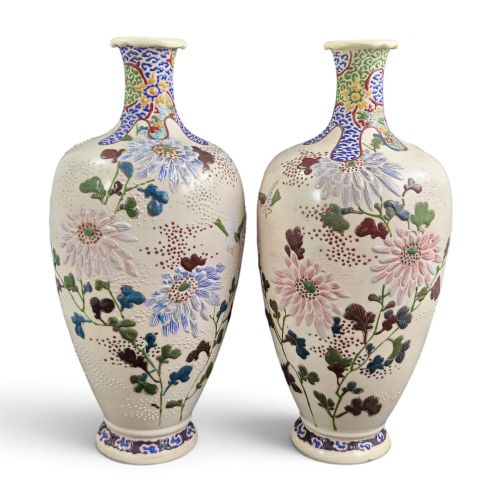
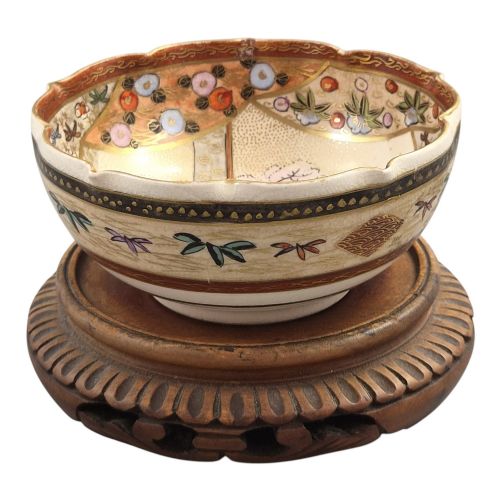
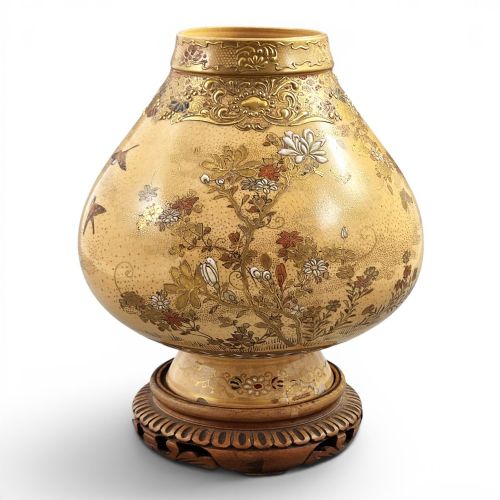
Kyoto satsuma ceramic works appear primarily as nineteenth-century vases, decorative bowls, and incense burners originating from the Meiji period. These items span smaller miniature forms alongside monumental vessels decorated with figures, landscapes, and floral motifs.
Makers in this category utilise specific signatures and studio marks, producing pieces that range from domestic household items to elaborate exhibition-grade works featuring cobalt blue grounds and raised enamel details.
How they were made
Artisans built these earthenware forms using local clay before applying complex glaze and enamel decoration. Gold gilt and gold leaf accents highlight intricate figural scenes and floral panels.
Raised moriage techniques add tactile depth to chrysanthemum and landscape motifs, paired with careful brushwork executed across bowls, jars, and koro incense burners.
Object forms span decorative bowls, miniature vessels, and koro incense burners complete with tripod bases.
What varies in quality
Quality differentiates through the precision of the enamel brushwork and the density of the gilding applied across the earthenware body. Pieces featuring detailed figural narratives, such as samurai battles or family scenes, demonstrate higher artistic execution than simpler repetitive floral patterns.
The prominence and clarity of workshop signatures, including those from established Kyoto kilns, distinguish standard production vessels from exceptionally ambitious exhibition pieces.
Kinkōzan Workshop·Chosei·Seiko-en Chokei·Yamashu·Choshuzan·Hakusan·Tagawa·Shozan·Hayakawa
The Kyoto Satsuma Ceramic Glossary
- Moriage
- A decorative technique using piped clay to create raised relief patterns beneath enamel and gilt work. This method adds a distinct tactile element to floral designs.
- Koro
- A traditional Japanese incense burner typically featuring a pierced lid and tripod feet. These vessels often incorporate guardian lion finials.
- Gilt
- A thin layer of gold applied to the surface of ceramics to accent panels and borders. It provides a contrasting metallic sheen against cobalt blue and polychrome enamels.
- Meiji
- The historical period spanning from eighteen sixty-eight to nineteen twelve characterised by significant artistic output. Much of the surviving decorative ceramic work originates from this era.
- Mon
- A traditional Japanese heraldic emblem or badge used to identify family lineages or clans. These crests frequently appear painted on high-quality Satsuma vessels.
Kyoto Satsuma Ceramic: Frequently Asked Questions
How do I identify a Meiji period piece?
Meiji period items typically display intricate pictorial scenes, dense floral borders, and signature marks corresponding to specific Kyoto workshops and artists active during that era.
The use of heavy gilding and raised enamel work also points directly to this period of heightened decorative craftsmanship.
Where should I display these pieces?
Vases and decorative bowls suit stable display cabinets or mantelpieces where natural light can catch the gold leaf and enamel details without exposing the earthenware to direct moisture or heavy handling.
Smaller miniatures and incense burners work well on tabletop surfaces where their fine brushwork remains visible at close range.
What do the painted scenes depict?
Common subjects include traditional landscapes featuring Mount Fuji, domestic family scenes, botanical motifs like wisteria and chrysanthemums, and mythological figures such as the seven gods of good fortune.
Some monumental vessels also portray historical narratives and samurai battles accompanied by family mon crests.