

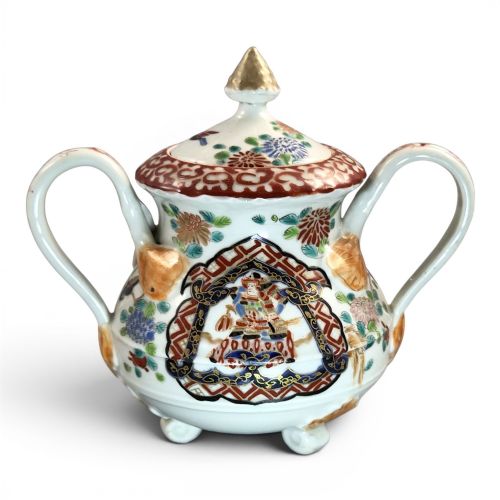


Polychrome Japanese Bowl
A polychrome japanese bowl brings together rich iron-red, cobalt blue and gold leaf upon ceramic or enamel surfaces.
Polychrome Japanese Bowl
A polychrome japanese bowl spans diverse forms ranging from large decorative chargers and jardinieres to delicate miniature vessels and sugar bowls. The examples encountered most frequently date from the nineteenth century and the Meiji period, reflecting a surge in export wares during that era.
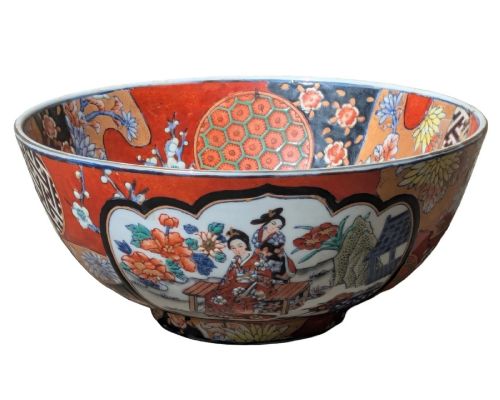
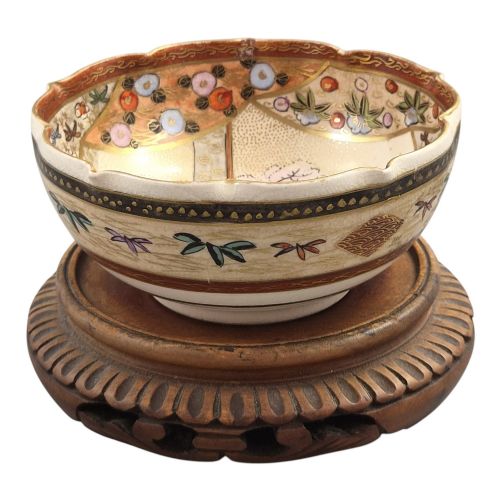
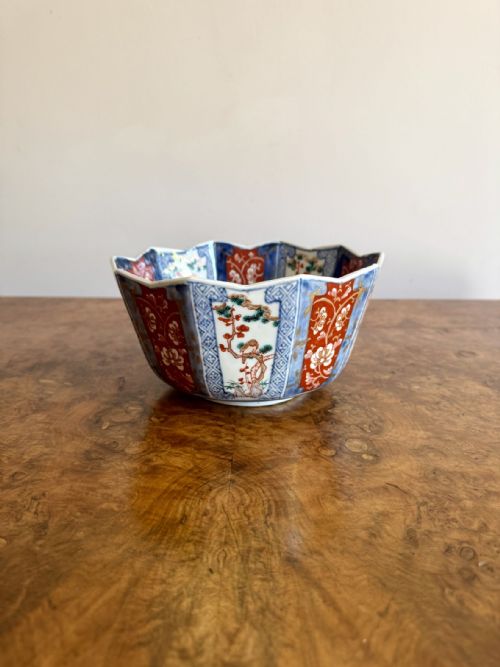
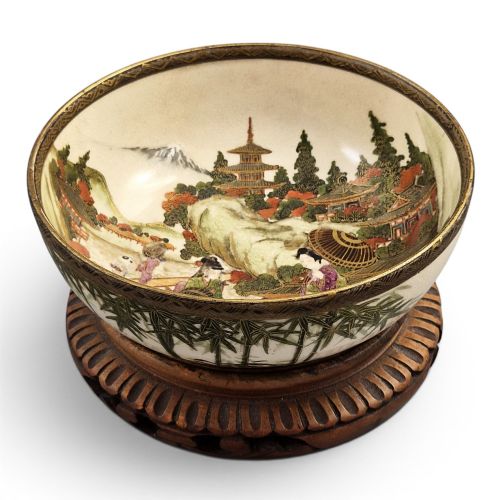
Many pieces display traditional Imari or Satsuma palettes, featuring intricate hand-painted scenes of samurai, birds, flowers, or figural compositions. Forms vary from simple circular basins to scallop-edged plates and deep bowls resting on small foot rings.
Materials and construction methods
Potters and artisans utilised porcelain, earthenware, and copper bases, applying detailed enamel designs often highlighted with gold leaf and gold gilt. Cloisonné pieces rely on thin metal wires soldered to a copper body to form cells that hold coloured enamel pastes before firing.
Hand-painted Satsuma wares employ a cream-coloured, crackle-glazed earthenware as a canvas for dense pictorial compositions, whilst Imari pieces typically combine underglaze blue with overglaze red and gilt directly on porcelain.
Several plates capture late nineteenth-century maritime history through Black Ship Imari designs commemorating Western trade vessels arriving in Japan.
Assessing quality in the collection
Quality rests upon the precision of the brushwork, the complexity of the enamel layering, and the clarity of any artist signature or workshop mark on the base. Pieces featuring finely delineated figural scenes or dense millefleur patterns demonstrate superior hand-painted skill compared to simpler, repetitive border motifs.
The crispness of the gilt work and the deliberate control of the enamel thickness without pooling or pitting distinguish finer studio output from standard export production.
Gyokkō·Ryuzan·Hododa·Shozo
The Polychrome Japanese Bowl Glossary
- Imari
- A style of Japanese export porcelain characterised by a palette of underglaze blue, iron-red, and supplementary gold. It takes its name from the port town from which the wares were shipped to Europe.
- Satsuma
- A type of earthenware originating from the Satsuma Province, known for its ivory crackle glaze and elaborate overglaze polychrome and gilt decoration. Much of it was produced specifically for Western export during the Meiji period.
- Kutani
- Japanese porcelain or earthenware distinguished by bold polychrome enamel designs, often featuring greens, purples, and deep reds alongside heavy gilding. Production centred in the Ishikawa Prefecture.
- Cloisonné
- A metalwork technique where fine wires form raised barriers on a copper vessel to create compartments filled with coloured enamel. The entire surface is then fired and polished smooth.
- Millefleur
- A decorative pattern translating to a thousand flowers, covering the entire ceramic surface in a dense meadow of painted blossoms.
Polychrome Japanese Bowl: Frequently Asked Questions
How do I care for a polychrome japanese bowl?
Dust these vessels gently with a dry, soft cloth to protect delicate overglaze enamels and gold leaf highlights. Avoid using water, detergents, or abrasive cleaners on antique ceramic and enamel surfaces.
Display them away from direct sunlight and areas subject to sudden temperature shifts to prevent stress on the glaze and body.
What is the difference between Satsuma and Imari?
Satsuma wares consist of an earthenware body covered in an ivory-coloured crackle glaze, painted with intricate polychrome figures or flowers. Imari pieces are made of hard-paste porcelain decorated in a distinct palette of cobalt blue, iron-red, and gold.
Satsuma relies on a matte, absorbent surface for detailed miniature paintings, whereas Imari presents a smooth, vitrified porcelain finish.
Are these bowls safe for food use?
Antique bowls from the nineteenth century are intended for display and decorative use rather than modern dining or food preparation. Historic glazes and overglaze enamels can contain heavy metals that are unsuitable for consumption.
Treat these items as works of art and restrict their use to ornamental placement or dry storage.
How can I date a Meiji period bowl?
Examine the base for artist signatures, studio marks, or workshop stamps that correspond to known nineteenth-century makers and export periods. The presence of dense, intricate hand-painting alongside gold leaf often points towards the later decades of the nineteenth century.
Compare the weight, glaze characteristics, and potting style with documented examples from the same production centre.