



Gilded Japanese Display Bowl
A gilded japanese display bowl brings intricate Meiji Satsuma and Imari artistry into a room, offering rich painted scenes and gold leaf detail.
Gilded Japanese Display Bowl
When you search for a gilded japanese display bowl, you encounter decorative bowls, plates, and bowls and saucers spanning the eighteenth century to nineteen hundred. These pieces originate from traditions such as Japanese Imari, Kyoto Satsuma, and Arita, reflecting periods from the Edo period to the Meiji period.
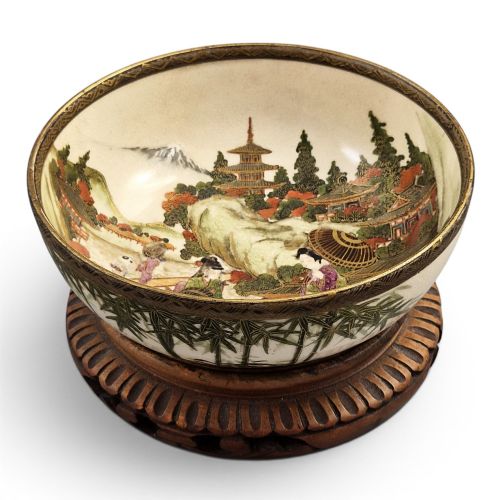
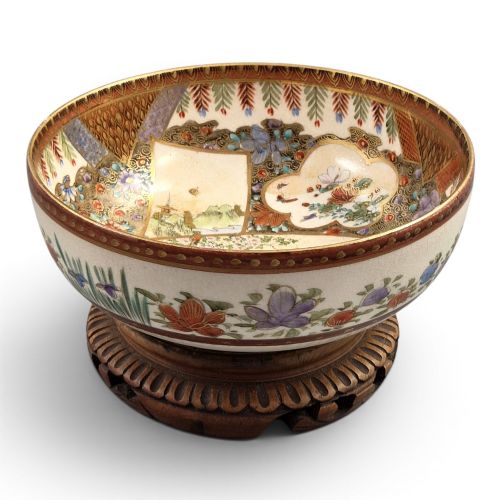
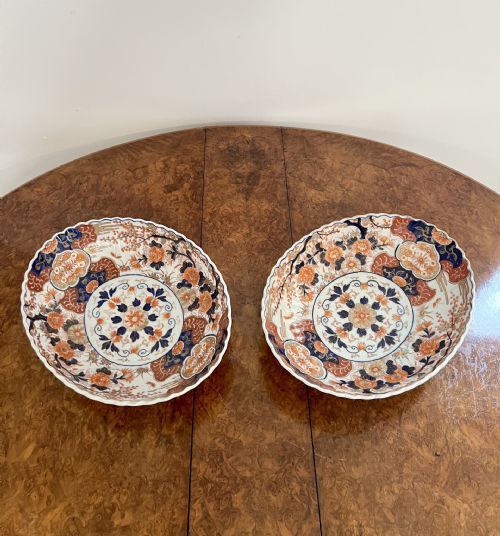
The objects available on this page include large scalloped edge bowls, tripod bowls, and thousand flowers gilt enameled bowls. Such vessels serve as striking ornamental centrepieces, decorated with flowers, birds, samurai battles, and women under camellia trees.
You are most likely to meet Meiji period Satsuma ware and nineteenth century Japanese Imari bowls. These items combine earthenware or porcelain bodies with elaborate enamel and gold leaf applications.
How they were made
Potters shaped these vessels using earthenware and porcelain, sometimes forming tripod bases or scalloped edges. Artisans then applied glaze and fired the ceramic foundation before adding detailed polychrome enamel paintwork.
Gold leaf and gilt provide the characteristic metallic highlights that define these surfaces. Makers incorporated fine gilding to frame painted panels of figures, flowers, and military scenes.
Listings feature works from the eighteenth century, the Victorian era, and the Meiji period, utilising porcelain, earthenware, and gold leaf.
What varies in quality
The distinction between standard vessels and exceptional examples rests in the complexity of the painted composition and the precision of the enamel work. Monumental bowls featuring detailed samurai battles or dense thousand flowers motifs demonstrate superior artistic execution.
Signature marks by renowned makers elevate the standing of a piece within the range. The integration of rich gilding with clear glaze and finely potted porcelain or earthenware defines the finer examples.
Gyokkō·Kozan·Kinkozan
The Gilded Japanese Display Bowl Glossary
- Imari
- A style of Japanese export porcelain characterised by underglaze blue, iron red, and gilt ornamentation. These pieces often feature intricate floral and geometric panels.
- Satsuma
- A type of earthenware from Japan featuring a crackle glaze decorated with polychrome enamels and extensive gilding. It frequently depicts figures, birds, and botanical subjects.
- Gilding
- The application of gold leaf or gilt powder to the surface of ceramic objects. This technique highlights rims, figures, and decorative borders.
- Earthenware
- A porous ceramic material fired at lower temperatures, commonly used for Satsuma ware bowls. It provides a textured base for enamel and gold decoration.
- Porcelain
- A vitrified ceramic material fired at high temperatures, utilised for durable Imari plates and tripod bowls. It offers a smooth, white body for underglaze painting.
Gilded Japanese Display Bowl: Frequently Asked Questions
What is a Satsuma bowl?
A Satsuma bowl is an earthenware vessel featuring a pale crackle glaze painted with enamel and gold. These pieces often illustrate traditional figures and natural scenes.
They originate primarily from the Meiji period and serve as decorative display items in a room.
How do I identify Imari ware?
Imari ware is porcelain decorated with a distinct palette of underglaze blue, iron red, and gilt highlights. The patterns typically combine floral designs with brocade motifs.
These pieces date from the eighteenth century through nineteen hundred and include plates and bowls.
Where were these bowls made?
These decorative bowls and plates were produced in Japan, with specific centres such as Arita and Kyoto. Arita is known for porcelain production, while Kyoto produced detailed Satsuma wares.
Exporters shipped these items to Western markets during the Victorian and Meiji eras.
How do I care for gilt bowls?
Display these bowls on stable surfaces away from direct sunlight and moisture to protect the enamel and gold leaf. Dust them gently with a soft, dry cloth.
Avoid using water or cleaning agents on the gilded and enameled surfaces.